
Last updated November 21, 2026
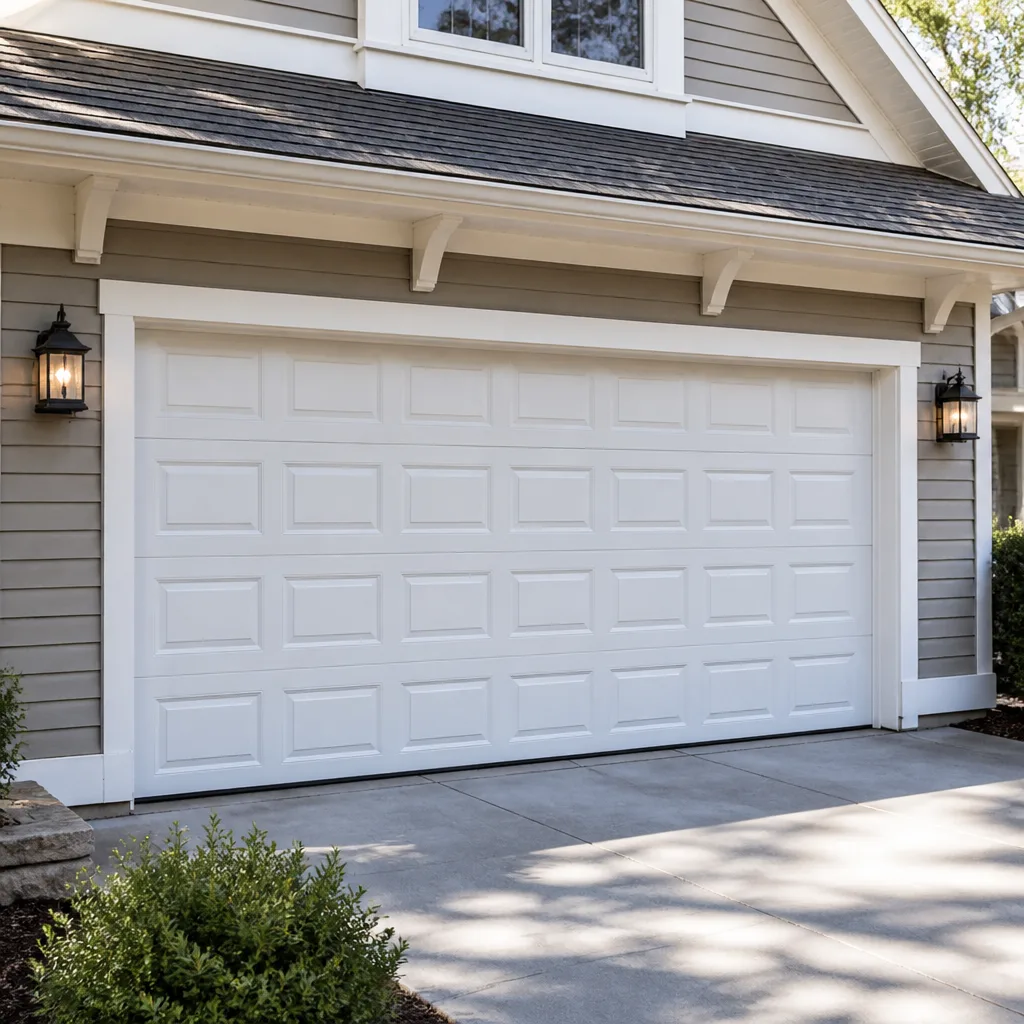 Raised-panel steel
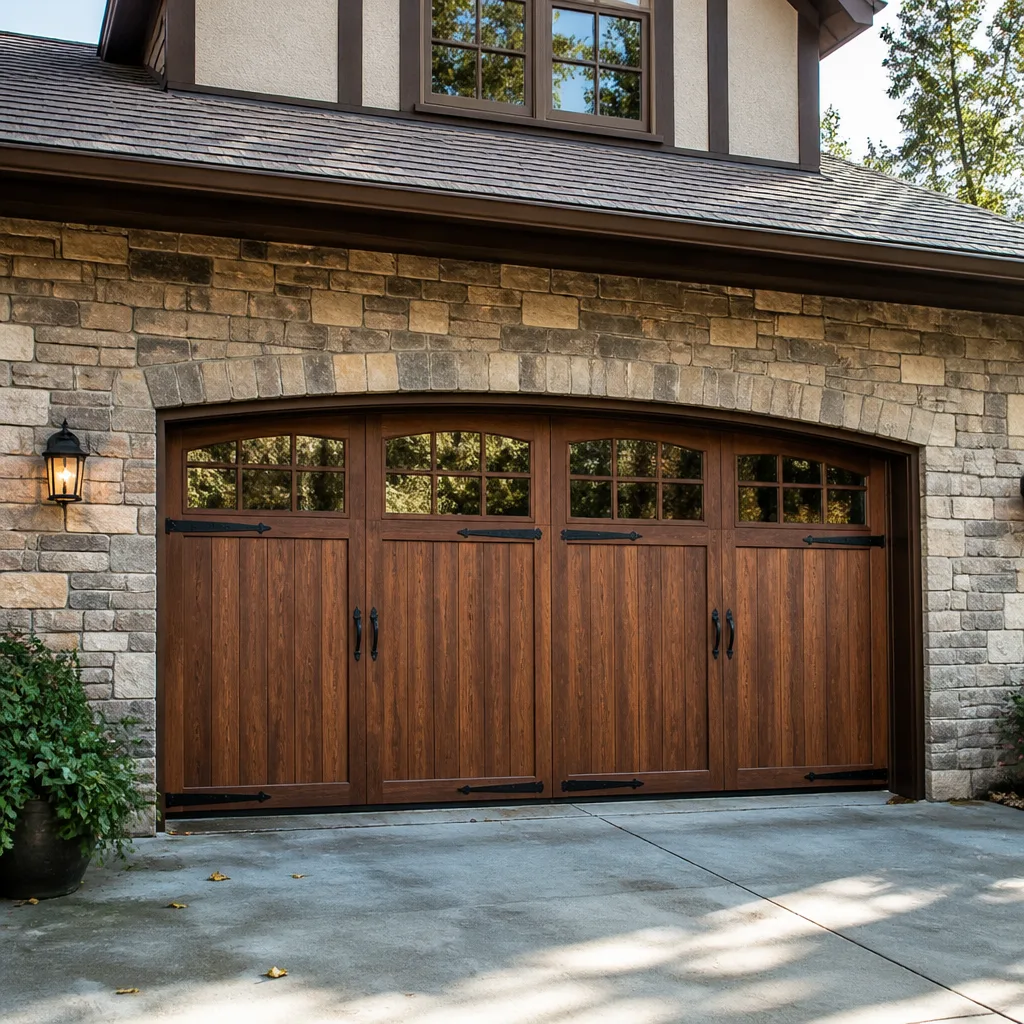 Carriage house
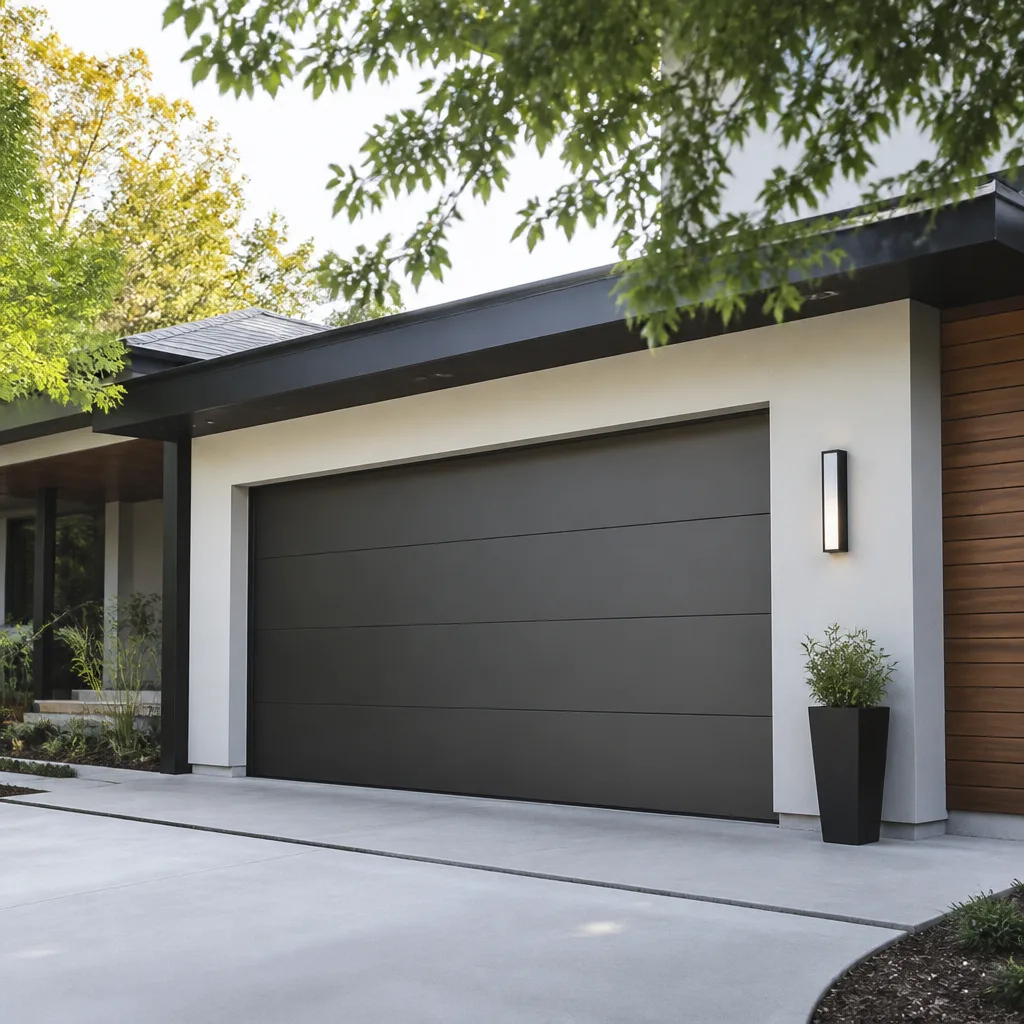 Modern flush
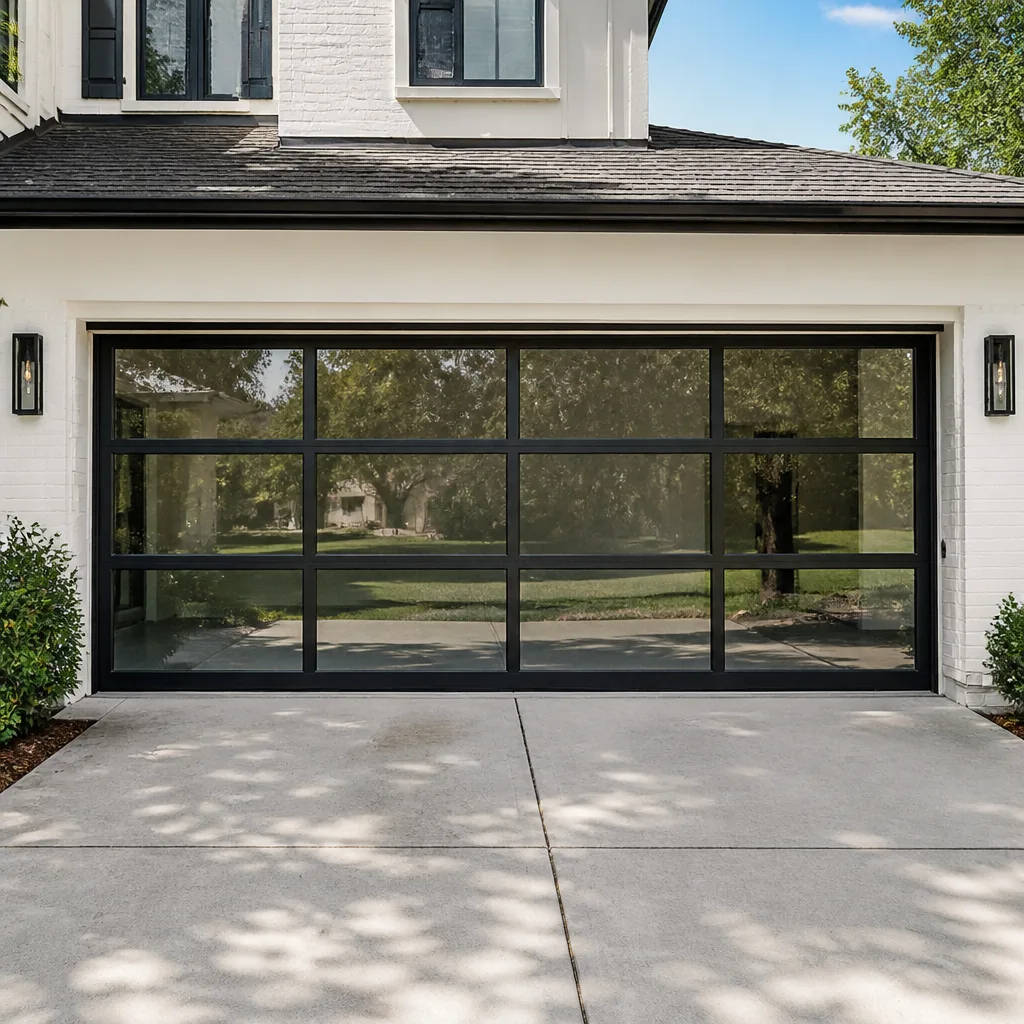 Full-view glass
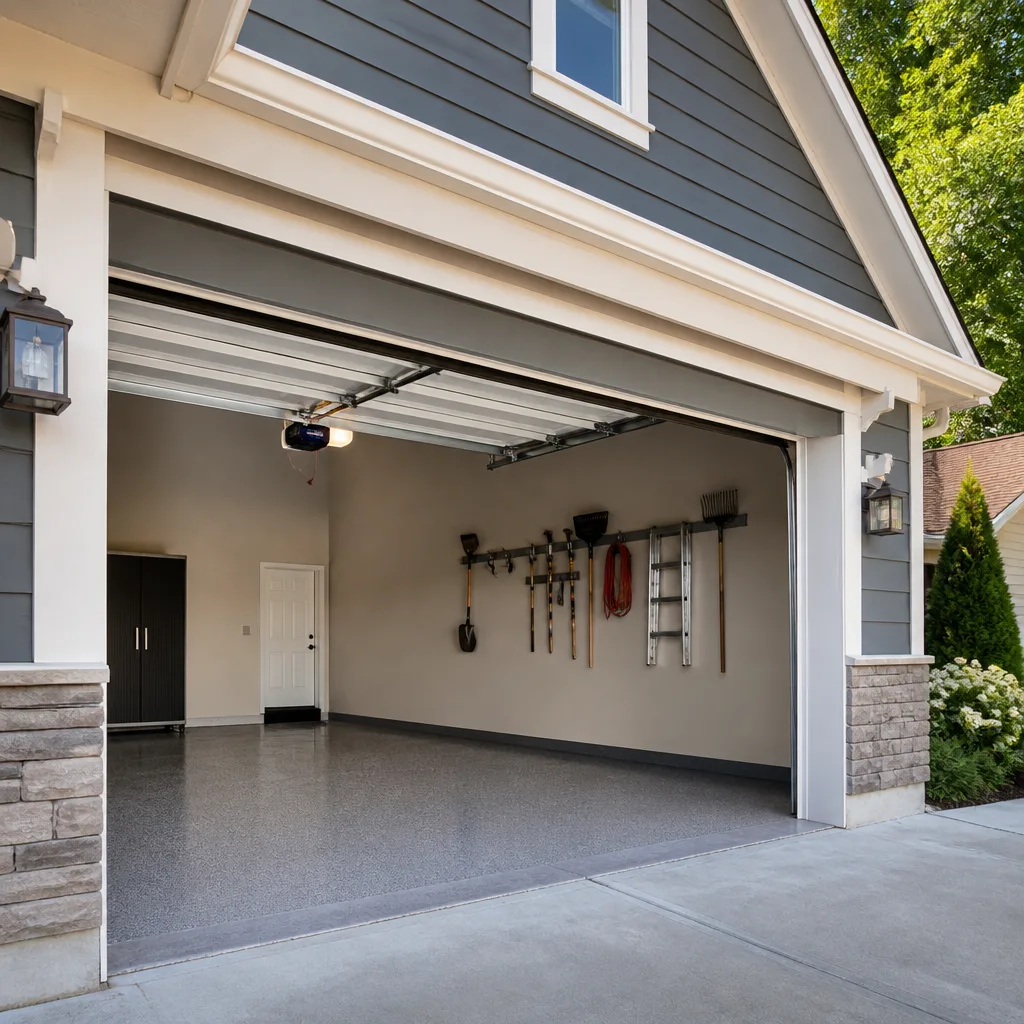 LiftMaster openers
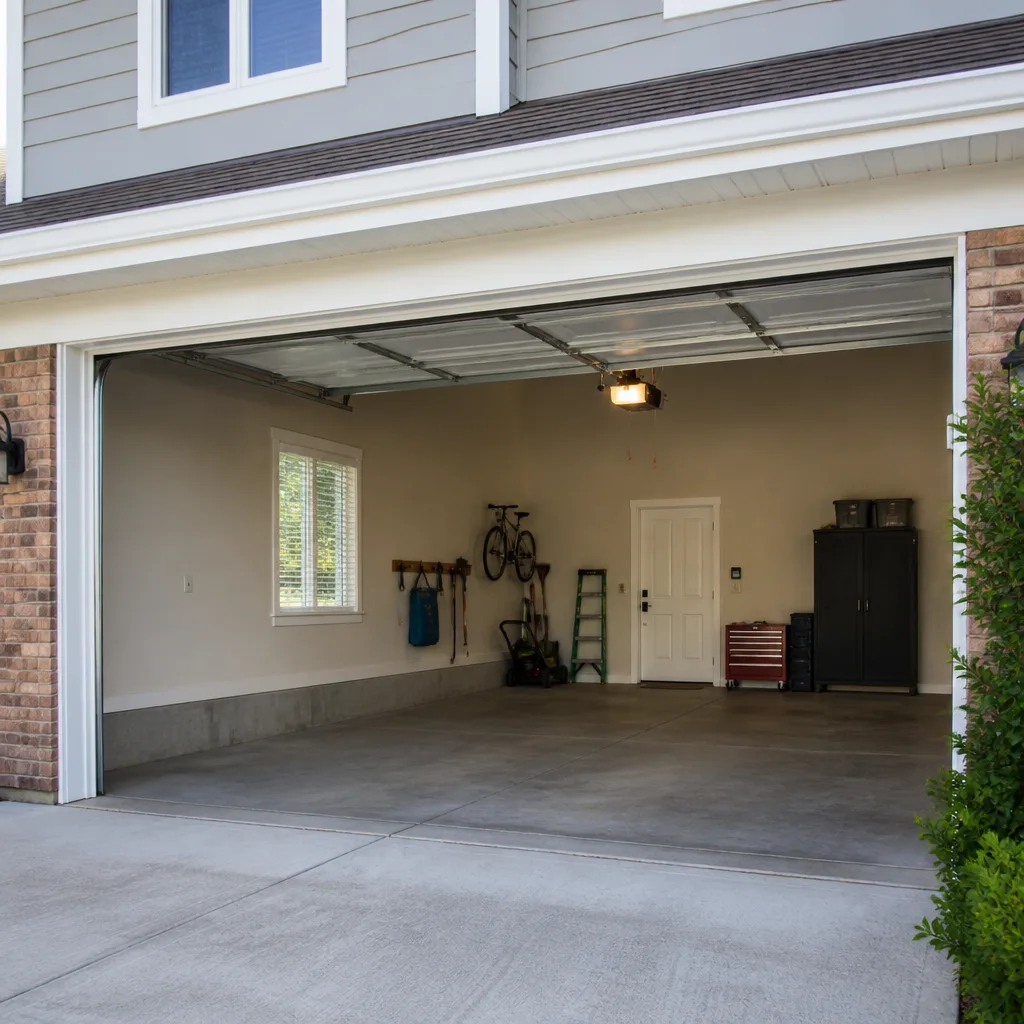 Chamberlain openers
Full 25-point door and opener safety check with every visit - springs, cables, rollers, tracks, and your LiftMaster or Chamberlain opener included
You get a price before we start. It does not change when the pro arrives.
Get your free estimateGarage Door Repair Maintenance Schedule: What to Do and When
Your garage door is the hardest-working moving part on your property. A typical Meriden household runs that door through roughly 1,500 open-and-close cycles a year, and two-car families with kids coming and going push it higher. Here’s the counterintuitive part: most maintenance schedules floating around online were written for doors that see half that traffic, so following them to the letter leaves the real wear points untouched. We’re not going to hand you a generic “lubricate monthly” calendar. Instead, this guide maps care to mechanical milestones and Connecticut weather, so you know exactly what to check, when to check it, and when a part has simply earned its retirement.
Quick Answer
A garage door doesn’t need constant fiddling. It needs a five-minute visual check once a month, a proper lubrication and balance pass twice a year (before the October freeze and in late spring), and planned replacement of predictable-wear parts: torsion and extension springs around 10,000 cycles, rollers every 10 to 15 years. Anything involving springs, cables, or the door coming off its track is a pro call, not a homeowner task.
Styles & brands we work with
- Raised-panel steel
- Carriage house
- Modern flush
- Full-view glass
- LiftMaster openers
- Chamberlain openers
Table of Contents
- Cycle-Based vs. Calendar-Based Maintenance
- The Five-Minute Monthly Self-Inspection
- The October Pre-Freeze Checklist for Connecticut
- What Lubrication Actually Means for Each Component
- Which Parts Have Predictable Lifespans
- Your Full Seasonal Schedule, Mapped
- What You Should Never Handle Yourself
- Brand-Specific Wear Notes
Cycle-Based vs. Calendar-Based Maintenance
Here’s the idea that changes everything: a garage door ages in cycles, not days. Every open is one cycle; every close is another. The springs, rollers, hinges, and opener all track their wear against that count, not against the calendar. A retired couple who open their door twice a day put about 730 cycles on it a year. A family of four with two cars, one working from home and two kids in school, might hit 2,000 or more. Same calendar year, wildly different wear.
So a schedule that says “service in October and March” is fine as a rhythm, but it’s incomplete. The homeowner running 2,000 cycles needs eyes on their springs and rollers at roughly twice the interval of the low-traffic household. That’s the reason we encourage Meriden homeowners to think about their actual door count first, then apply the schedule.
Practical way to estimate your household’s cycle count:
- Count the average daily opens. Morning departures, afternoon returns, kids in and out, trash runs, yard work trips.
- Multiply by two (each open is paired with a close).
- Multiply by 365.
- Compare to the 1,500 national-average figure. Under 1,200 and you’re light traffic. Over 2,000 and you’re heavy.
A light-traffic Meriden door can follow the seasonal routine comfortably. A heavy-traffic door gets the monthly check plus a mid-season look. The underlying principle doesn’t bend: springs wear out on cycle count, and a spring that’s been through 10,000 cycles is on borrowed time regardless of how many months it’s been in the door.
The Five-Minute Monthly Self-Inspection
This is the highest-return five minutes you can spend on your garage door. No tools, no ladder, no disassembly. It’s a look-and-listen pass, and in our experience it catches the early signs of most developing problems before they become a failure.
Stand inside the garage, close the door, and work through this list in order:
- Look at the springs. Torsion springs live on the shaft above the door; extension springs run along the tracks. You’re looking for visible gaps, a stretched appearance, or obvious rust. If a spring looks separated or elongated, stop and call – don’t run the opener.
- Look at the cables. The steel cables on either side should sit evenly in their drum. Fraying, kinks, or a cable sitting off the drum is a red flag.
- Run the door and listen. Squeaks, grinding, pops, and rattling each point to different parts. Squeaks usually mean dry hinges or rollers. Grinding often points to opener gears or a worn bearing.
- Watch the travel. The door should open and close smoothly, without shimmying, jerking, or reversing halfway.
- Check the safety reverse. Set a roll of paper towels under the door and close it. The door should reverse on contact. If it keeps pressing, the opener’s force or sensor needs attention.
- Look at the photo-eye sensors at the bottom of the tracks. Both LEDs should be lit. A blinking light means misalignment or an obstruction.
That’s it. Five minutes, once a month, and you’ve caught the vast majority of problems while they’re still cheap to fix. If anything on this list looks off, note the date and call it in. Meriden homes with weather-exposed garages (single-bay detached, north-facing doors) tend to show wear faster, so those homeowners should be a little stricter about the monthly check.
The October Pre-Freeze Checklist for Connecticut
Meriden winters are the single biggest maintenance variable for a garage door. The freeze-thaw cycles we get from November through March put a specific kind of stress on metal parts, and October is the window to get ahead of it. Skip this and you’ll be dealing with a stuck door in January, which is exactly when you don’t want to be.
What happens in a hard freeze: any moisture trapped around hinges, bearings, and rollers freezes and expands. Lubricant that flows fine at 50°F thickens into a gum at 20°F. Opener motors work harder to push through that resistance, and the stress shows up as strained opener gears, worn belts, and doors that briefly reverse mid-travel because the opener’s force sensor reads the drag as an obstruction.
Here’s the October checklist, in order:
- Switch to cold-rated lubricant. White lithium grease or a dedicated garage-door lubricant designed to stay viscous below freezing. Standard WD-40 (the classic blue-can formula) is a solvent, not a lubricant, and it leaves parts drier than it found them.
- Hit every hinge pivot point with a small drop of lubricant, not a spray cloud. Excess attracts grit.
- Lubricate the torsion spring coils with a purpose-made spring lubricant. This is a light coat, not a soak. It quiets the spring and slows rust, which is the actual killer of springs in Connecticut.
- Wipe down the tracks with a dry cloth. Don’t lubricate the tracks themselves – they’re meant to be clean and dry so the rollers can roll. Lubricated tracks collect grit and cause binding.
- Test the balance. Disconnect the opener (pull the red release cord) and lift the door halfway. It should stay put. If it drifts down, the springs are tired and won’t survive the winter load.
- Test the safety reverse again. Cold weather reduces opener power slightly, and a marginal reverse test now becomes a failure in February.
- Check the weather seal at the bottom. A cracked or frozen-shut bottom seal tears away from the door and lets in cold air and moisture.
If the balance test fails or a spring looks weak, we’d rather see it in October than get the emergency call in January. Our garage door spring repair service handles both torsion and extension systems, and October is the right month to schedule a look before the cold really sets in.
What Lubrication Actually Means for Each Component
“Lubrication” gets thrown around as a single task, but each component of a garage door wants a different treatment, and getting it wrong causes more harm than skipping it. Here’s what actually goes on each part, and what to avoid.
Springs (torsion and extension)
Spring lubricant, light coat, twice a year. The purpose is rust prevention as much as smoothness – a rusty spring fatigues faster and can snap without warning. What you should not do: spray classic WD-40 on your springs. It temporarily displaces moisture but leaves the metal dry once it flashes off, and repeated use accelerates the rust it looked like it was preventing. Use a purpose-made spring or white lithium lubricant instead.
Hinges and pivot points
A single drop of lubricant per hinge, on the pivot pin, twice a year. Not a spray cloud. Excess lubricant drips onto the door finish and collects grit at the hinge.
Rollers
Nylon rollers need no lubrication at all – they’re self-lubricating by design. Steel rollers benefit from a light drop at the stem, but if they’re squealing, lubrication only buys a little time; they’re due for replacement.
Tracks
Clean and dry. That’s it. The tracks are a guide channel; the rollers do the rolling. Lubricating the tracks is one of the most common mistakes we see, and it causes binding because grease plus grit equals sandpaper.
Opener rail and chain or belt
Chain-drive openers want a light chain lubricant once or twice a year. Belt drives need essentially nothing – belts are designed to run dry. Screw drives want a specific screw-drive lubricant. Check your opener’s manual for the exact spec; applying the wrong lubricant to a drive system is worse than applying none.
If you’re not sure which system your door runs, or you’d rather have it done right once, a Meriden Garage Door Repair Pros technician can handle the full lubrication pass and check the balance and safety reverse at the same time.
Which Parts Have Predictable Lifespans
This is where planning beats reacting. A garage door has parts with a rough, predictable service life, and knowing that life in advance lets you replace them on your terms instead of discovering the failure late on a cold evening with a car trapped inside. Here’s the list, with the caveat that these are typical figures, not guarantees.
- Torsion springs: roughly 10,000 cycles. At the national-average 1,500 cycles a year, that’s around seven years. At 2,000, closer to five. A single spring snapping is common; replacing as a matched pair is standard practice.
- Extension springs: similar cycle life, often a bit shorter. Ideally replaced in pairs.
- Rollers: 10 to 15 years on nylon, less on steel, less if the door is heavy or the tracks are slightly out of alignment. Worn rollers are the most common source of noise.
- Cables: 10 to 15 years in a sheltered garage. Rust shortens that, and Meriden humidity plus winter road salt tracked in on tires is not gentle on cables.
- Hinges: 15 to 20 years with regular lubrication. Hinge pins wear before the plates do.
- Opener (the unit itself): 10 to 15 years for a quality unit. Belt and screw drives often outlast chain drives in terms of quietness through that life.
- Bottom weather seal: 5 to 10 years, shorter if it faces full afternoon sun or regularly freezes against the concrete.
The planning trick: work out your cycles-per-year, then divide 10,000 by that figure. That gives you the year your springs are due. If the answer is “next year,” start budgeting for the spring replacement now, and have the rollers and cables inspected at the same time – it’s the cheapest moment to do all three.
Your Full Seasonal Schedule, Mapped
Here’s the whole schedule pulled together, organized by when to do each thing. This assumes a Meriden household in the 1,500 to 2,000 cycle range. Heavier traffic means shortening the intervals on the checks.
Monthly
- Five-minute visual and listening check (the list above)
- Safety reverse test with a roll of paper towels
- Photo-eye sensor check
Early October (pre-freeze)
- Switch to cold-rated lubricant
- Full lubrication pass on springs, hinges, and opener drive
- Balance test (disconnect opener, lift halfway, should hold)
- Weather seal inspection
- Service call if balance fails or springs look weak
Late March or April (post-thaw)
- Wipe down the tracks and check for rust
- Second lubrication pass
- Look for cracks or warping on wooden door panels from freeze-thaw
- Visual check on the bottom seal after a winter of sitting on frozen concrete
- Listen for new noises that showed up over the winter
Annually
- Full inspection by a technician (springs, cables, rollers, opener)
- Opener force and travel calibration check
- Confirm none of the wear-parts are at or past their expected lifespan
Every 5 to 7 years (depends on cycles)
- Plan the spring replacement if you’re near 10,000 cycles
- Assess the rollers and cables at the same time
Notice what’s absent: no weekly tasks, no quarterly deep-cleaning, no elaborate monthly rituals. The door doesn’t need more attention than this; it needs this attention at the right times. Most Meriden garage doors that fail do so because the monthly check wasn’t done and the balancing pass in October was skipped – not because the schedule was too short.
What You Should Never Handle Yourself
We’ll be plain about this: the vast majority of garage door maintenance is safe for a homeowner. Springs and cables are not. Torsion springs are under extreme tension – a single wrong turn of a winding bar can release a store of energy with enough force to cause serious injury. Cables are under tension too, and both parts have killed people who tried to work on them without proper tools or training. Springs are the most dangerous part of your garage door system, and no amount of YouTube preparation changes the physics.
The line is clear:
- Safe for you: visual inspection, listening, lubrication, safety reverse testing, wiping tracks, replacing a photo-eye that’s gone bad, replacing the bottom seal (on most doors).
- Not safe for you: adjusting, winding, or replacing torsion springs; replacing extension springs; adjusting or replacing cables; rebalancing a door that’s off-tension; any work while the door is up with the opener engaged.
If the balance test fails, if a spring looks stretched or has a visible gap, or if the door isn’t sitting level, stop running it and call. Our garage door repair service covers exactly these calls, and a Meriden technician can be out the same day for a failure that’s trapping a car or leaving the house unsecured.
Brand-Specific Wear Notes
Different systems wear differently, and knowing what your door or opener is likely to need saves a lot of diagnostic time. We service equipment across eight brands – LiftMaster, Chamberlain, Genie, Clopay, Amarr, Wayne Dalton, Craftsman, and Raynor – which means we’ve seen the recurring patterns on most any system you’ll find in a Meriden garage.
A few realistic notes:
- Genie and LiftMaster openers commonly develop travel-limit and force sensor issues before anything mechanical fails. Those show up as a door that reverses mid-travel or refuses to close. If your garage door opener repair call is a “door stopped closing” symptom, this is often the cause.
- Clopay and Amarr steel doors show panel dents and bottom-seal wear before structural issues. Their springs typically follow the standard cycle life figure and are the first component to go.
- Wayne Dalton doors with the TorqueMaster torsion system have their springs housed inside a tube, which means visual inspection is limited. Balance testing becomes more important, since you can’t directly see spring condition.
- Chamberlain and Craftsman openers commonly need belt, gear, or logic board service after the 10 to 15 year mark. Genie screw-drive systems want their specific screw-drive lubricant, not a generic chain lube.
The point isn’t to memorize brand quirks – it’s that the right part for your specific system matters. A generalist guessing at parts wastes your time and money; the brand roster we work across means the diagnosis starts from experience with your system, not a blank slate.
Common Mistakes to Avoid
- Treating classic WD-40 as a garage door lubricant. It’s a water displacer and light solvent, not a lasting lubricant. On springs and hinges it actually accelerates the wear it appeared to fix. Use a purpose-made lube or white lithium grease.
- Lubricating the tracks. Tracks are supposed to be clean and dry. Grease plus grit equals binding. If the door is binding on the tracks, that’s an alignment issue, not a lubrication one.
- Skipping the October balance test. It’s five minutes. It’s also the single best predictor of a January spring failure. Connecticut winters are unforgiving on a door that was already marginal.
- Replacing one spring when both are worn. Matched springs wear at the same rate. Replacing one means the second is due weeks later, and you pay for the labor twice. Replace as a pair.
- Continuing to run a door that’s off-balance. A door that drifts when you try the balance test is forcing the opener to do work the springs should be doing. That burns out opener gears and belts, turning a $200-ish repair into a $600-ish one.
- Ignoring a slow-reversing door. A door that reverses without obstruction, or refuses to close all the way, is usually a force or limit issue. It’s also a safety concern. Have it looked at before the photo-eye failure becomes a habit.
- Assuming a heavy-traffic household can follow the generic schedule. If you’re running 2,000+ cycles a year, your springs are burning through life almost twice as fast as the standard advice assumes. Adjust the check intervals accordingly.
See the difference
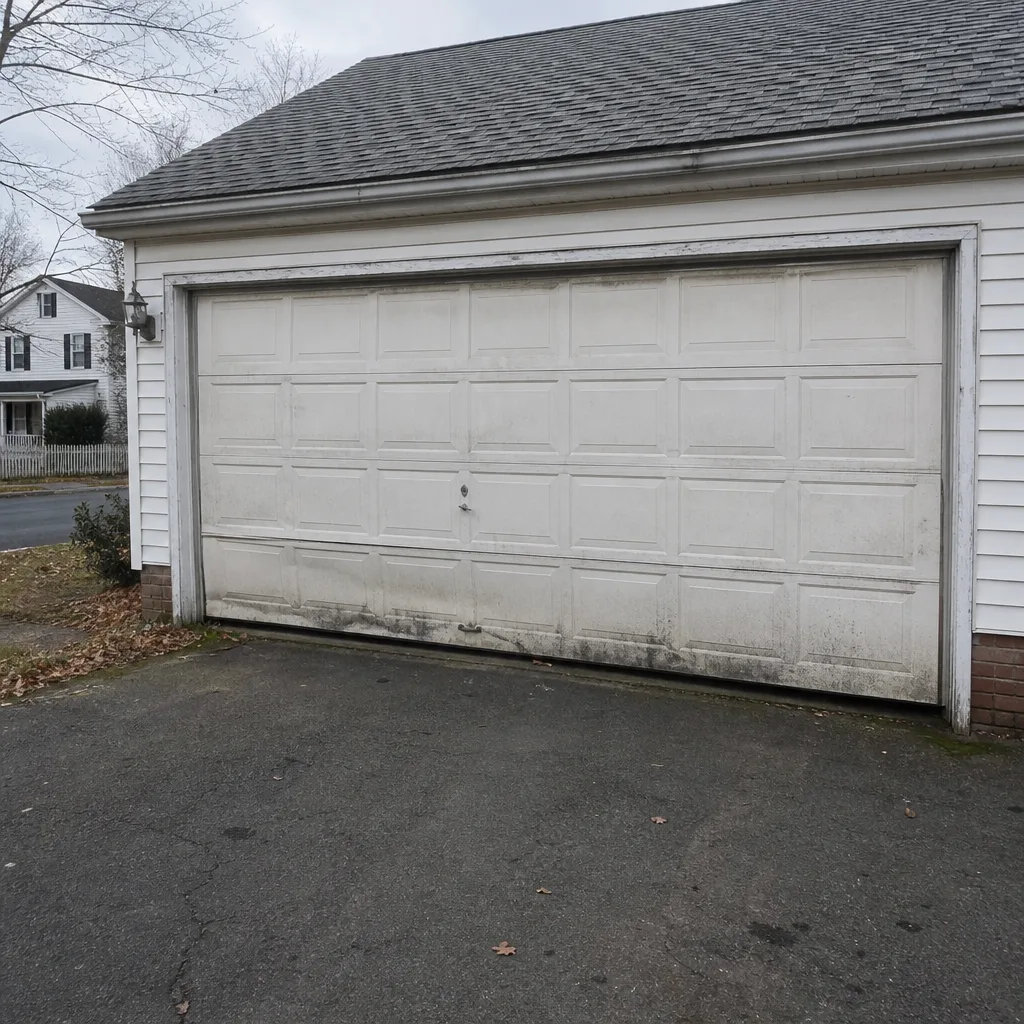 Before
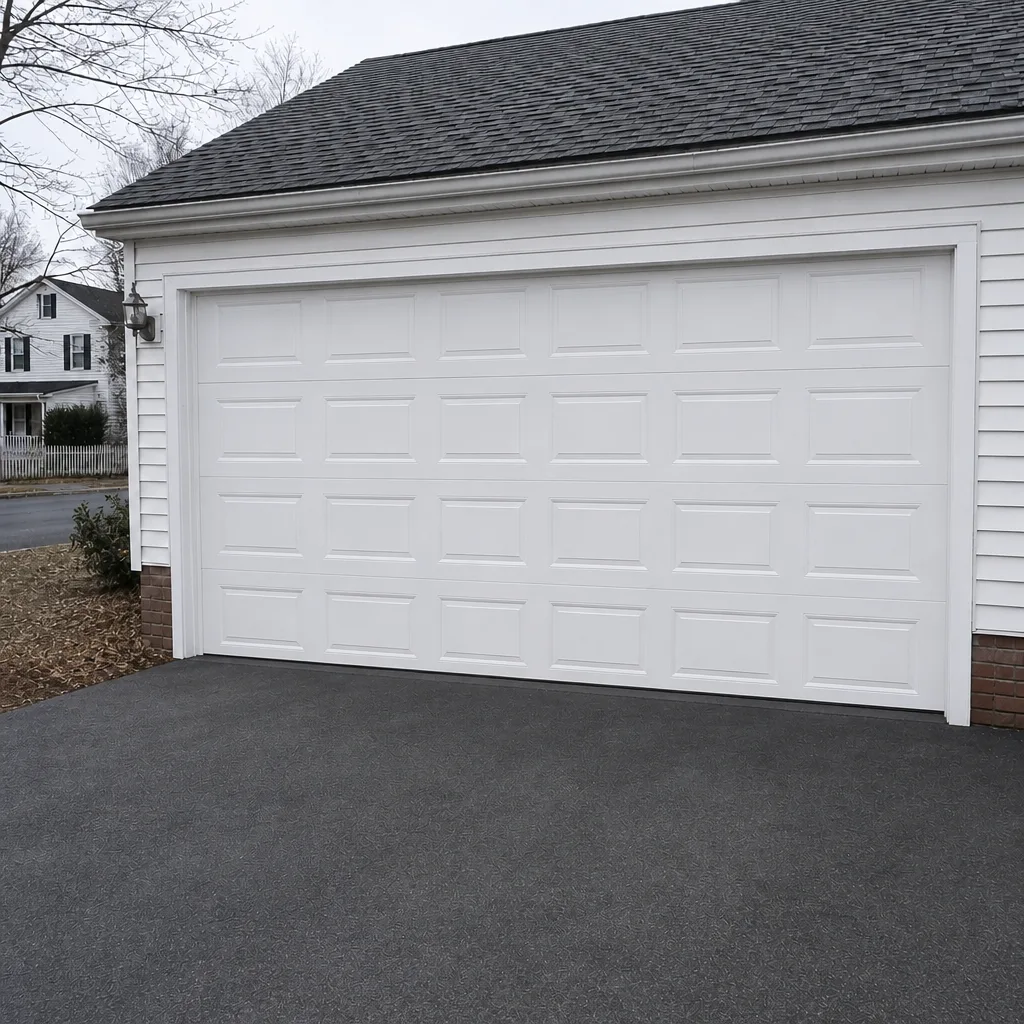 After
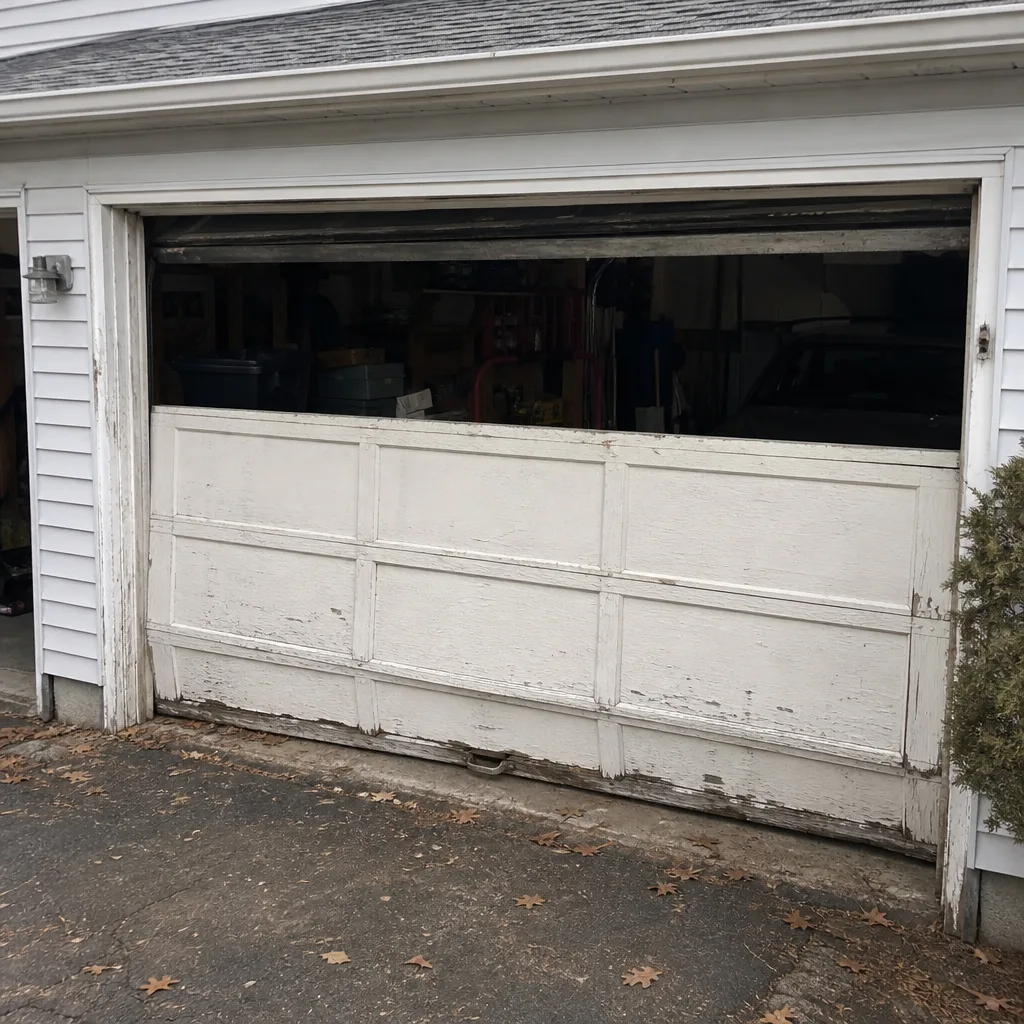 Before
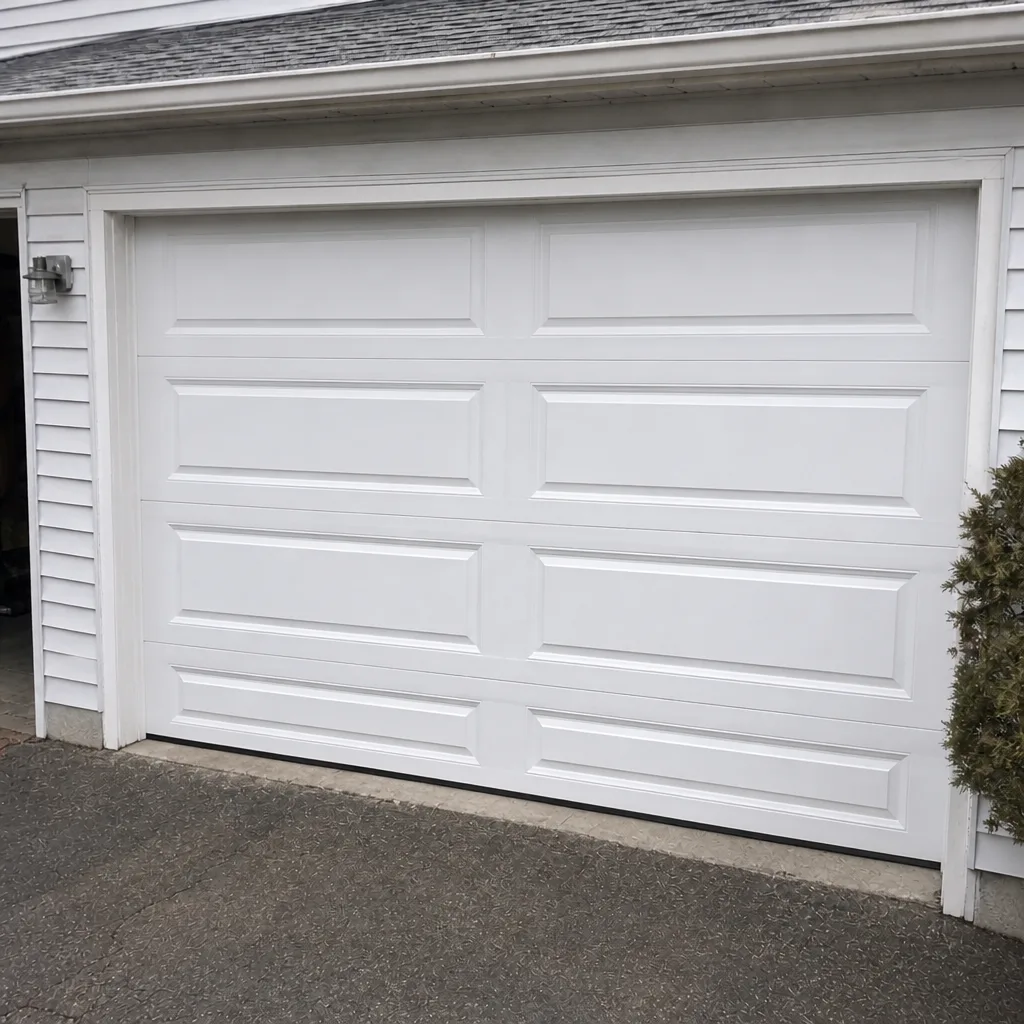 After
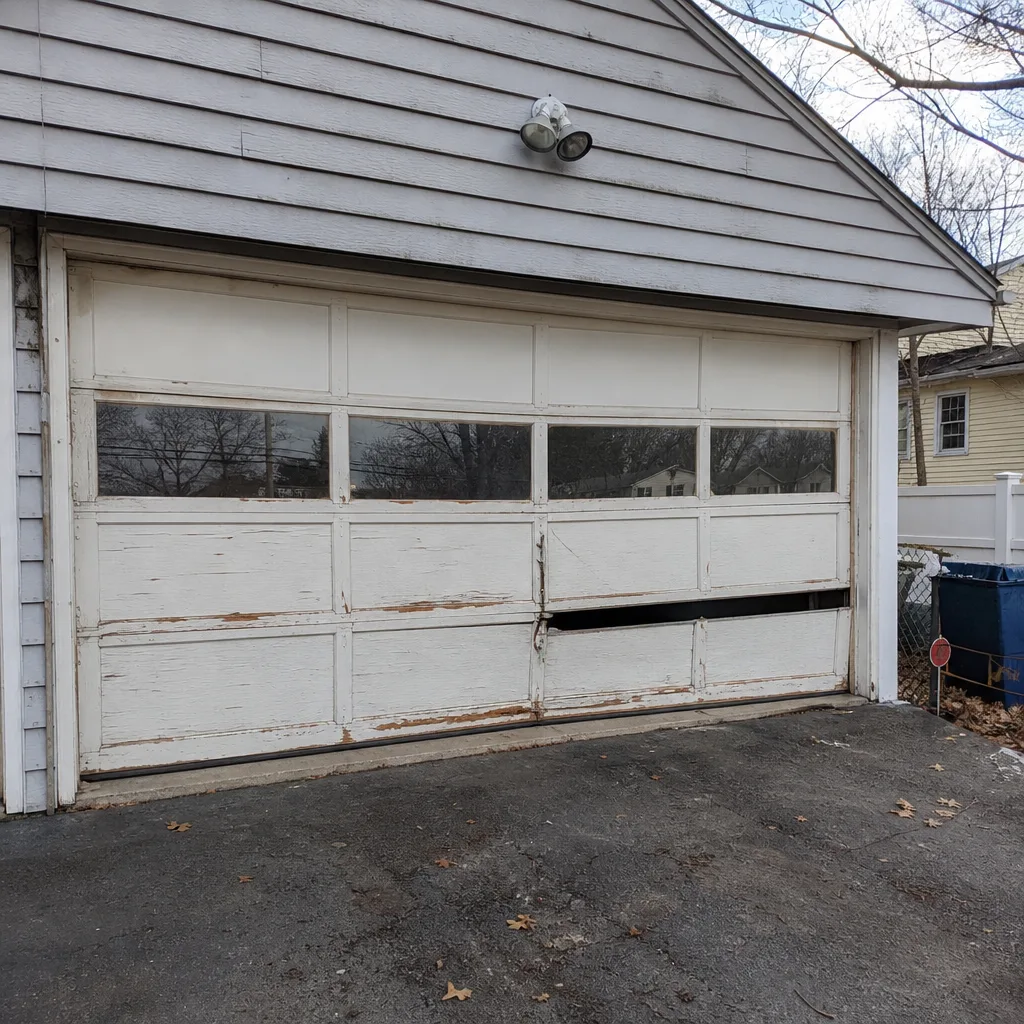 Before
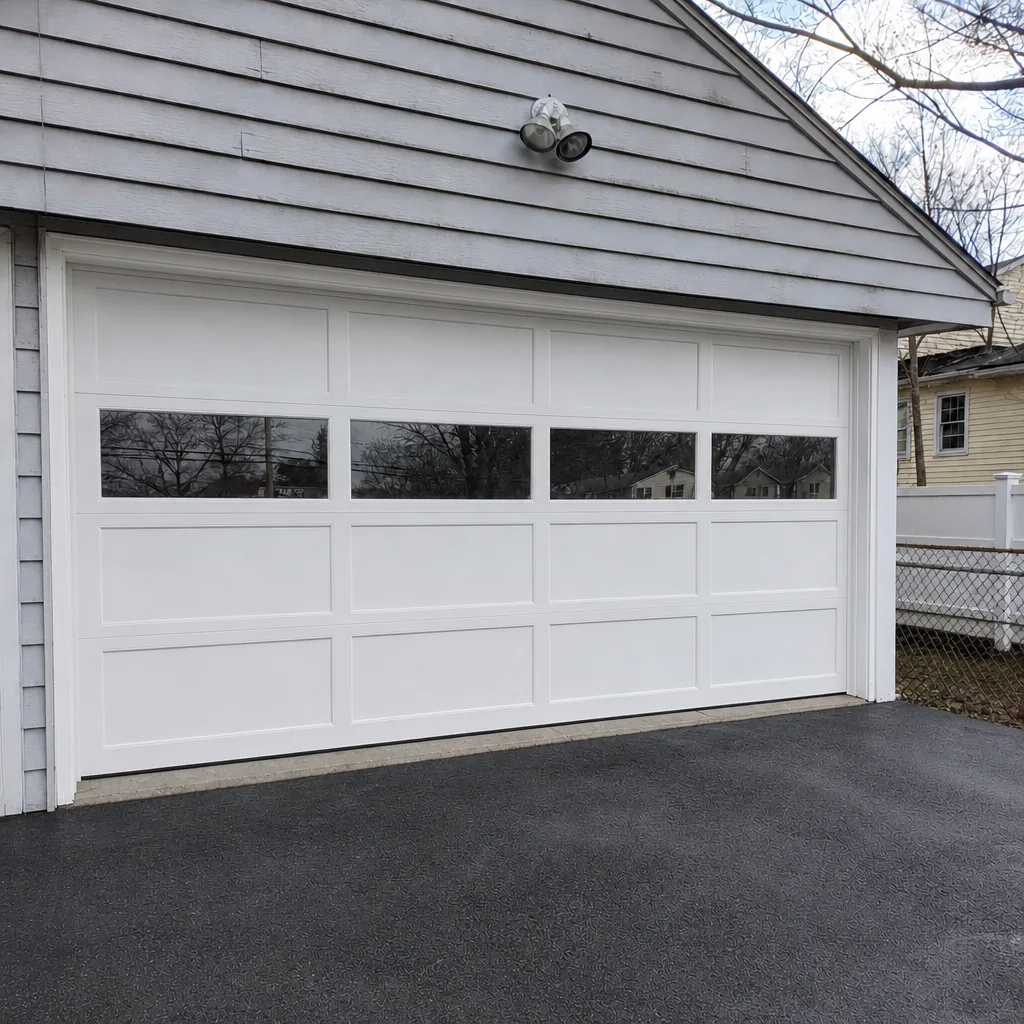 After
When to Call a Professional
You should call a technician the moment any of these appear: a visible gap or stretched appearance in a spring, a broken or frayed cable, a door that won’t balance when you lift it halfway, a door that’s off its track, an opener that reverses mid-travel or grinds, or noise that started suddenly. Those are the symptoms the monthly check is designed to catch. If a door fails and a car is trapped or the house is unsecured, that’s an emergency call – back in operation today is the standard we hold ourselves to for that kind of failure. For everything else, the smart play is a scheduled inspection to confirm what’s due and what can wait. Meriden Garage Door Repair Pros offers free estimates in Meriden – call (855) 294-4551. We answer 24/7. Fast dispatch from 7am to 7pm, Sunday through Friday.
Frequently Asked Questions
Twice a year for a full lubrication and balance pass, plus a five-minute visual check once a month. A formal technician inspection once a year covers the wear-parts assessment that matters most. Households running more than 2,000 cycles a year should shorten the check intervals. Call (855) 294-4551 for an exact quote on a scheduled inspection – estimates are free.
Roughly 10,000 cycles for torsion springs, similar for extension springs. At an average 1,500 cycles a year that’s about seven years; at 2,000 cycles it’s nearer five. The cycle life is the number that matters, not the calendar. If your door’s balance test fails or a spring looks stretched, call (855) 294-4551.
Yes – lubrication is one of the safest DIY tasks on the door. Use a purpose-made garage-door lubricant or white lithium grease on springs, hinges, and opener drive, not classic WD-40. Leave the tracks dry. If you’d rather not get into the specifics, a technician can do the full lubrication pass and check balance and safety reverse at the same time. Call (855) 294-4551.
No. Torsion and extension springs are under extreme tension and can release enough energy to cause serious injury. Springs are the most dangerous part of your garage door system, and professional spring work is not a DIY task. Our spring repair is handled as a safety-critical specialty, not a general repair line item. Call (855) 294-4551 for a free estimate.
A household running 2,000 or more cycles a year should do the monthly check without skips, the October and late-spring lubrication passes, and plan for spring replacement closer to the five-year mark than seven. The calendar stays the same; the check intervals tighten. Call (855) 294-4551 to talk through your specific door.
No – the price is quoted and agreed before any work starts, and the written estimate sets the final number. A free inspection confirms what’s due, and anything beyond the agreed scope gets your approval first. Call (855) 294-4551 for an exact quote.
The Bottom Line
The right schedule for your garage door isn’t a monthly ritual, and it isn’t a set-it-and-forget-it either. It’s a five-minute monthly look, a two-pass lubrication routine timed to the Connecticut freeze-thaw cycle, and planned replacement of parts with predictable lifespans. Track your cycles, run the October balance test, and never touch the springs yourself. Do those three things and most failures arrive as scheduled maintenance instead of a cold-weather emergency with a car trapped inside. We work on the brand you already have, from opener remote to full door replacement – Meriden Garage Door Repair Pros is at (855) 294-4551. We answer 24/7. Fast dispatch from 7am to 7pm, Sunday through Friday.
Written by the team at Meriden Garage Door Repair Pros.