
Last updated November 21, 2026
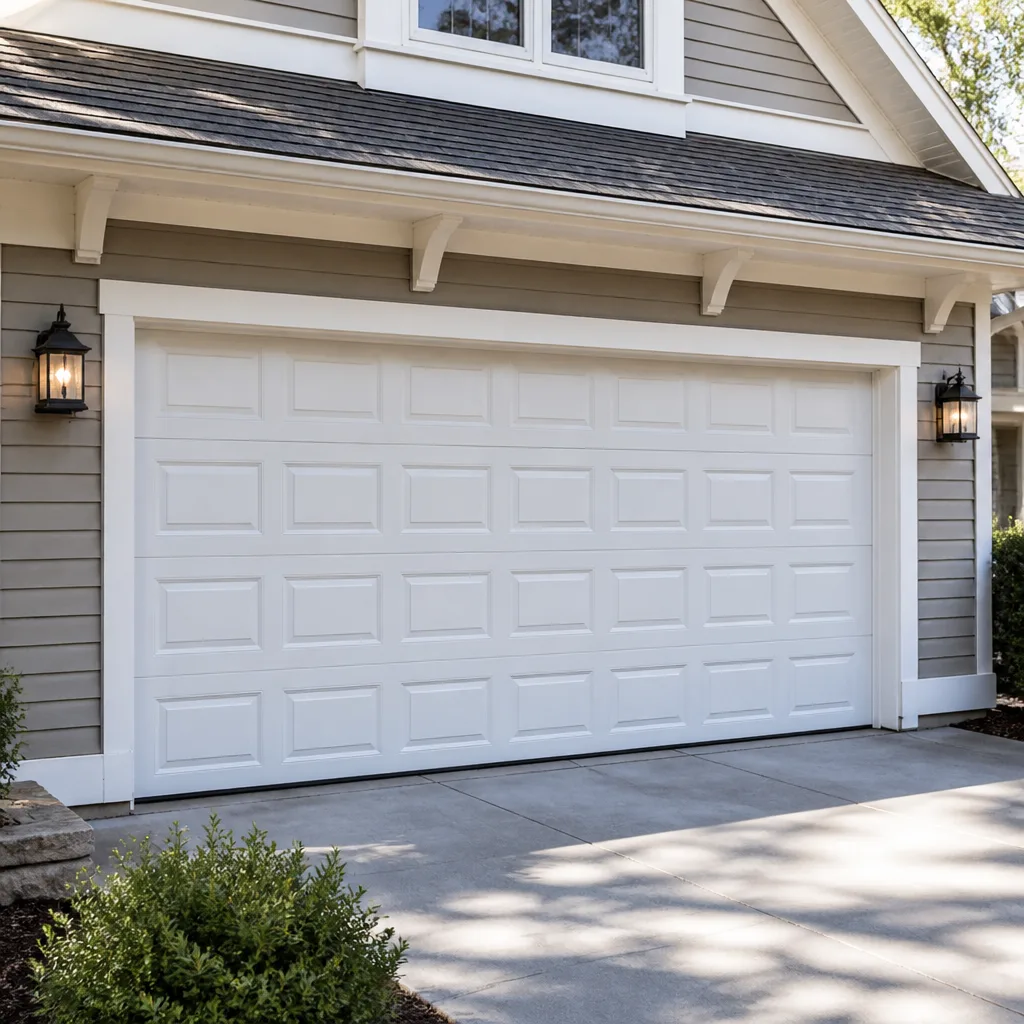 Raised-panel steel
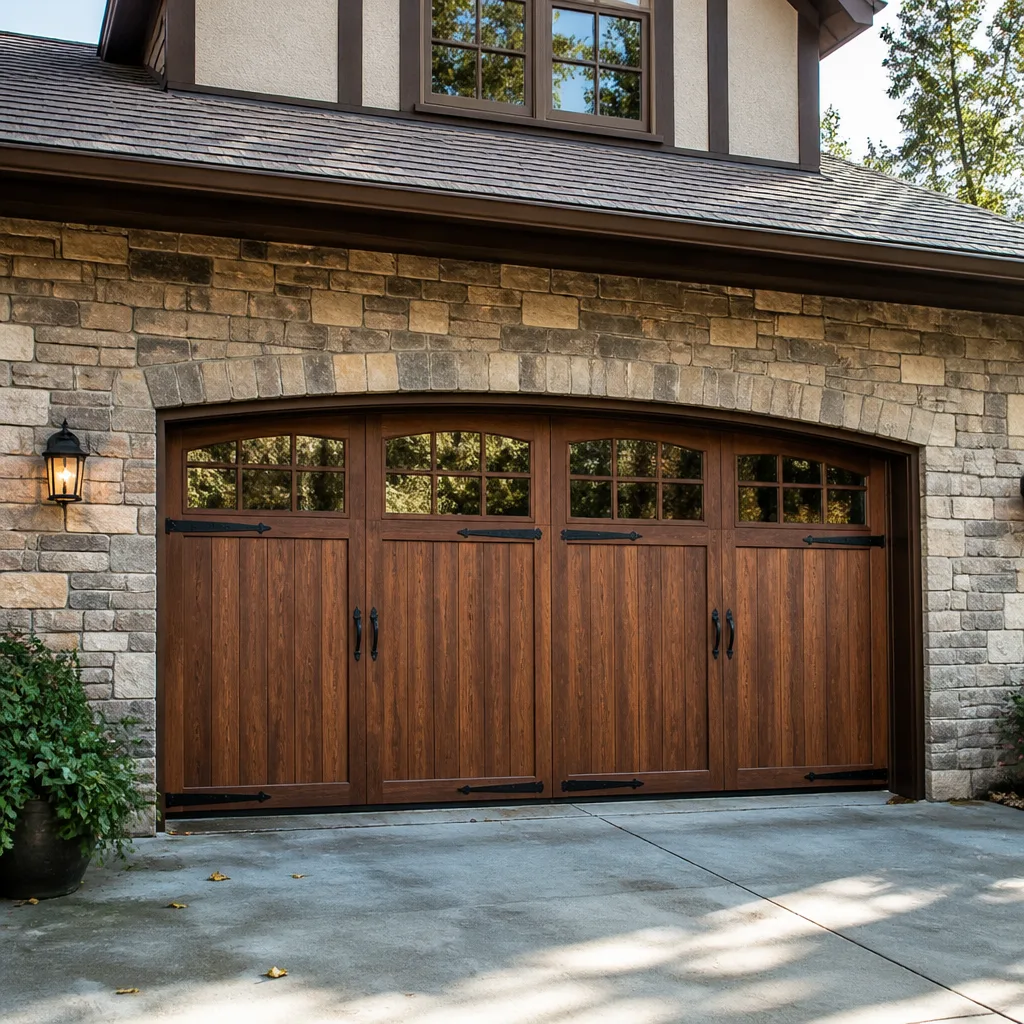 Carriage house
 Modern flush
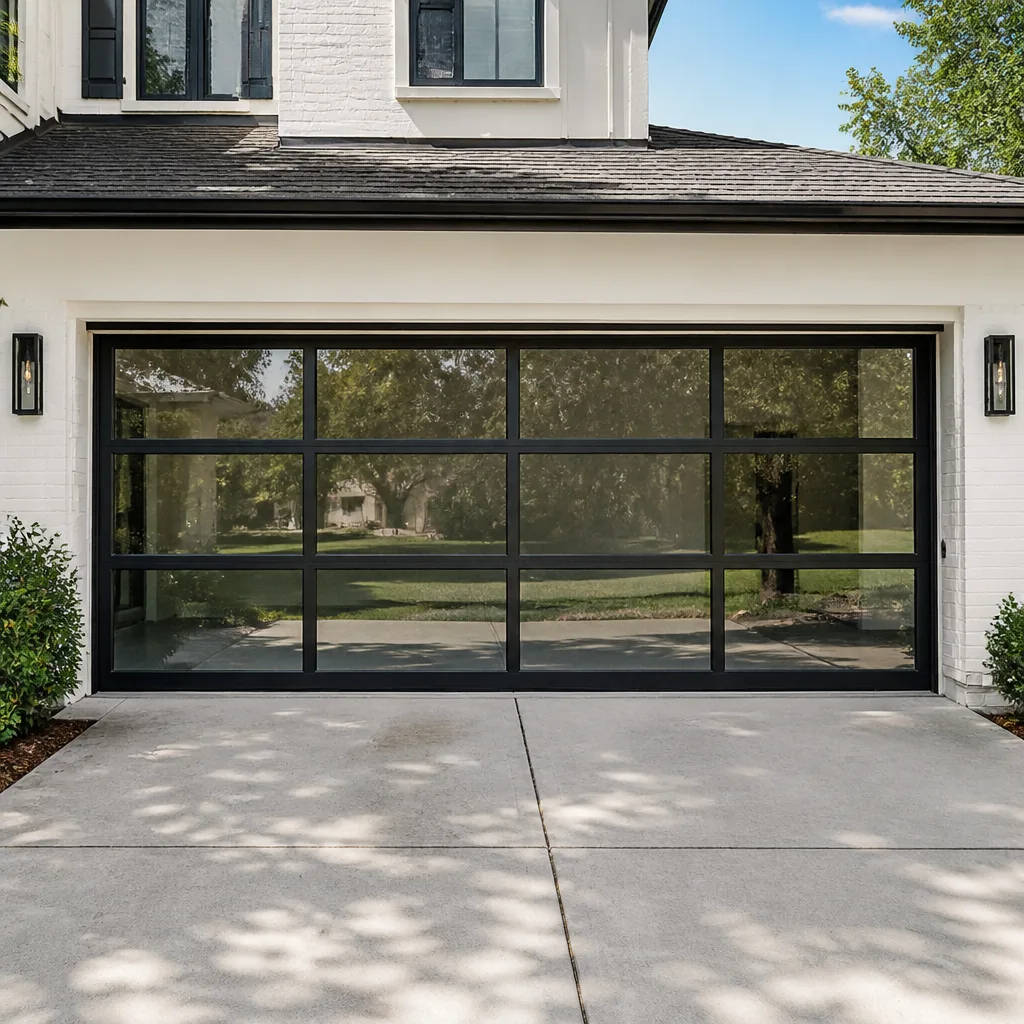 Full-view glass
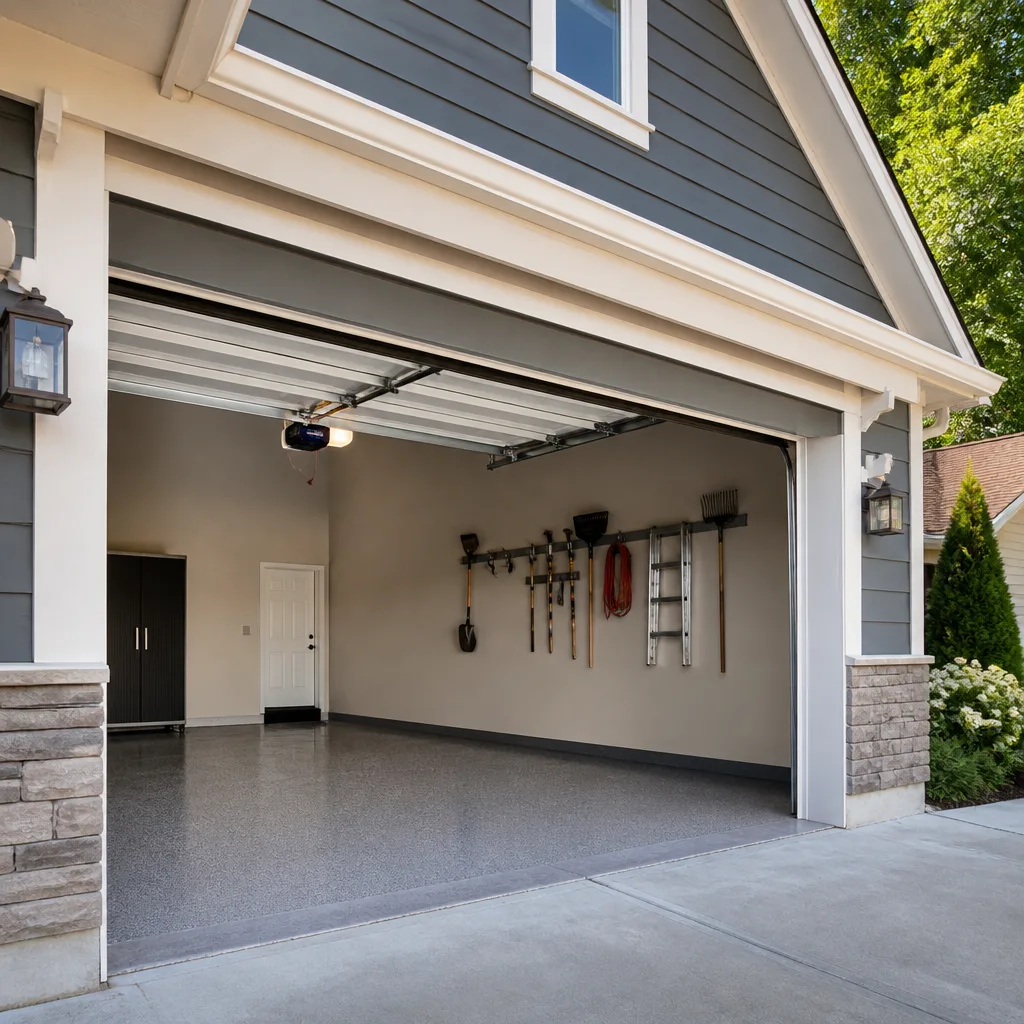 LiftMaster openers
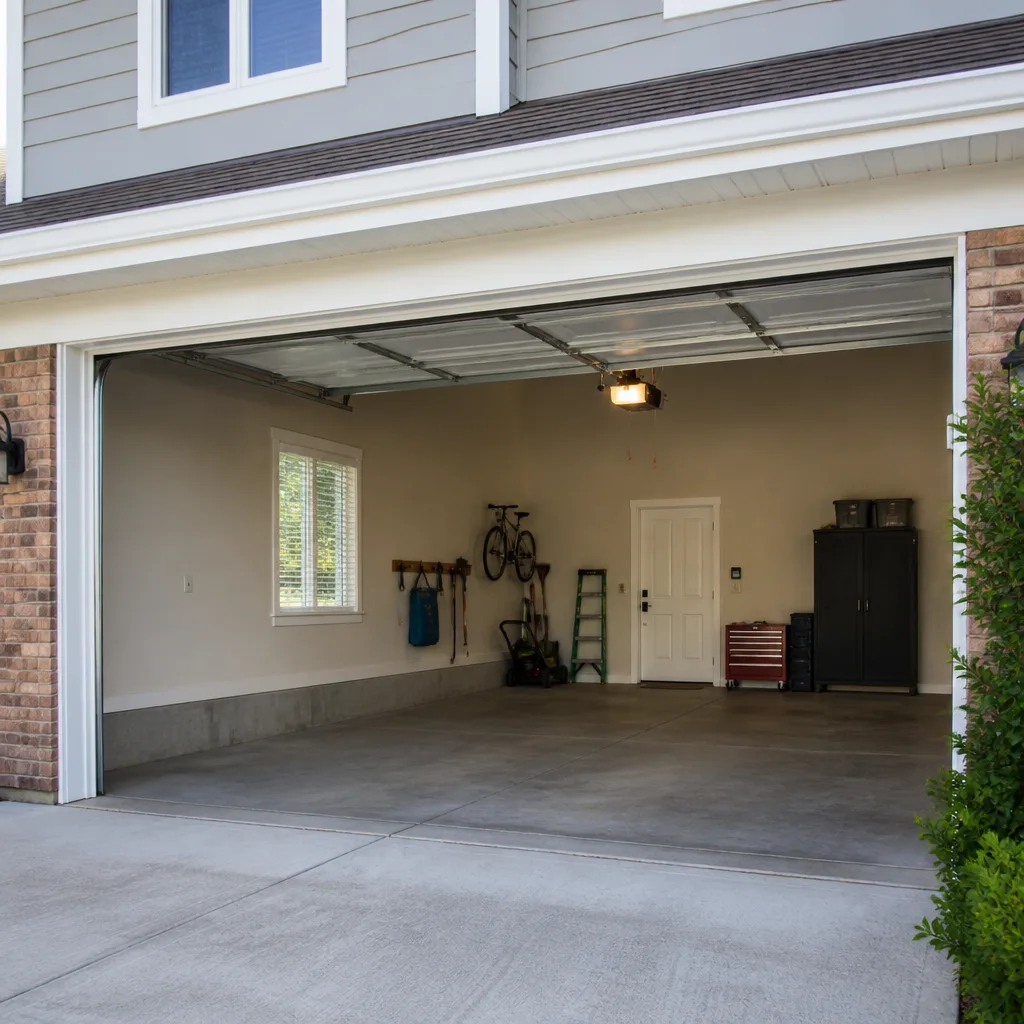 Chamberlain openers
Full 25-point door and opener safety check with every visit - springs, cables, rollers, tracks, and your LiftMaster or Chamberlain opener included
You get a price before we start. It does not change when the pro arrives.
Get your free estimateGarage Door Permits, Codes & Inspections in Meriden, CT: What You Need to Know
Most homeowners assume a garage door replacement is a simple swap, no different from buying a new appliance. It isn’t always. In Meriden, replacing a door can involve the State Building Code, a permit application, and a physical inspection of the opening itself. What surprises people more is why inspectors look so closely: they’re checking the header, the framing, and the load path above the door, not the panels you just bought. A door installed without that check leaves a gap in your home’s improvement record that tends to surface during a sale. This guide covers when a permit is required in Meriden, what an inspector actually examines, how the process works, and how to fix an unpermitted replacement left by a previous owner.
Quick Answer
A straight like-for-like garage door replacement in Meriden usually does not require a permit, but any change to the opening size, the header, the framing, or the addition of a new automatic opener circuit can trigger one under Connecticut’s State Building Code. When a permit is required, the work is inspected before it’s closed up, and the signed-off record protects you at resale. If you’re unsure which category your project falls into, ask the City of Meriden’s building department directly before ordering a door.
Styles & brands we work with
- Raised-panel steel
- Carriage house
- Modern flush
- Full-view glass
- LiftMaster openers
- Chamberlain openers
Table of Contents
- When does a garage door project need a permit in Meriden?
- What counts as ordinary repair under Connecticut code?
- What does a building inspector check during a garage door inspection?
- How do you pull a garage door permit in Meriden?
- Fire-rated door requirements for attached garages
- What to do if a previous owner’s replacement was unpermitted
- Common mistakes to avoid
- When to call a professional
When Does a Garage Door Project Need a Permit in Meriden?
Permits are triggered by structural change, not by the act of replacing a door. That distinction matters more than most homeowners realize, because it’s the difference between a one-day job and a project that waits on an inspection. In Meriden, the question comes down to whether your new door fits the existing opening exactly, or whether the opening itself has to change.
A permit is typically required when:
- The rough opening is being enlarged or reduced to fit a different door size.
- The header above the opening is being modified, reinforced, or replaced.
- Framing, jack studs, or the wall structure around the opening is being altered.
- A new electrical circuit is being run for a garage door opener where none existed before.
- The door is part of a structural change to the garage, such as converting it to living space or adding a new opening to an existing wall.
Projects that usually don’t require a permit include a same-size door replacement on the existing track and hardware, replacing a torsion or extension spring, swapping out an opener on the existing circuit, and routine repairs to rollers, cables, hinges, or panels. These fall under ordinary repair, which is treated differently under Connecticut’s residential code. If you’re replacing a LiftMaster or Chamberlain opener with a newer model on the same wiring, that’s normally repair territory. If you’re adding a new circuit to power a door where the garage had none, expect the electrical work to be permitted separately.
Meriden’s housing stock is a big part of why this question comes up so often. The city has a deep bench of mid-century capes and ranches, especially in neighborhoods around the Westfield and Center sections, and garages from that era often have openings that don’t match modern standard door sizes. When a homeowner wants to move from an older single-wide door to a wider modern door, the opening has to change, and that’s the point where a permit enters the picture. The same is true in the East Meriden and South Meriden areas, where postwar homes frequently have shallow garages that require header work before a heavier insulated door can go in.
Connecticut’s climate matters here too. Meriden winters bring repeated freeze-thaw cycles, and garage doors on north-facing walls take the brunt of it. That wear is one more reason older doors get replaced, and it’s also a reason the framing around the opening deserves a look before a new door is hung. If a technician finds rot in the header or the jamb while measuring, the job can move from repair to structural work quickly, and that’s a permit conversation.
What Counts as Ordinary Repair Under Connecticut Code?
Ordinary repair is the category that keeps most garage door work permit-free. The principle is simple: if you’re restoring a component to its original condition without changing the structure, the size of the opening, or adding new systems, it’s maintenance. If you’re changing what’s built, it’s construction.
Here’s how the split usually looks in practice:
- Spring replacement: ordinary repair. Torsion and extension springs are wear items and are replaced on the existing hardware. This is also the most dangerous job on the door, which is why we treat it as a safety-critical service rather than a routine line item.
- Cable, roller, and hinge replacement: ordinary repair. Cables in particular are under extreme tension and should never be handled by a homeowner.
- Opener replacement on existing wiring: ordinary repair. Going from an older Craftsman chain drive to a modern belt drive with smart-home features is a swap, not new construction, as long as the circuit stays put.
- Panel replacement: ordinary repair, unless the panel change alters the door’s structural rating or the opening’s dimensions.
- Full door replacement at the same size: a gray area that depends on the scope. Many jurisdictions treat a same-size replacement as repair. Some require a permit when the new door is significantly heavier and the track, springs, and anchoring all change.
- Opening size change or header work: permit territory. This is structural, and it’s the category that gets flagged at resale.
In our experience, the gray-area cases are where homeowners get into trouble. A homeowner replaces a light aluminum door with a heavily insulated Raynor model, upgrades the track, swaps the springs, and re-anchors everything to the framing. On paper this is a same-size replacement. In practice the load on the header and the anchoring pattern have changed, and that’s exactly the kind of work an inspector wants to see. During a Meriden sale, a buyer’s inspector may notice new anchoring or fresh stucco around the opening and ask for documentation. If there isn’t any, the conversation gets uncomfortable.
The safest rule of thumb: if the new door weighs noticeably more than the old one, changes the opening size, or requires different anchoring or track, call the City of Meriden’s building department and ask. A short phone call now is easier than a resale problem later. And if the work is a genuine repair on an existing system, ask your technician to note the scope on the invoice so the record is clear.
What Does a Building Inspector Check During a Garage Door Inspection?
The inspection is not a review of the door’s appearance. It’s a review of how the door is attached to your house and whether the structure around it can carry the load. Inspectors care about the building, not the brand, which is why a poorly anchored LiftMaster-equipped door and a well-anchored Craftsman-equipped door are judged by the same standard.
Here’s what gets checked, in roughly the order an inspector moves through it:
- The header above the opening. This is the beam that carries the wall load over the garage door opening. The inspector checks its size, condition, and whether it was modified. If a new, heavier door was hung without verifying the header, this is where the inspection fails.
- Jack studs and king studs. These are the vertical members that support the header on each side. The inspector verifies they’re intact, properly fastened, and not cut or notched to make a new door fit.
- The rough opening dimensions. The opening needs to match the door’s specified size with the right clearances. A door forced into an undersized opening puts stress on the track and springs from day one.
- Track and anchorage. The inspector looks at how the vertical and horizontal track is fastened to the framing, and whether the fasteners are appropriate for the substrate. Anchoring a heavy door into unsupported drywall or thin sheathing is a common failure.
- The spring and counterbalance system. The inspector is checking for correct installation and safe containment. This is the part of the door most likely to injure someone if it fails, and it’s also the part that the inspector will look at skeptically if the installation doesn’t match the door manufacturer’s instructions.
- Fire separation for attached garages. For an attached garage, the inspector verifies that the wall and door between the garage and the living space maintain the required separation. This is where the fire-rated door requirement comes in, and it’s covered in more detail below.
- Electrical for the opener. If new wiring was part of the scope, the inspector verifies it’s in the right conduit, on the right circuit, and properly grounded.
What most homeowners don’t realize is how much of this the inspector can see in a few minutes. Fresh paint around the jamb, new anchors in the header, a door that’s heavier than the original tracking – these details tell a story. If the story doesn’t match the permit, the inspector will ask questions, and the answers determine whether the job gets signed off or needs to be corrected.
How Do You Pull a Garage Door Permit in Meriden?
The process is more straightforward than most people expect. The City of Meriden’s building department reviews applications and issues permits for work that falls within its scope. The sequence below is the standard path for a garage door project that triggers a permit.
- Confirm the scope with the building department. Call the City of Meriden’s building department before ordering anything. Describe exactly what’s changing – the opening size, the header, the framing, the electrical. Ask whether the scope requires a permit and what documentation they’ll want with the application.
- Gather the project documentation. You’ll typically need the door manufacturer’s specification sheet, the installation instructions, the door’s weight and size, and a drawing or photo of the existing opening with the proposed changes marked. If the header is being altered, you’ll also need framing details from the contractor handling that work.
- Submit the application. The contractor handling the permit pulls it in their name, or the homeowner pulls it as the property owner. For a project that touches the structure, we recommend using a licensed professional who can supply the documentation the department needs.
- Pay the permit fee and wait for review. Fees depend on the scope of the work, and the department sets them. Review time varies, so plan the door order around the permit rather than the other way around.
- Schedule the inspection. When the work is complete, the inspection has to happen before the job is closed out. This is the step that most homeowners forget, and it’s the step that matters most at resale – an open permit on a property is a red flag for a buyer’s attorney.
- Keep the sign-off. The final inspection record belongs with your home’s documents alongside the manufacturer’s warranty paperwork. If you sell the home, you’ll be asked for it.
For a straight installation where the opening is unchanged, the process is easier and the paperwork lighter. If you’re replacing an existing door and keeping the same size, we’d still recommend asking the department about documentation. The cost of asking is a phone call. The cost of finding out at resale that the work wasn’t recorded is much higher.
Meriden’s permit timeline varies with the season more than people expect. Spring and early summer are the busiest months for exterior projects, so a garage door permit submitted in April may take longer to review than one submitted in February. If you’re planning a replacement that involves structural change, build that window into your schedule early. If the work is a genuine repair, our garage door repair team can usually handle it without a permit and without that wait.
Fire-Rated Door Requirements for Attached Garages
If your garage is attached to your home, the door between the garage and the house is a fire separation, not just a door. Connecticut’s residential code requires separation between an attached garage and the living space, and that separation includes the door assembly – its rating, its self-closing hardware, and the wall around it. This is one of the most commonly missed requirements in garage door work, and it’s also one of the most consequential.
Here’s the short version of what the requirement means in practice:
- The door between the garage and the house must carry the appropriate fire rating for that separation. A standard door swap that replaces a fire-rated door with a non-rated one violates the code, even if the new door is prettier and heavier.
- The door needs self-closing hardware so it returns to the closed position on its own. That hardware has to be properly installed and adjusted, not just present.
- The wall between the garage and the house has to maintain its separation rating around the door opening, including the framing and any penetrations.
- Any new opening between the garage and the living space – a service door, a pass-through, or a conversion – brings the entire separation into play and requires a permit.
Why does this get missed? Because most homeowner conversations about garage doors are about the big overhead door, not the service door between the garage and the kitchen. A homeowner buys a beautiful new insulated overhead door and asks the install team to swap the interior door at the same time because it looks tired. That swap, if the replacement isn’t fire-rated and self-closing, can undo a code-compliant separation and create a real safety problem.
In our experience, the fix is easier than it sounds. When you’re planning a garage door replacement on a Meriden home with an attached garage, tell your contractor up front that the service door is part of the scope. They can either source a fire-rated replacement with the right self-closing hardware or leave the existing door alone. Either choice is fine. What’s not fine is a well-installed overhead door and a non-rated interior door on the same job.
What to Do If a Previous Owner’s Replacement Was Unpermitted
Discovery usually happens in one of two ways: a home inspector flags something during a sale, or a contractor working on a different project notices signs of an unrecorded installation. Either way, the fix is more manageable than the discovery feels.
Work through these steps in order:
- Don’t panic – and don’t assume the news is bad. An unpermitted garage door replacement is often functionally fine. The problem is the record, not the door itself. Plenty of doors installed without permits are hanging correctly and safely.
- Find out what was actually done. Look at the door and track for manufacturer labels, model numbers, and installation dates. Check the spring system. Look at the anchoring and the header. A contractor can tell you in a short visit whether the installation was done to standard or whether the structural work needs attention.
- Call the City of Meriden’s building department. Ask them what’s on file for the property and what they’d want to see to bring an unpermitted installation into the record. Every municipality handles this a little differently, and the department is the authority, not a contractor or an internet guide.
- Have the work assessed for code compliance. If the door was installed to code but never permitted, the fix may be as simple as an inspection and a permit application. If the header or framing was altered without inspection, a licensed professional will need to verify the structure is sound before anything is signed off.
- Correct anything that isn’t right. This is where a real assessment pays off. A door with the wrong fire-rated interior door, an undersized header, or improper anchoring needs to be brought up to standard before the inspection. This is the point where a shortcut on the original job turns into a second project.
- Get the final inspection and keep the record. A signed-off permit record is what turns a problem into a non-issue. If you ever sell the home, you’ll be asked for it, and having it removes an entire category of negotiation risk.
The real cost of the unpermitted replacement is the second visit – the contractor needs to come out, inspect the door, and potentially redo work. If the original install was clean, this can be a short visit. If a spring was undersized for a heavier door, or the header was notched to fit a wider opening, the correction is more involved. Our garage door spring repair team gets calls like this regularly: a door that worked for years suddenly sagging because the springs were never sized for the door that was actually installed.
One thing worth saying plainly: this is not a reason to hide the problem. If a homeowner’s attorney flags an open permit or an unrecorded replacement during the sale process, the deal can be held up over a piece of paper that would have taken a few weeks to resolve properly. Better to resolve it on your own schedule than on a buyer’s.
Common Mistakes to Avoid
- Skipping the building department call because a contractor said “we do this all the time.” A contractor’s experience with similar jobs doesn’t override what the City of Meriden requires for your specific property. A quick call costs nothing and settles the question.
- Assuming a heavier door is a straight swap. When a homeowner upgrades from a light aluminum door to a heavier insulated model, the springs, track, and anchoring all have to match. If the change requires different anchoring or a header upgrade, that’s a permit conversation.
- Forgetting the fire-rated interior door. If your garage is attached, the door between the garage and the house is part of the fire separation. Replacing it with a standard door removes a safety feature and creates a code violation, and that’s a common miss when the focus is on the big overhead door.
- Treating the final inspection as optional. The signed-off record is the point of pulling a permit. A project that gets inspected and signed off is done. A project that doesn’t leaves an open permit hanging over the property.
- Replacing the interior service door at the same time without checking its rating. It’s convenient to swap both doors on the same visit. It’s also how fire-rated separations get quietly downgraded on Meriden homes.
- Ignoring signs of prior unpermitted work before you sell. If you notice fresh anchoring, mismatched hardware, or a door that doesn’t match the original opening, ask about it now. The worst moment to discover an unpermitted replacement is during a buyer’s inspection.
- Trying to DIY spring or cable work to save on the permit question. Springs and cables are under extreme tension and are the most dangerous part of the system. No permit savings justify handling them without training, and the risk is real.
When to Call a Professional
Some garage door work is a genuine DIY project – a new remote, a light bulb in the opener, a wiped-down track. The rest of it isn’t. Call a professional when the door is heavy or sticking, when a spring has snapped, when the opener runs but the door doesn’t move, or when you’re considering a replacement that might change the opening size, the header, or the door weight. Call us when you’re unsure whether a permit is involved, too. We can look at the door and tell you whether the scope is a repair, a same-size replacement, or a structural change that needs the building department.
Meriden Garage Door Repair Pros offers free estimates in Meriden – call (855) 294-4551. We answer 24/7. Fast dispatch from 7am to 7pm, Sunday through Friday. Our technicians have up to 11 years of experience, and we work on the equipment you already have, from Craftsman and Raynor systems to newer LiftMaster and Chamberlain openers. If a spring has failed and your car is trapped, our spring repair team treats that as a safety-critical call, not a general repair. If the opener is the problem, our garage door opener repair specialists cover the full range of drive types and smart-home integrations.
See the difference
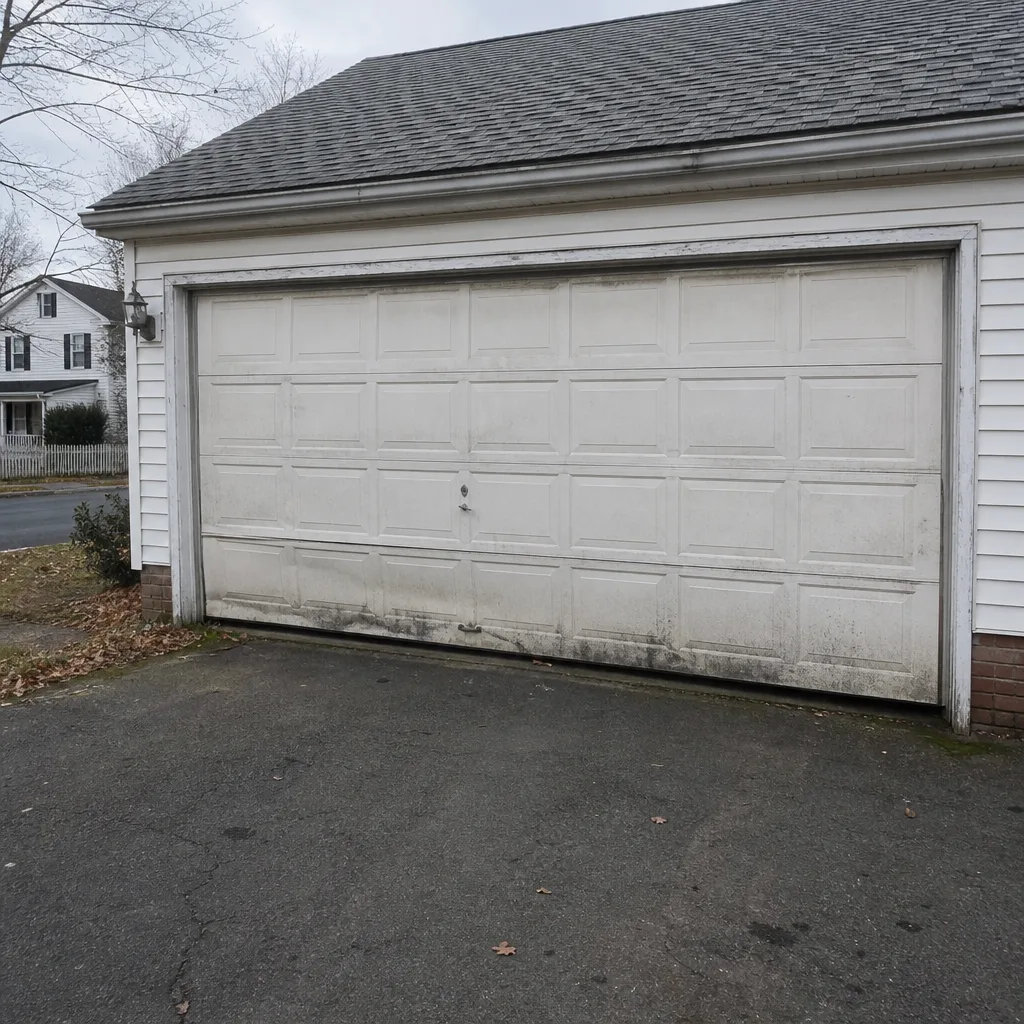 Before
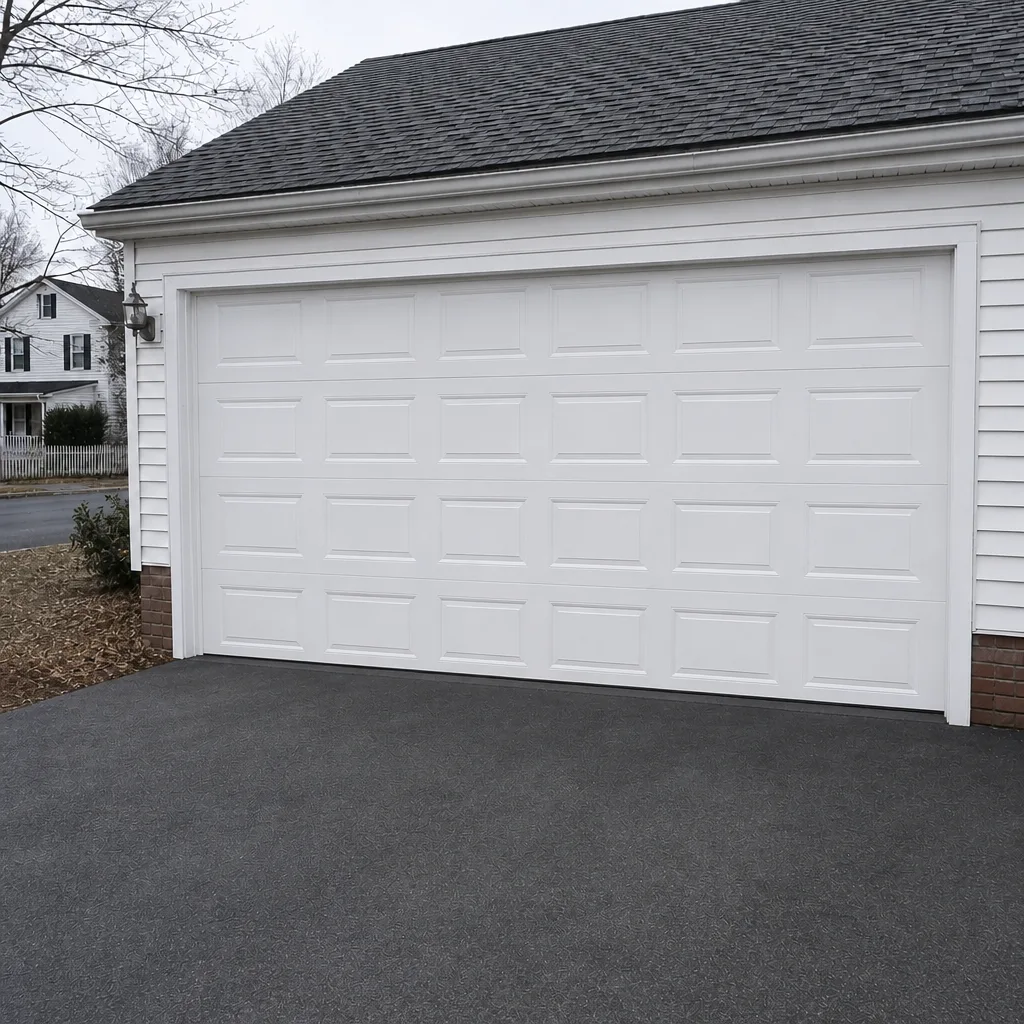 After
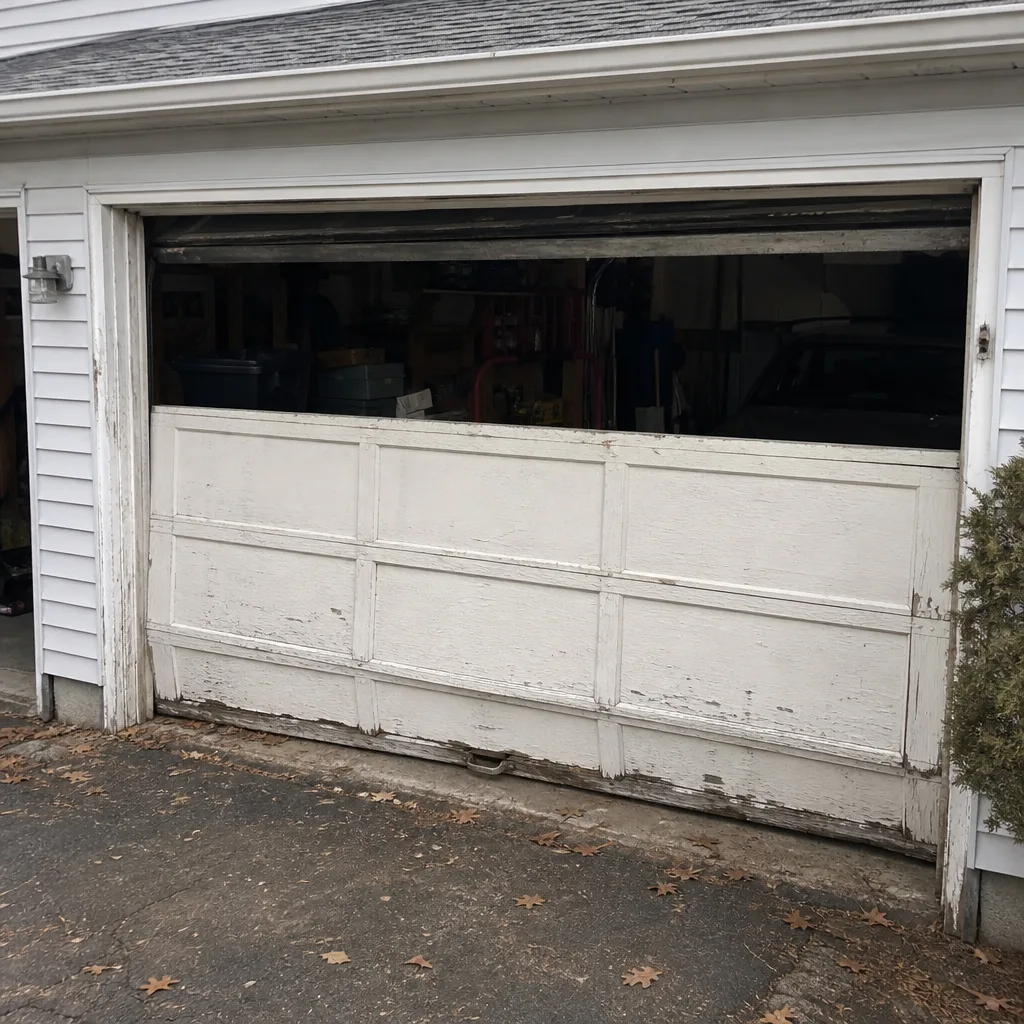 Before
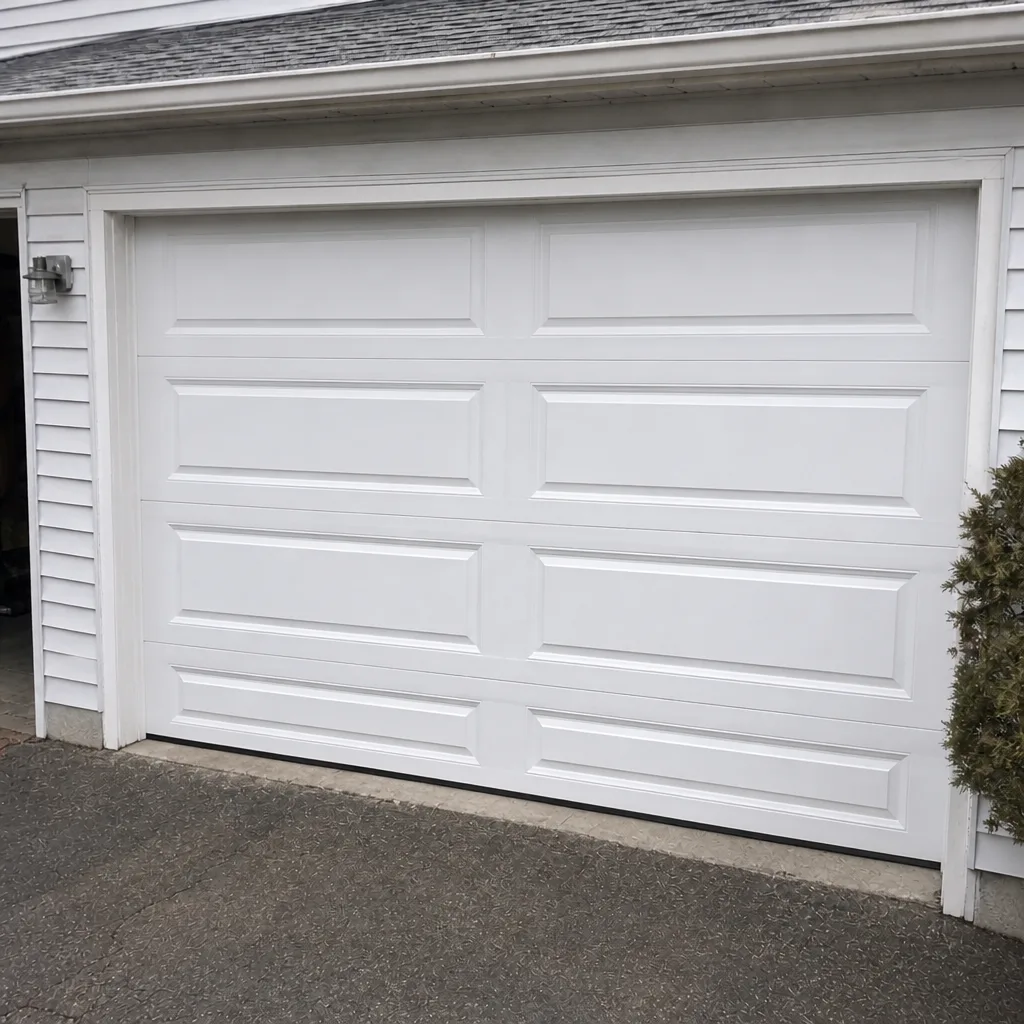 After
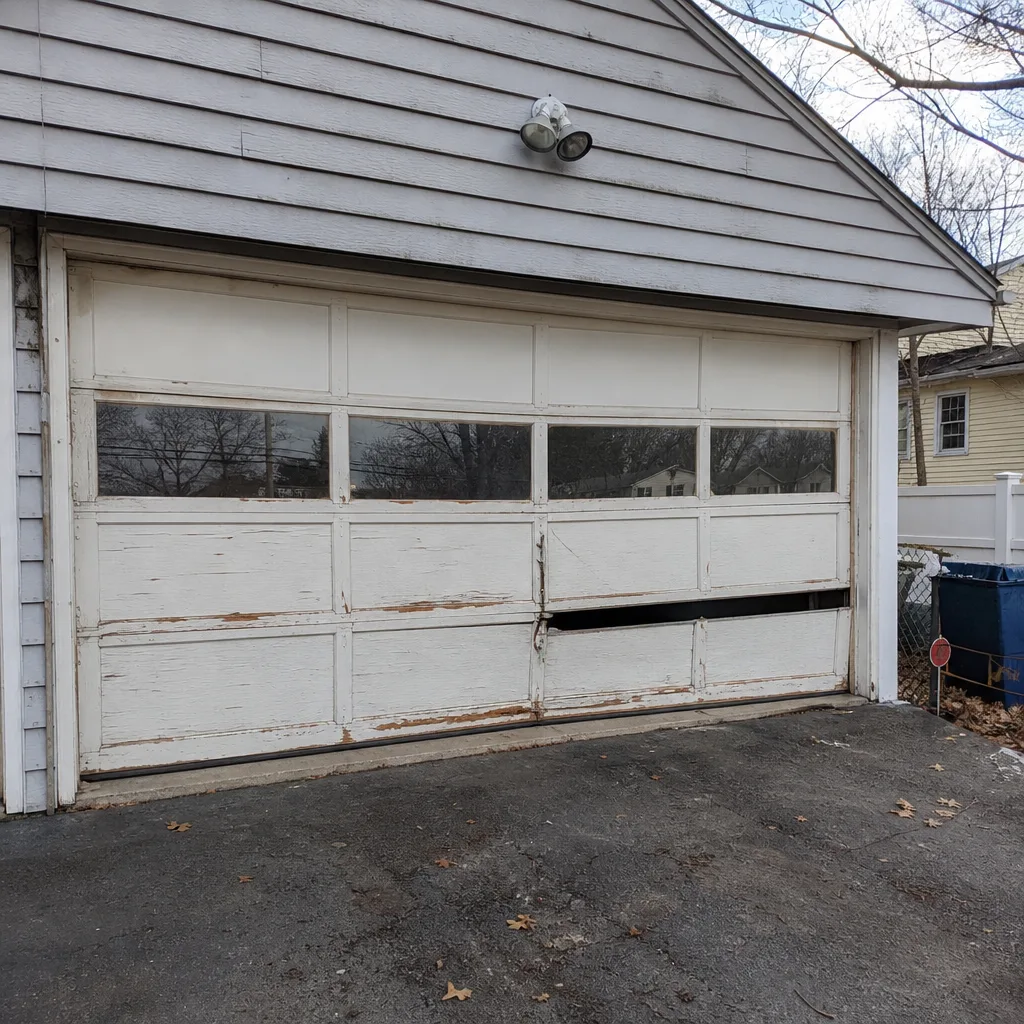 Before
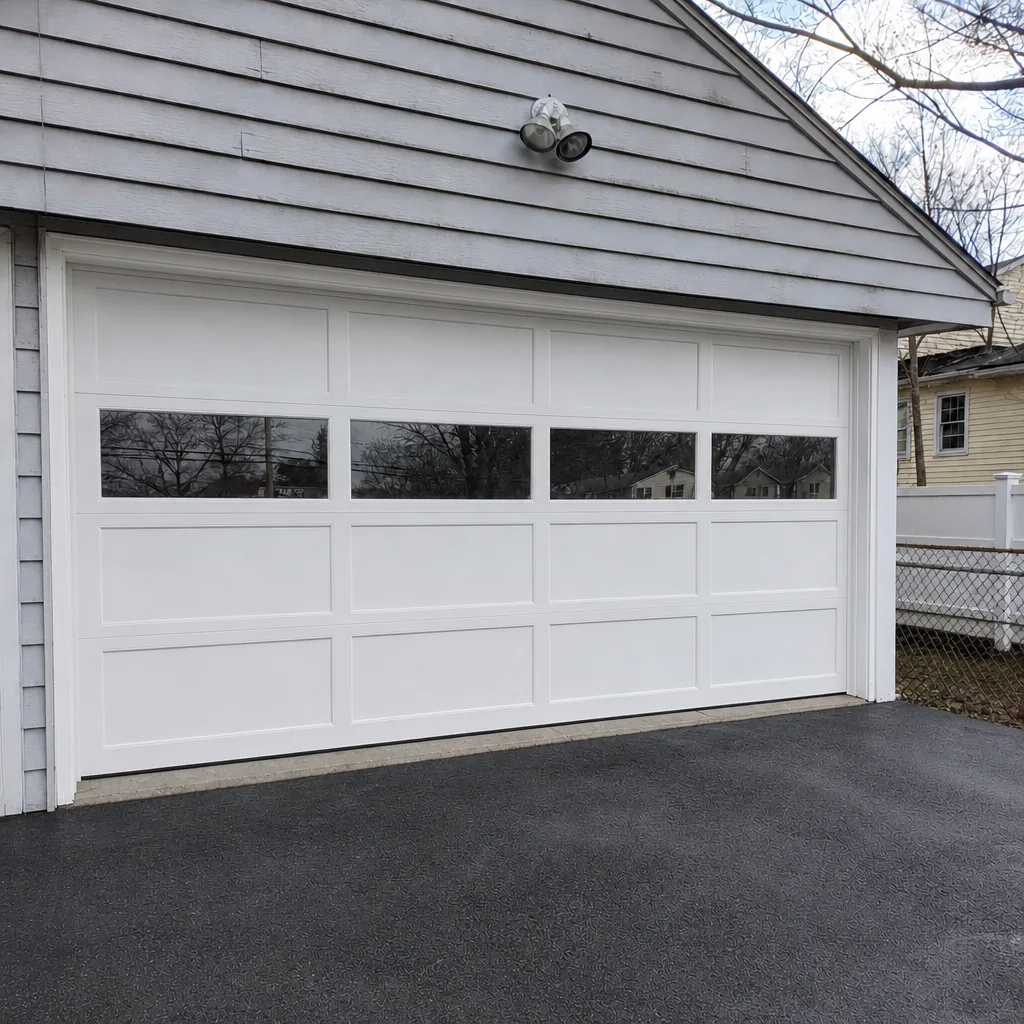 After
Frequently Asked Questions
Usually not for a same-size replacement on the existing opening, but yes if the project changes the opening size, the header, the framing, or adds new electrical work. The City of Meriden’s building department is the authority on your specific scope, so confirm with them before ordering a door. Call (855) 294-4551 for a free estimate – we can look at the job and tell you which category it falls into.
Review times vary, so ask the City of Meriden’s building department when you submit the application. Plan the door order around the permit rather than after it, especially for projects that touch the header or the framing. Spring and summer are the busiest months for exterior permits, so build in extra time if you’re working in that window.
Nothing dramatic happens on its own – the door may be perfectly fine. The problem is the missing record, which becomes a real issue at resale. Call the City of Meriden’s building department, ask what’s on file, and have a licensed professional assess whether the installation is code-compliant before you apply. Call (855) 294-4551 for a free estimate on that assessment.
Yes, Connecticut’s residential code requires fire separation between an attached garage and the living space, and that separation includes the door assembly and its self-closing hardware. If you’re replacing the interior service door at the same time as the overhead door, make sure the replacement carries the right rating. Ask the City of Meriden’s building department for the specific requirement on your property.
They look at how the door is attached to the structure and whether the structure can carry the load – the header, the framing, the anchoring, the counterbalance system, and the fire separation for an attached garage. Cosmetics aren’t the point. If the scope changed the load on the opening, that’s what the inspector will focus on.
Yes. Spring replacement, cable and roller work, and opener swaps on existing wiring are ordinary repair and don’t require a permit in Meriden. That doesn’t mean they’re safe to handle yourself – springs are the most dangerous part of the garage door system, and a failed spring can cause serious injury. Call (855) 294-4551 and we’ll handle it safely.
The Bottom Line
A garage door replacement in Meriden is often a permit-free repair, but it isn’t automatically one. The dividing line is structural change: a same-size swap on the existing opening is usually repair, while an opening size change, header work, new framing, or new electrical wiring is permit territory under Connecticut’s State Building Code. When a permit is involved, the inspection checks the header, the framing, the anchoring, and the fire separation between an attached garage and the house – not the door’s appearance. If you discover a previous owner’s replacement was unpermitted, the fix is a phone call to the building department, a professional assessment, and a final signed-off record. That record is the thing that protects you at resale. If you’re not sure which category your project is in, or if a spring has failed and the door isn’t safe, call us and we’ll look at it with you.
Written by the team at Meriden Garage Door Repair Pros.