
Last updated November 21, 2026
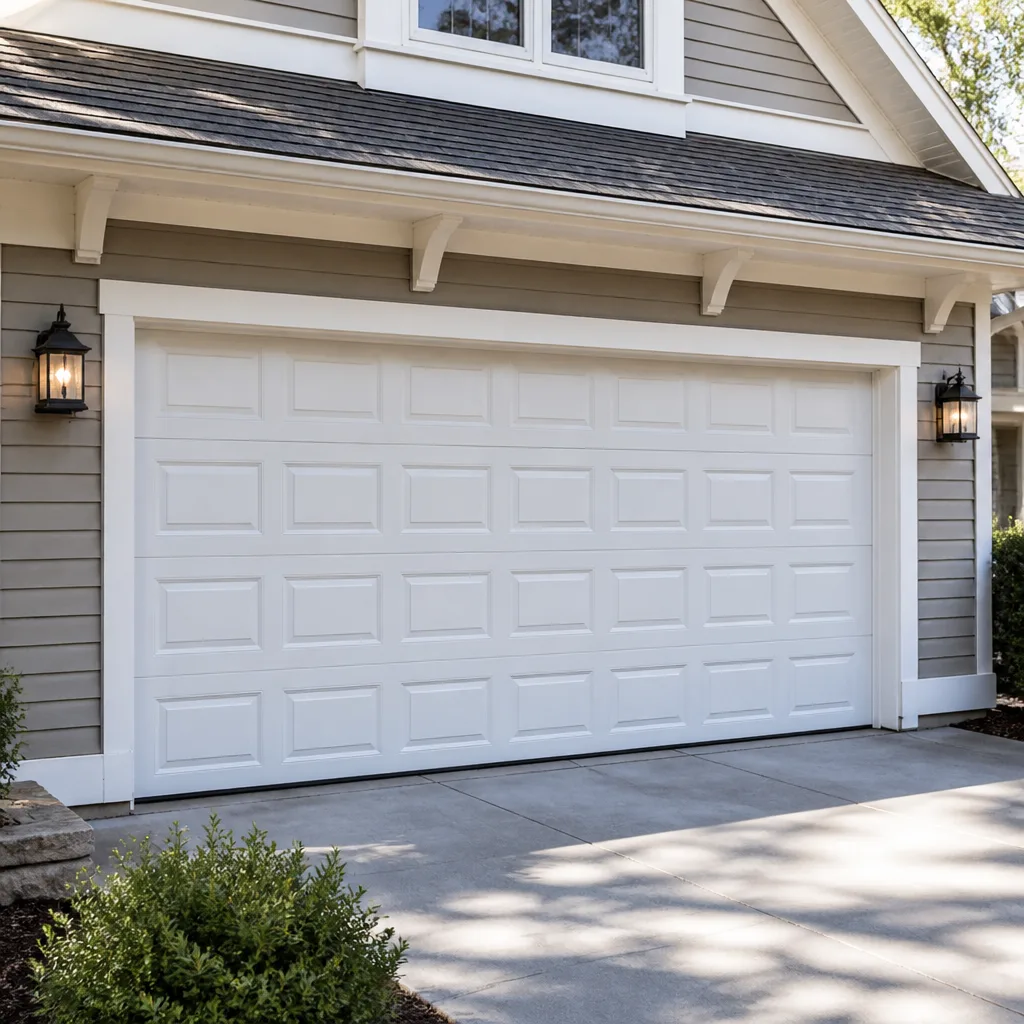 Raised-panel steel
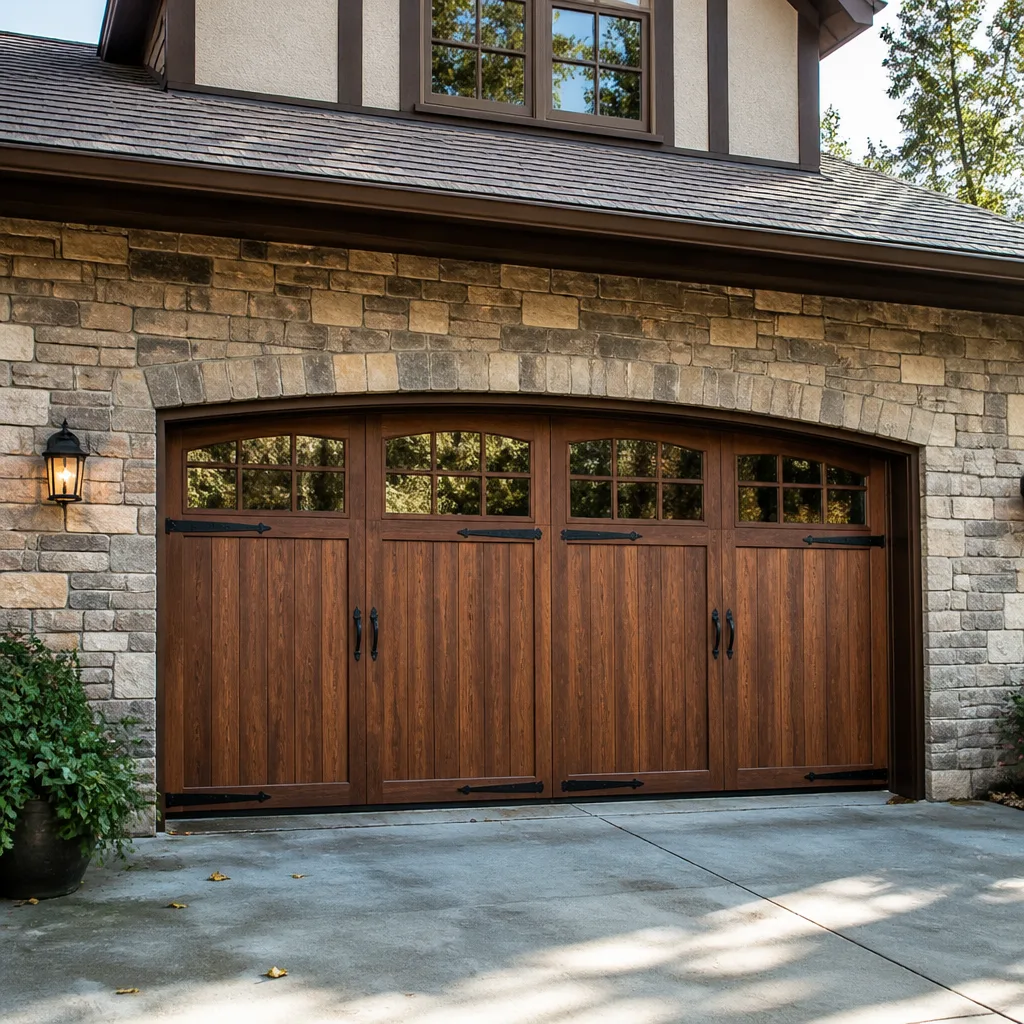 Carriage house
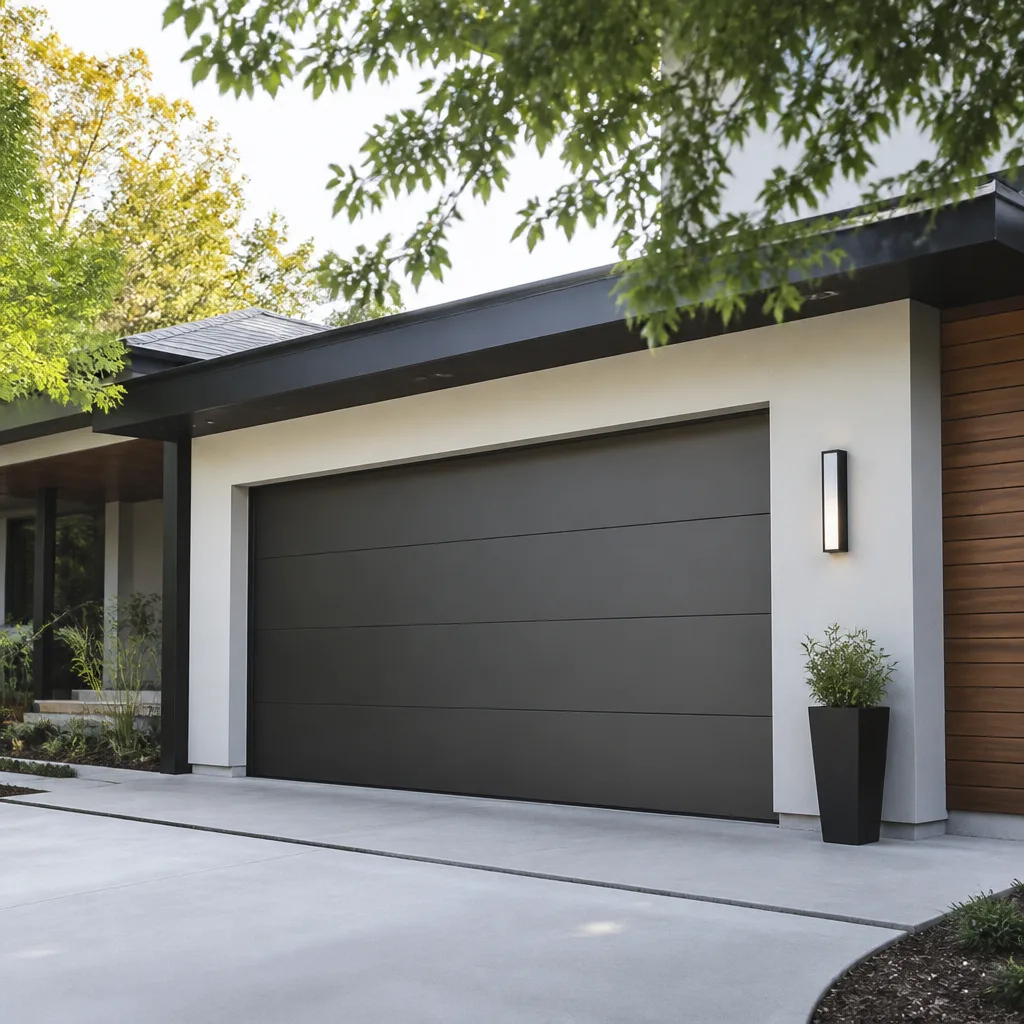 Modern flush
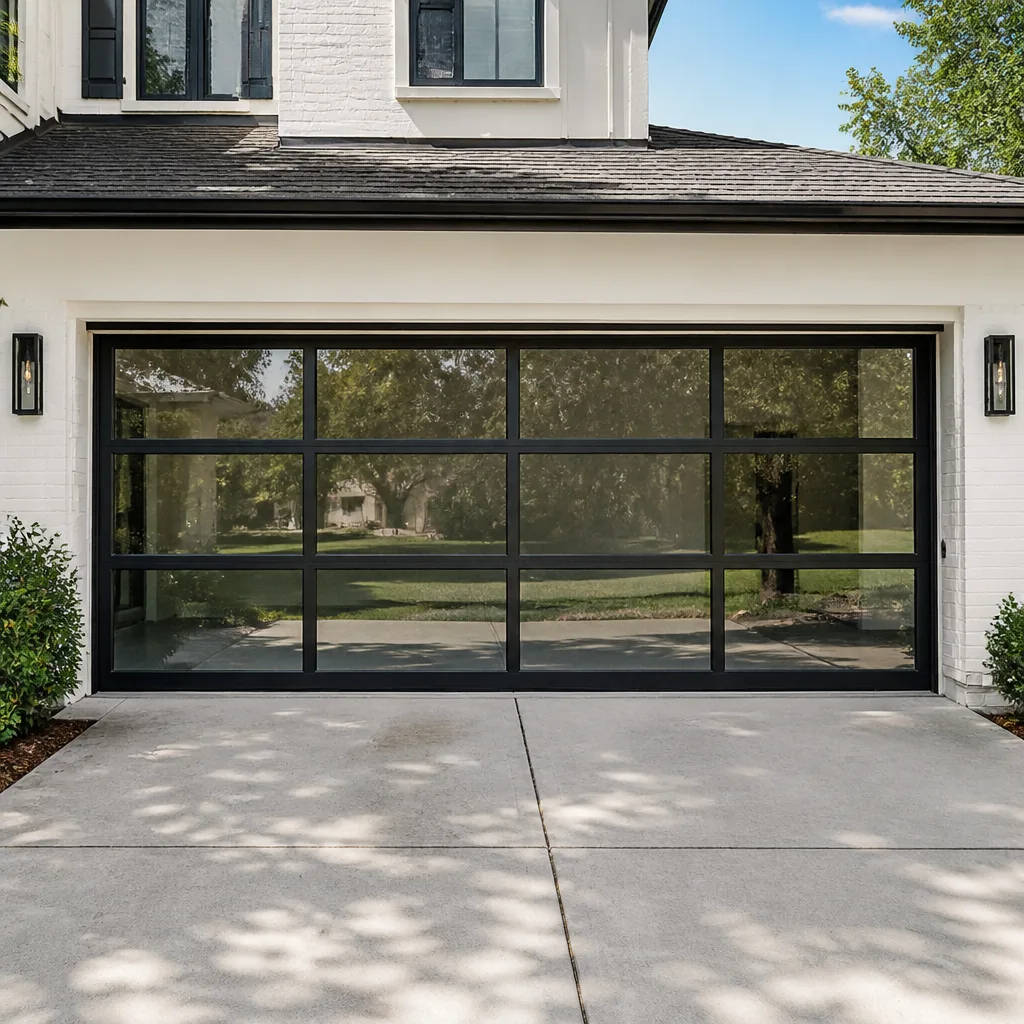 Full-view glass
 LiftMaster openers
 Chamberlain openers
Full 25-point door and opener safety check with every visit - springs, cables, rollers, tracks, and your LiftMaster or Chamberlain opener included
You get a price before we start. It does not change when the pro arrives.
Get your free estimateGarage Door Repair Troubleshooting in Meriden: Common Problems and How to Fix Them
Your garage door weighs between 130 and 400 pounds. That single fact explains why so many DIY repair attempts end badly: the door is a balanced mechanical system under real tension, and the most common mistake isn’t a lack of skill. It’s misdiagnosing which category of failure you’re dealing with before touching anything. The same “door won’t open” symptom can point to a snapped spring, a jumped cable, a bent track, a dead motor, or a misaligned safety sensor, and each one carries different risks. This guide maps symptoms to root causes for Meriden homeowners, so you know what’s safe to check yourself and what needs a technician before someone gets hurt.
Quick Answer
Most garage door problems in Meriden fall into one of five mechanical categories: springs, cables, tracks, openers, or safety sensors. A door that won’t open usually means a spring or cable failure, a door that opens unevenly usually means a track or roller issue, and a door that reverses immediately usually means a sensor or opener problem. If you hear a loud bang and the door won’t lift, stop and call a professional – that’s a spring failure, and it’s the most dangerous part of your garage door system.
Styles & brands we work with
- Raised-panel steel
- Carriage house
- Modern flush
- Full-view glass
- LiftMaster openers
- Chamberlain openers
Table of Contents
- The Five Failure Categories: Why the Same Symptom Means Different Things
- Symptom-to-Cause Map: What Your Door Is Telling You
- The Safety Gate Test: Stop Now vs. Safe to Limp Along
- What You Can Safely Check Yourself
- What Requires a Technician: Springs and Cables
- How Meriden’s Freeze-Thaw Cycles Accelerate Wear
- How to Describe Your Problem So You Get the Right Tech
- What Garage Door Repair Costs in Meriden
The Five Failure Categories: Why the Same Symptom Means Different Things
When a door stops working, homeowners tend to describe the symptom, not the cause. “It won’t open” could mean five different mechanical failures, and each one needs a different part, a different skill level, and a different urgency. Understanding the categories is the first step toward an accurate diagnosis.
The five categories are:
- Springs. Torsion springs run across the top of the door; extension springs run along the sides. Both store the energy that counterbalances the door’s weight. When a spring fails, the door becomes dangerously heavy, and the spring itself is under extreme tension.
- Cables. Steel cables connect the bottom bracket to the spring system and keep the door tracking evenly. A cable can slip off its drum, fray, or snap, and any of those can send the door down hard.
- Tracks and rollers. The door rides on rollers inside vertical and horizontal tracks. Bent tracks, worn rollers, or debris in the track cause binding, uneven movement, and eventual motor strain.
- Openers. The motor, drive system (belt, chain, or screw), logic board, and safety reverse mechanism all fall under this category. A dead opener doesn’t mean a dead door – the door itself may be fine.
- Safety sensors. The photo-eye sensors near the floor detect obstructions and reverse the door. Misalignment, dirt, or a tripped breaker can make the door behave as if something is in the way.
In Meriden, we see all five categories regularly, but spring and track failures come up more often than you’d expect from manufacturer wear estimates. The local climate has a lot to do with that, which we’ll get to later. For now, the important point is that the symptom alone never tells the whole story. A proper diagnosis starts with identifying which category you’re in.
Symptom-to-Cause Map: What Your Door Is Telling You
Here’s how to translate what you’re seeing into what’s likely wrong. This map isn’t a substitute for a technician’s inspection, but it will help you understand the scope of the problem and communicate it clearly when you call.
- Loud bang, door won’t lift, and you can see a gap in the spring. Spring failure. Stop using the door immediately. Do not try to lift it manually – the door is now dead weight and can crash down.
- Door lifts a few inches, then stops or reverses. Could be a safety sensor obstruction, a binding track, or a failing opener capacitor. Start with the sensor check, then look at the track.
- Door moves unevenly, one side lags behind. Likely a stretched or slipped cable, a worn roller, or a bent track on one side. This one needs a technician before it gets worse.
- Motor runs but the door doesn’t move. Broken drive gear, snapped belt or chain, or a disconnected emergency release. Check whether the release cord has been pulled first.
- Door reverses immediately after touching the floor. Sensor misalignment, limit switch setting, or a logic board issue in the opener. More common with older Craftsman and Genie units.
- Grinding or squealing during operation. Dry or worn rollers, a failing bearing, or a track that’s out of alignment. Often fixable before it becomes a bigger repair.
When the symptom matches more than one category, that’s your cue to stop guessing. A door that lifts partway and reverses could be a sensor, a track, or an opener capacitor, and each fix is completely different. Knowing which questions to ask narrows it down fast. If you’re not sure, that’s exactly the kind of call where garage door repair from a trained technician saves you time and money over trial-and-error.
The Safety Gate Test: Stop Now vs. Safe to Limp Along
Not every problem needs to be handled this minute, but some absolutely do. This is the test we recommend for deciding whether to stop using the door entirely or whether you can get through the day while you schedule a repair.
Stop using the door immediately if:
- You heard a loud bang and the door won’t lift. That’s a spring failure, and the door is now unsupported dead weight.
- You can see a cable hanging loose or frayed at the bottom bracket. A snapped cable can whip and cause serious injury.
- The door is visibly crooked in the opening, with one side higher than the other.
- The door won’t stay up when you lift it manually. If it falls, it can crush anything underneath.
- You see a broken or cracked bottom bracket. That bracket holds the cable under tension and should never be touched by a homeowner.
You can usually limp along temporarily if:
- The door opens and closes but the sensors occasionally need a nudge. Keep the door closed when you’re not actively using it.
- You hear a squeak or grind but the door moves smoothly. Schedule a repair soon, but it’s not an emergency.
- The opener remote works intermittently. You can use the wall button while you troubleshoot the remote or replace the battery.
- The door is slightly noisier than usual. Cold weather in Meriden does make doors louder, but persistent noise means worn parts.
If you’re in the stop-now category, don’t wait for a convenient time. If you’re in the limp-along category, get a free estimate scheduled before the small problem becomes a spring or cable failure. That distinction is the whole point of the safety gate test: it tells you how urgently you need help and whether you can safely use the door in the meantime.
What You Can Safely Check Yourself
Several garage door issues are genuinely safe to investigate yourself. These checks don’t involve springs, cables, or anything under tension, and they often solve the problem before you need to call anyone.
The photo-eye sensor test. The two sensors near the bottom of the door should be aligned with each other and have a clear line of sight. Wipe the lenses with a soft cloth – dust and cobwebs are common culprits, especially after a windy stretch in Meriden. If one sensor’s indicator light is off or blinking, check that it’s aimed at the other sensor and that nothing is blocking the beam.
The manual release test. Every opener has an emergency release cord, usually red and hanging from the rail. Pulling it disconnects the door from the opener so you can move the door by hand. If the door moves easily by hand but not with the opener, the problem is likely in the opener or its connection, not the door itself. If the door is nearly impossible to lift by hand, that’s a sign of a spring problem, and you should stop and call a technician.
The visual track inspection. Look along both tracks from top to bottom. You’re checking for obvious bends, dents, or debris. A small twig or a chunk of ice in the track can cause binding. If the track is visibly bent or out of alignment, don’t try to bend it back – that’s a technician’s job.
The opener reset and remote check. If the door won’t respond to the remote but works from the wall button, start with the remote battery. If neither works, check whether the opener is receiving power. A tripped breaker or a loose plug is easy to rule out.
These safe checks take ten minutes and rule out a surprising number of “broken” doors. What you should never do is adjust a torsion spring, re-thread a cable, or try to realign a track by force. Those jobs go beyond what’s safe for a homeowner, and they’re where most DIY injuries happen.
What Requires a Technician: Springs and Cables
Torsion springs and cables are the two parts of your garage door system that you should never adjust, repair, or replace yourself. This isn’t a matter of skill – even experienced homeowners can get seriously hurt because the energy stored in these components is enormous and the release is violent.
A torsion spring is wound to counterbalance the full weight of the door. When it fails during adjustment or from corrosion, the stored energy releases instantly. Cables are equally dangerous: they’re under tension and can snap back with enough force to cause a severe injury. We treat spring and cable work as a safety-critical specialty, separate from routine adjustments, and our technicians have up to 11 years of experience with both configurations.
Beyond the danger, spring replacement requires matching the correct wire gauge, inside diameter, and length to your door’s weight. Getting that wrong means the door either won’t balance or the new spring will fail prematurely. A matched pair should usually be replaced together, and using mismatched springs on a two-spring door causes uneven wear and can damage the opener over time.
Springs also differ between torsion and extension systems, and the replacement procedure is not the same. A technician who works on both types can tell you which one you have and which replacement parts match your door. If you’ve got a door with extension springs and one of them has failed, don’t ignore the other one. In Meriden’s climate, both springs tend to wear at similar rates, so replacing just one often leads to a second call within months.
If your spring has failed, or you’re not sure whether it has, that’s a call worth making early. Our garage door spring repair is a dedicated service precisely because this work carries more risk than any other garage door repair.
How Meriden’s Freeze-Thaw Cycles Accelerate Wear
Meriden sits in a climate that cycles through freezing nights and thawing days repeatedly through winter and early spring. Those cycles are the reason garage door wear here can outpace the national averages manufacturers quote. A door that’s rated for a certain number of cycles in a moderate climate will often see more stress in Meriden because the same freeze-thaw pattern that cracks driveways also affects the garage door system.
Here’s what happens. Metal tracks expand in the afternoon warmth and contract overnight, and that movement works loose the fasteners that hold them in alignment. Over a winter, a track that was perfectly straight in October can end up slightly out of line by March, which causes binding and roller wear. You may notice the door getting louder or moving unevenly before you see any visible track damage.
Springs feel the same cycles. Steel that expands and contracts repeatedly under tension begins to lose its temper, especially if any moisture gets into the coils. The fatigue happens faster at the two ends of the spring, where the coils carry the most load. That’s why a spring that looks fine can fail with a bang on a cold morning – cold tends to be when the weakest point gives out.
Lubrication matters more here than in milder climates, too. Cold weather thickens lubricant on the rollers and hinges, increasing friction and forcing the opener to work harder. A yearly check of the moving parts, before the first hard freeze, goes further in Meriden than it would in a warmer place.
The Northeast’s mix of cold, wet winters and hot summers is also why door materials matter. Steel doors with a good finish hold up well, but any scratch that exposes bare metal will take on moisture and start to rust faster than it would in a drier climate. Neighborhoods near the Quinnipiac River and along the low-lying streets see more moisture in the air, and that makes the finish more important than the brand. Whether it’s a Clopay steel model or a Wayne Dalton, a quick touch-up of exposed metal each fall is worth the effort.
This is also where brand-specific knowledge earns its keep. Door manufacturers build their tracks, springs, and hardware to different tolerances, and knowing which model you have tells a technician what adjustments and parts to expect. Our teams work with LiftMaster, Chamberlain, Genie, Clopay, Amarr, Wayne Dalton, Craftsman, and Raynor systems, so most Meriden doors get the right diagnosis on the first visit.
How to Describe Your Problem So You Get the Right Tech
The fastest way to a one-visit fix is to describe your problem accurately on the call. A technician who knows which category of failure you’re in can bring the parts and tools needed for that job and skip the guesswork entirely. Here’s what to have ready.
- What happens when you press the button. Does nothing happen at all, does the motor run without the door moving, or does the door start and reverse? Each answer narrows the category.
- What you hear. A loud bang, a grind, a squeal, or silence. The sound often identifies the failure type faster than any other detail.
- What you see. A gap in the spring, a hanging cable, a bent track, or a crooked door. Describe it plainly – you don’t need to diagnose it.
- Your door’s brand and approximate age. Brand guides replacement parts. Opener brand matter too: a LiftMaster or Chamberlain opener calls for different diagnostics than a Genie or Craftsman unit.
- Whether the door has been unbalanced or noisy for a while. A door that’s been getting louder over weeks points to wear rather than a sudden failure.
- Whether anyone has attempted a repair already. If a part was adjusted or replaced recently, tell the technician. It changes where they start.
When homeowners give us these details up front, we can match the job to the right technician and the right parts before the visit. It also saves the second trip that happens when a generalist shows up without the correct spring size or opener component. If your symptom matches more than one category, say so – that’s useful information too. And if you’re not sure what you’re seeing, that’s fine. Describe what the door does, and the diagnosis follows from there.
What Garage Door Repair Costs in Meriden
Most garage door repairs in Meriden fall into a fairly predictable range, and it helps to know roughly what each category costs before you call. These are typical estimates for the area – the written estimate you get after the technician inspects the door sets the final price, and it’s agreed before any work starts.
- Safety sensor alignment or replacement: $75-$150
- Roller or hinge replacement: $100-$200
- Track adjustment or straightening: $120-$250
- Cable replacement: $150-$300 per side
- Torsion spring replacement, one spring: $180-$340
- Matched spring pair: roughly double the single-spring figure ($360-$680)
- Opener repair: $120-$350 depending on the component
- New opener installation: $300-$600, depending on the drive type and features
Spring pricing is per spring, not per visit. If your door has two springs and both are worn, replacing the pair at the same time is the practical choice and costs about twice the single-spring range. That’s not an upsell – matched springs control how evenly the door lifts, and replacing one of a worn pair puts the extra load on the old spring. What you won’t get from us is a surprise at the end: the estimate is quoted and agreed before any work begins, so you know the number before the technician touches the door.
Senior homeowners and long-time Meriden residents often ask whether an older door is worth repairing at all. Sometimes it isn’t. If the panels are rusted through, the tracks are bent beyond straightening, and the opener is a decade past its service life, a replacement may cost less over the next few years than a series of repairs. We’ll tell you honestly which side of that line your door is on, and there’s no fee for the estimate either way.
Common Mistakes to Avoid
- Trying to lift a dead door by hand. When a spring has failed, the door is unsupported weight. Lifting it can drop it on you or someone below. Stop and call a technician.
- Spraying lubricant on the springs to quiet a noise. Lubricant on a torsion spring does nothing for the sound and makes the spring harder to inspect for corrosion. Grease the rollers and hinges, not the springs.
- Bending a track back into place with pliers. Tracks are designed to a specific profile, and bending one by hand usually makes the misalignment worse. This is a job for someone with the right tools.
- Replacing one spring of a matched pair. The old spring carries more load after a single replacement and often fails within a short time, leaving you with a second repair bill. Replace pairs together.
- Ignoring a slow-leaking gap around the bottom seal. In Meriden’s thaw season, water gets under a worn bottom seal and freezes, then expands. That water works its way into the brackets and speeds corrosion – a cheap seal replacement prevents a more expensive repair.
- Resetting the opener repeatedly when the door binds. Every reset pushes a motor against a mechanical problem. Over time the drive gear or the opener’s logic board becomes the second repair.
- Assuming a brand-specific part is universal. A LiftMaster remote doesn’t work with a Chamberlain opener without the right matching, and spring dimensions vary by door weight. Give the technician the make and model when you call.
See the difference
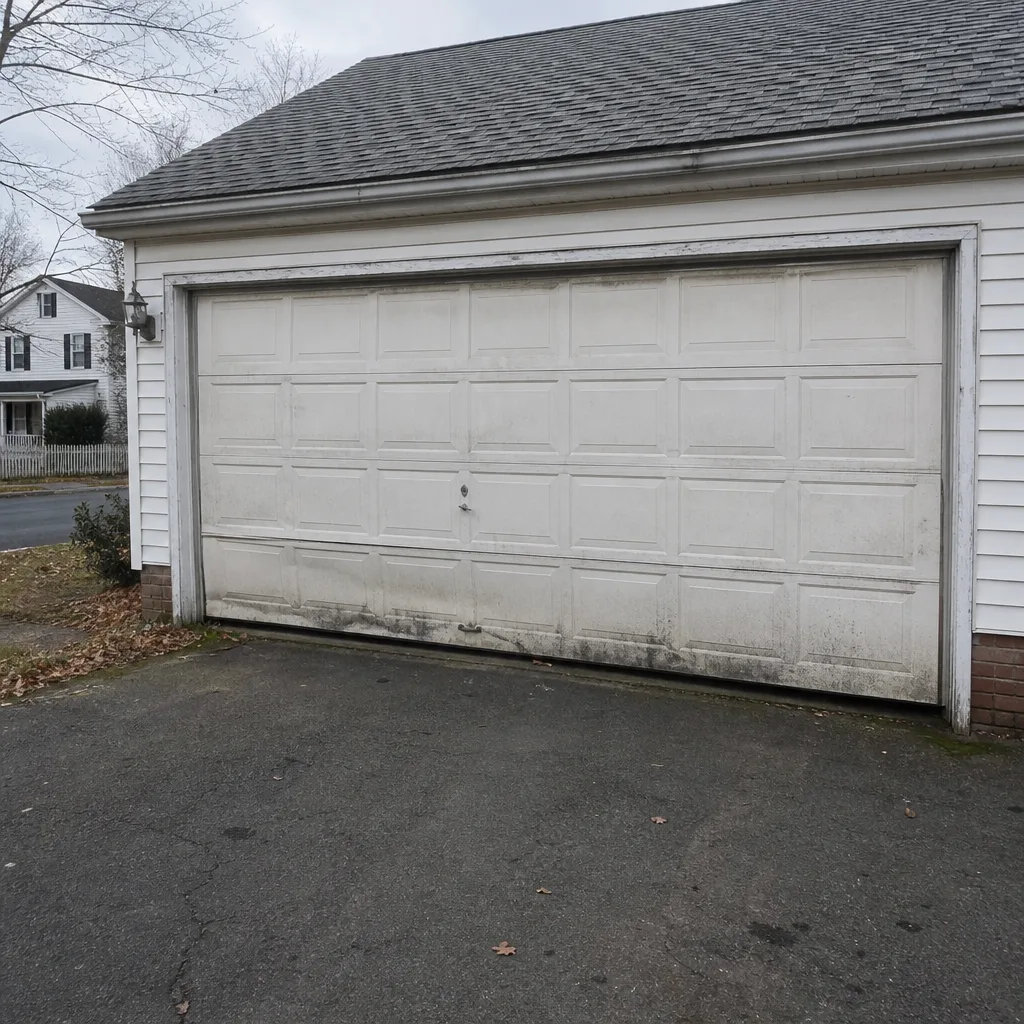 Before
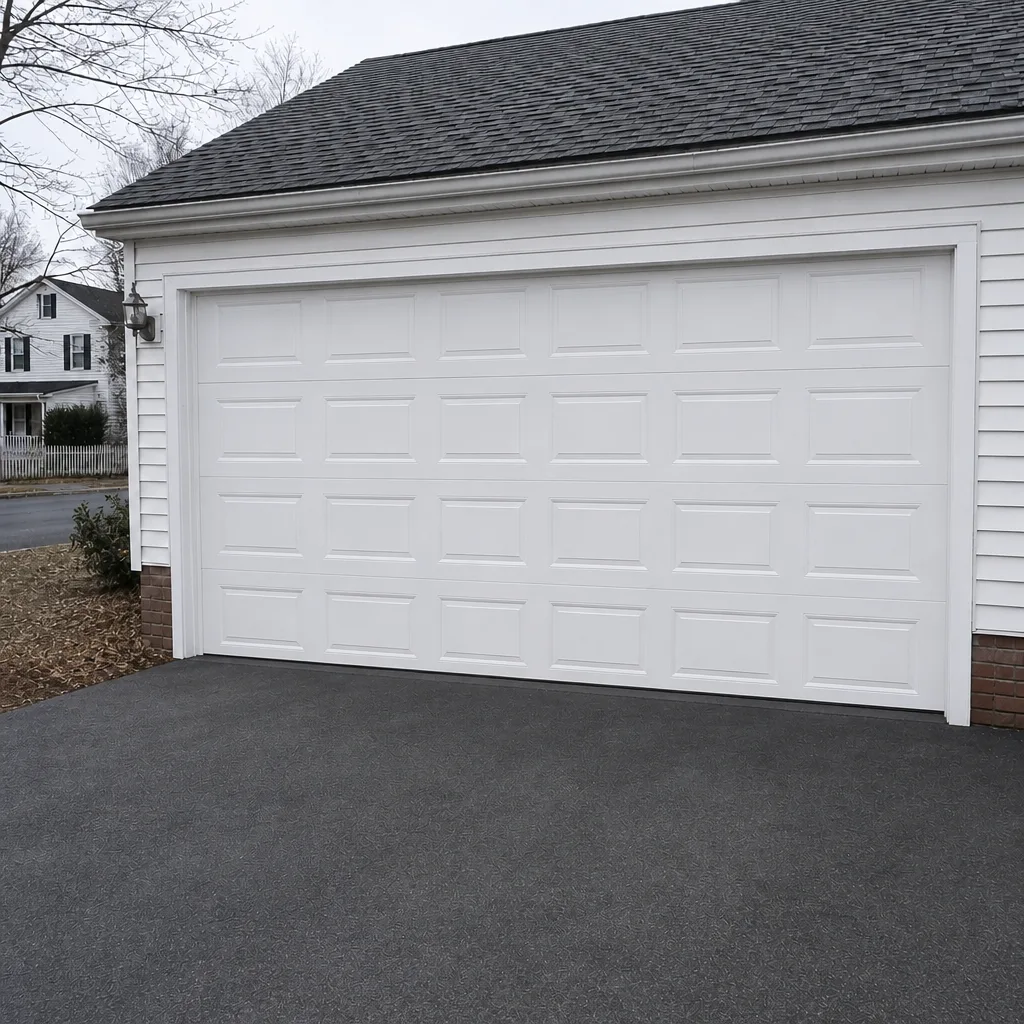 After
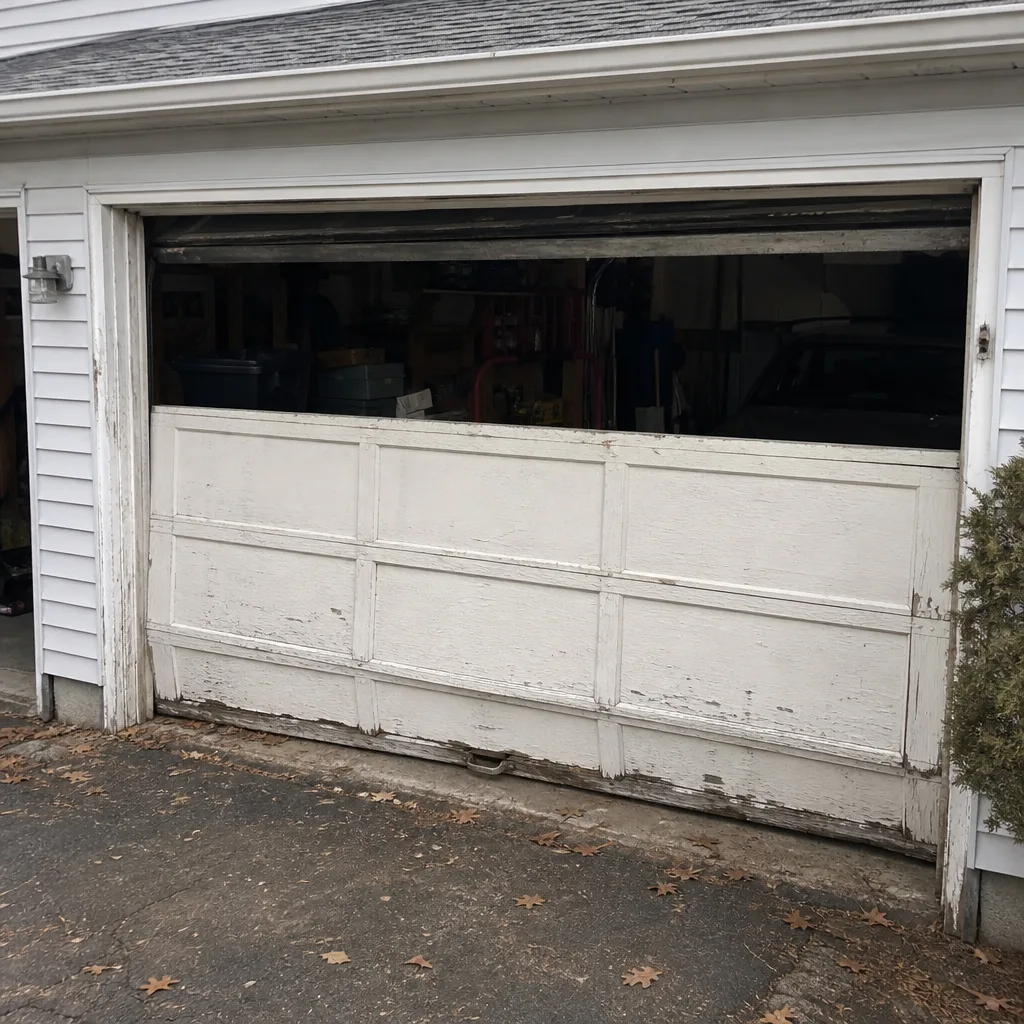 Before
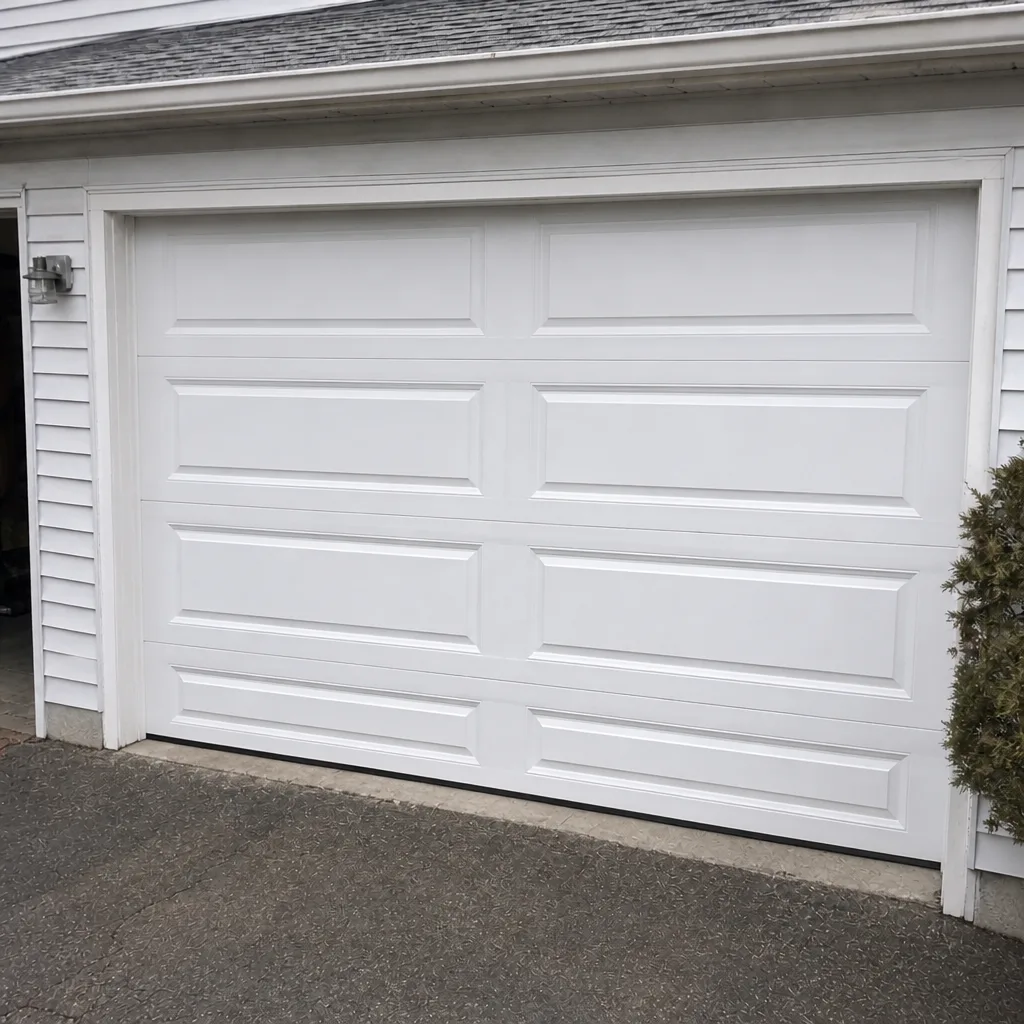 After
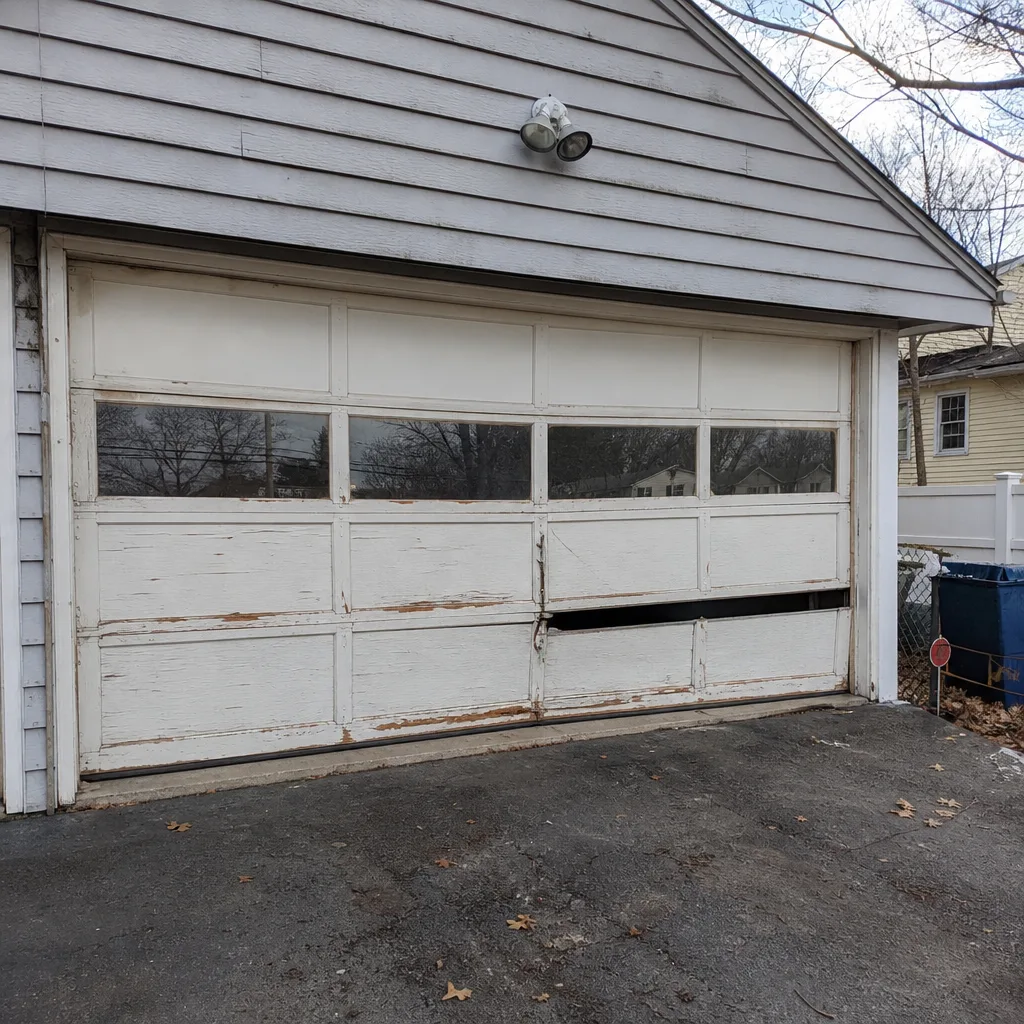 Before
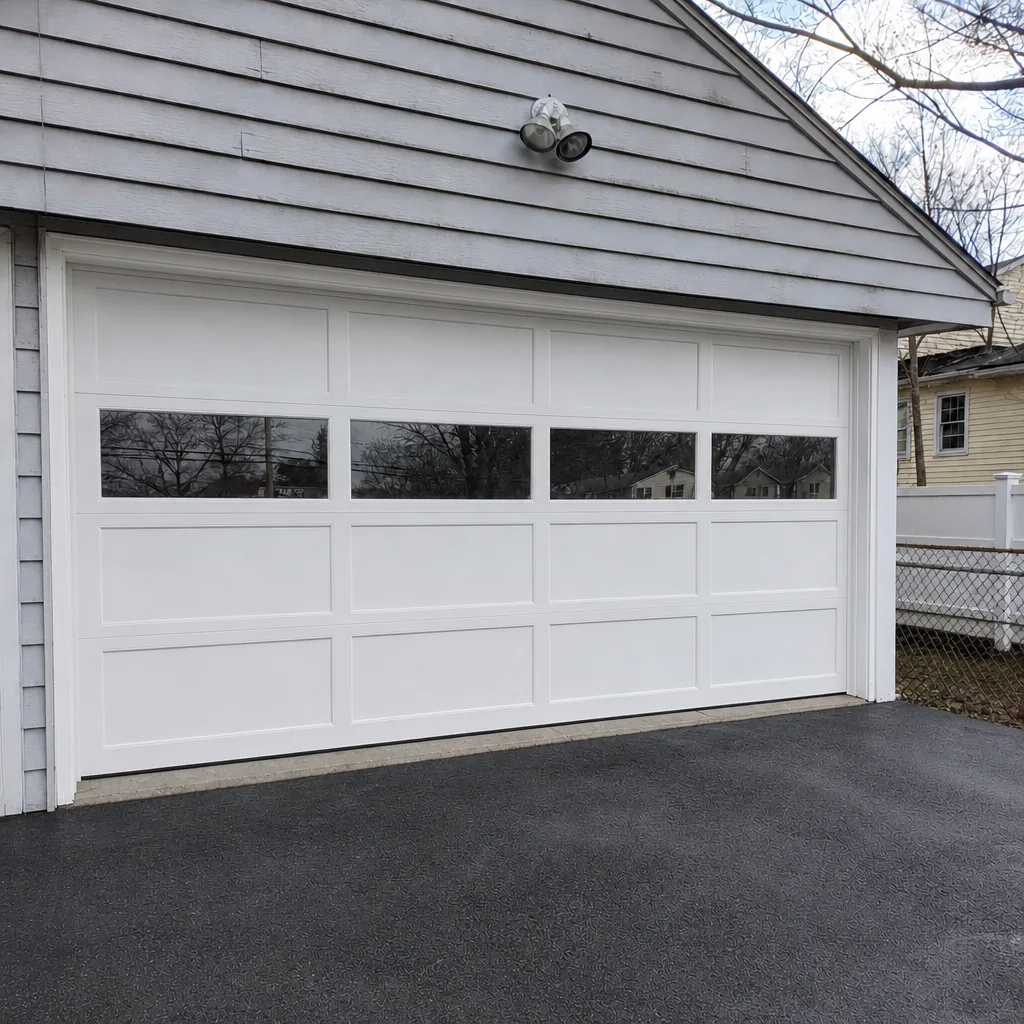 After
When to Call a Professional
Some problems deserve a technician on the first call, not a third attempt. Call us when you hear a bang and the door won’t lift, when a cable is hanging loose or frayed, when the door is crooked in the opening or won’t stay up when you lift it manually, when the bottom bracket is cracked, or when the opener cycles but the door refuses to move after you’ve checked the release cord and the sensors. Any of these points to spring, cable, or opener work that’s beyond what’s safe to handle yourself.
It’s also the right call when a small problem has stopped being small. A door that’s been noisy for a month, a sensor that needs a nudge every other morning, or an opener that strains on cold days will usually cost less to fix now than after the next failure. Meriden Garage Door Repair Pros offers free estimates in Meriden – call (855) 294-4551. We answer 24/7, and fast dispatch runs from 7am to 7pm, Sunday through Friday. If your car is trapped or the house is unsecured, that’s exactly the kind of call our emergency service is built for.
Frequently Asked Questions
A failed spring is the most common cause of a door that won’t open at all, especially after a cold night. The loud bang followed by a door that won’t lift is the classic sign. If the opener runs but the door doesn’t move, the cause is more likely an opener or release issue rather than the spring.
No – spring replacement is not a safe DIY repair. Torsion springs are wound under extreme tension, and a mistake during adjustment can release that energy in an instant. This is the most dangerous part of your garage door system, and it’s why we handle spring work as a dedicated, safety-critical service.
Typical estimates run $180-$340 for one torsion spring, and a matched pair is roughly double that. The written estimate sets the final price and is agreed before any work starts. Call (855) 294-4551 for an exact quote – estimates are free.
Often it will, but noise in cold weather is a warning rather than a guarantee. Cold thickens lubricant and tightens metal, so a door that’s already loud may bind or fail entirely on the coldest morning. A pre-winter check of the moving parts is worth more in Meriden than in warmer places.
Pull the manual release cord and try lifting the door by hand. If it moves easily, the door’s balance is fine and the problem is in the opener or its connection. If it’s hard to lift or won’t stay up, the problem is in the door’s springs or cables, and it needs a technician.
Yes – that’s a core part of our service, not an add-on. Call (855) 294-4551 and describe the situation; we answer 24/7, and fast dispatch runs from 7am to 7pm, Sunday through Friday. We’re closed on Saturday, but a call then will be booked into the next opening.
The Bottom Line
Most garage door problems come down to one of five mechanical categories, and identifying yours is the difference between a quick adjustment and a dangerous attempt at a spring or cable repair. The safe checks – sensors, remote batteries, visual track inspection, and the manual release test – solve a good share of “broken door” calls on their own. Anything involving a spring, a cable, or a bent track belongs with a technician. Meriden’s freeze-thaw cycles make tracks and springs wear sooner than you’d expect, so a noisy or slightly crooked door is worth attention before the weather turns. If you’re not sure which category you’re in, describe the symptom to Meriden Garage Door Repair Pros – we’ll tell you what it likely means and whether it’s urgent. For openers specifically, our garage door opener repair covers the full range of drive types and smart-home systems.
Call (855) 294-4551 for a free estimate. We answer 24/7. Fast dispatch from 7am to 7pm, Sunday through Friday.
Written by the team at Meriden Garage Door Repair Pros.