
Last updated November 21, 2026
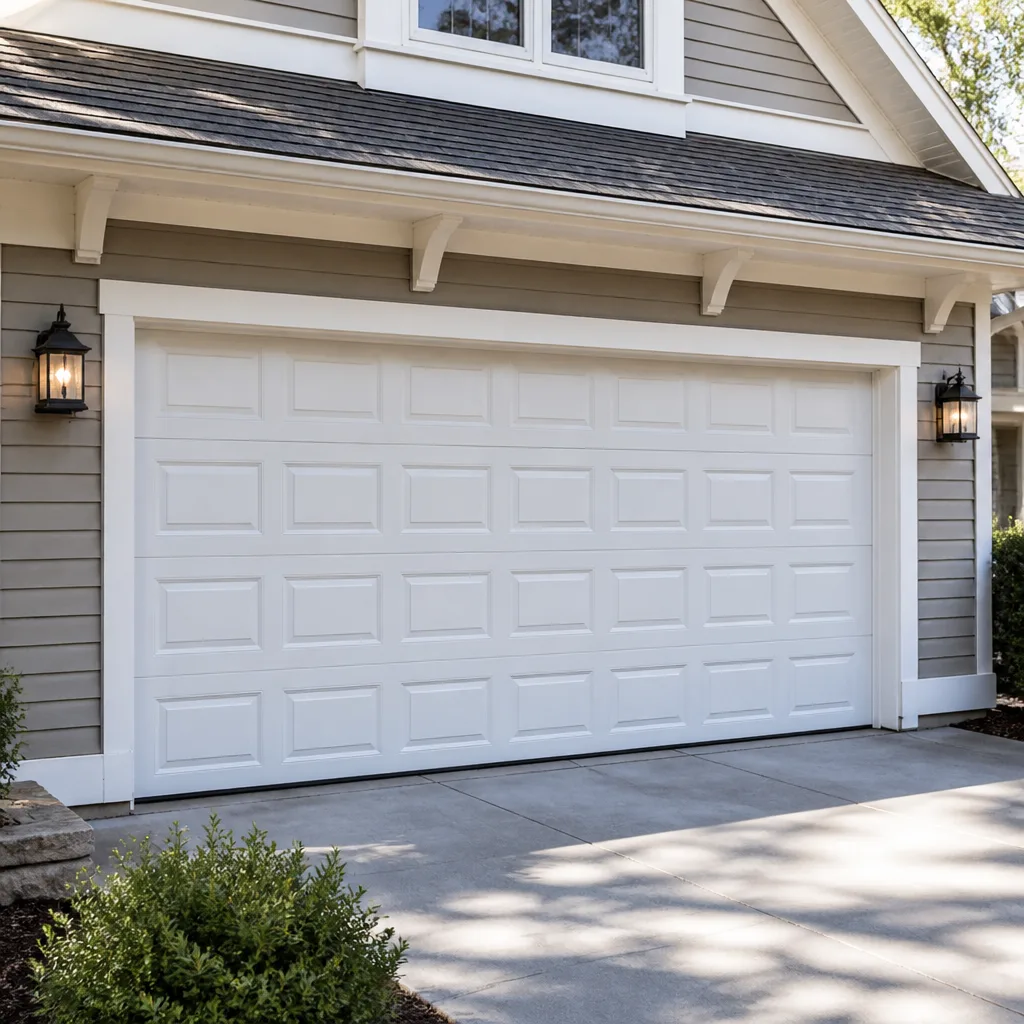 Raised-panel steel
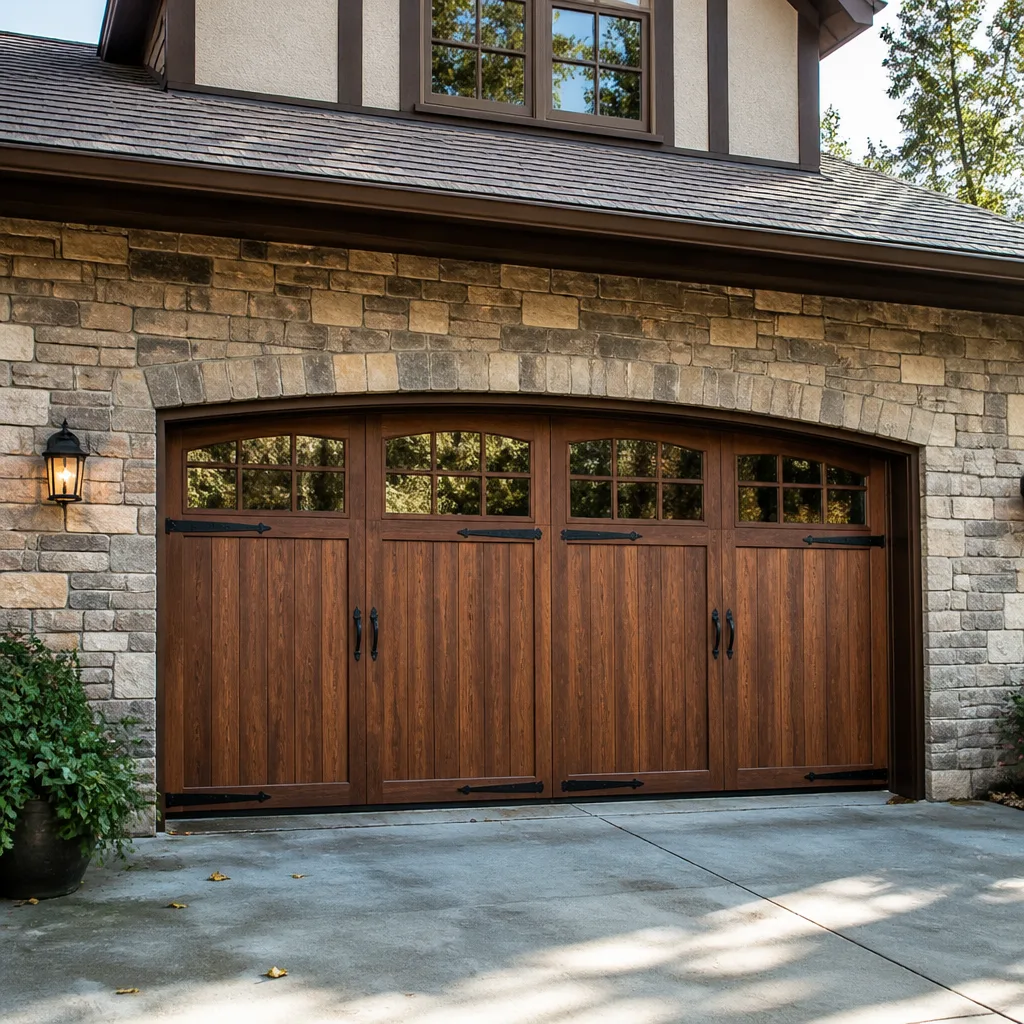 Carriage house
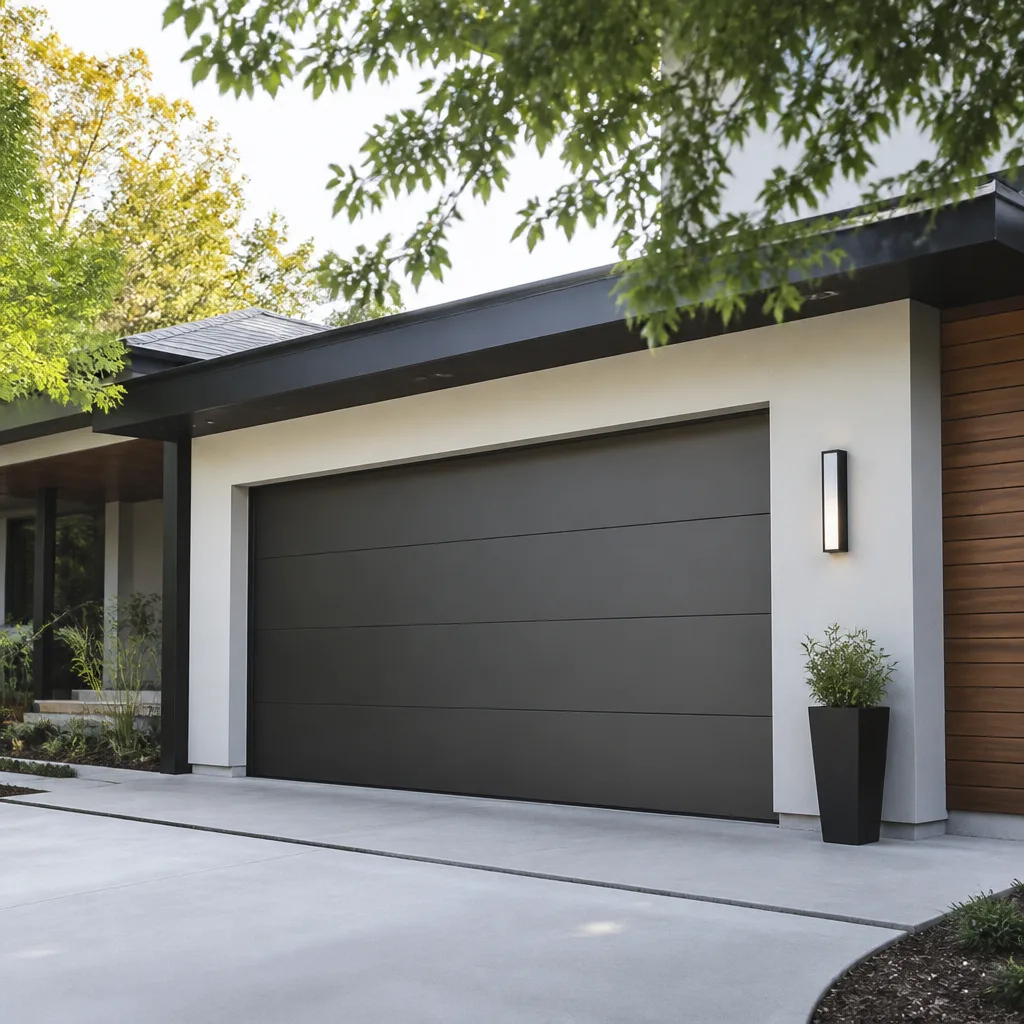 Modern flush
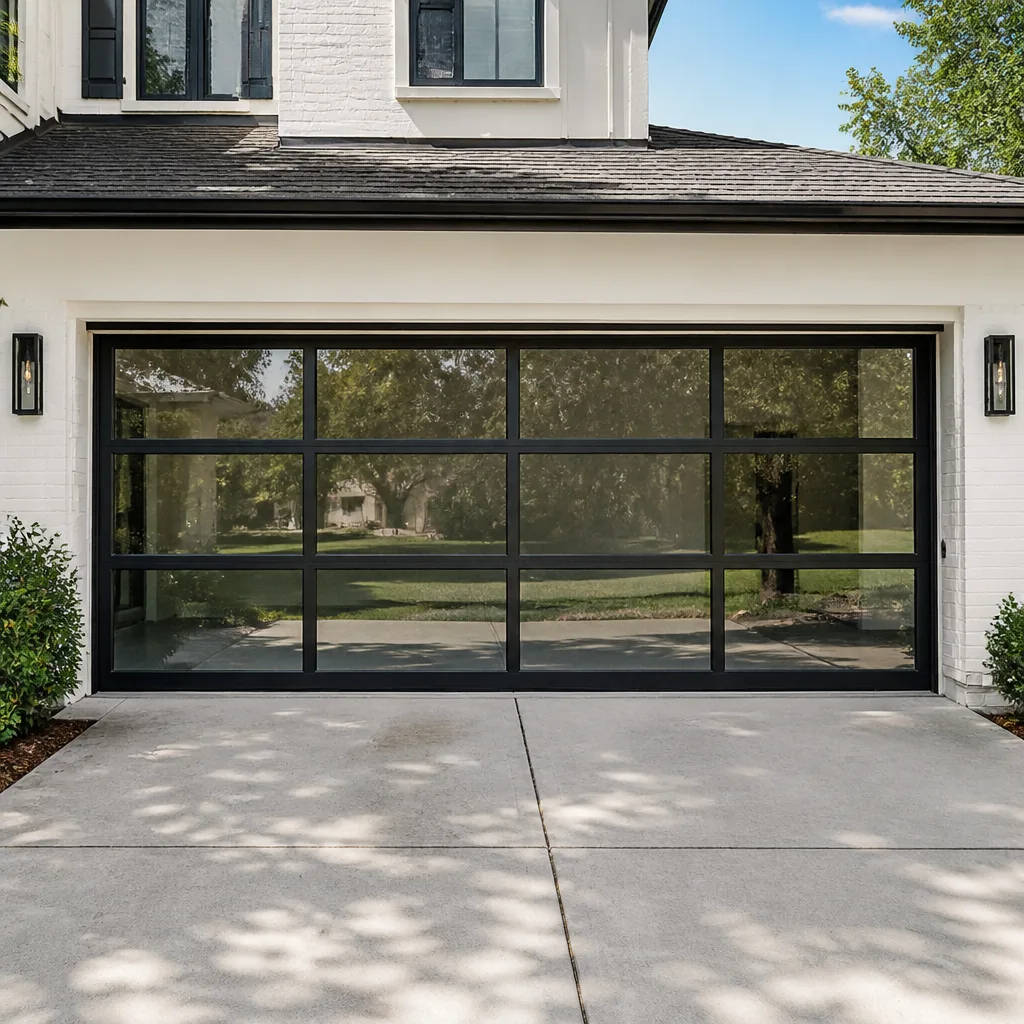 Full-view glass
 LiftMaster openers
 Chamberlain openers
Full 25-point door and opener safety check with every visit - springs, cables, rollers, tracks, and your LiftMaster or Chamberlain opener included
You get a price before we start. It does not change when the pro arrives.
Get your free estimateSeasonal Garage Door Care for Meriden: Year-Round Homeowner’s Guide
Most seasonal maintenance advice treats a garage door like a lawn mower: change the oil in spring, put it away in fall, and hope for the best. That approach misses what actually happens to a door in Meriden. This city gets four genuinely distinct mechanical stress conditions across the year, and the tasks that protect your door in October are not the same ones that matter in February. Cold contracts steel. Ice adds weight to panels. Humidity changes how wood composite and insulation behave. Freeze-thaw cycles torque the bottom seal against the floor and drift opener limit switches out of adjustment. In this guide we’ll walk month by month through what each season demands, which failure modes to watch for, and where a homeowner should stop and call a technician. If you own a door in Meriden, the calendar below will save you more repairs than any general checklist you’ll find online.
Quick Answer
Seasonal garage door care in Meriden means four different jobs, not one. In fall you prep for frost by inspecting weatherstripping, replacing the threshold seal before the ground freezes, and switching to a cold-weather lubricant. In winter you watch for the freeze-thaw failure modes: bottom seal stuck to the slab, opener limit drift, and ice loading on the horizontal tracks. In spring you undo winter damage by checking panels for stress fractures and recalibrating opener force once temperatures normalize. In summer you manage humidity, which affects the inside of steel and wood composite panels. A door that gets this treatment runs quieter, lasts longer, and fails less often at the worst possible moment.
Styles & brands we work with
- Raised-panel steel
- Carriage house
- Modern flush
- Full-view glass
- LiftMaster openers
- Chamberlain openers
Table of Contents
- Why Meriden’s Climate Is Hard on Garage Doors
- Fall Tasks: Preparing for First Frost and Ground Freeze
- Winter Failure Modes: What Meriden’s Freeze-Thaw Pattern Does
- Spring: Undoing Winter Damage Before Summer Heat Sets In
- Summer Humidity: What Condensation Does Inside Your Panels
- The Meriden Month-by-Month Task Calendar
- Brand-Specific Notes: LiftMaster, Chamberlain, Craftsman, Raynor
- Safety: Where Seasonal Care Stops and a Technician Starts
Why Meriden’s Climate Is Hard on Garage Doors
Meriden sits in central Connecticut, which means the door on your house faces an unusually wide annual temperature band. It’s not a single cold snap or a single hot stretch: it’s repeated crossings of the freezing point, sometimes several times within the same week. Every one of those crossings changes the length of the metal in your door’s tracks, hinges, and torsion tube, and changes the behavior of every seal and lubricant in the system. A door in a mild climate deals with one adjustment per year. A door in Meriden adjusts itself over and over, and the homeowner ends up chasing the symptoms unless the maintenance is timed to the season.
Three parts of the door take the worst of it:
- Torsion and extension springs. Steel retains its spring rate well below freezing, but the door weighs more when ice accumulates on the panels, and thickened summer grease drags on the rollers. Springs that sit near their fatigue limit will often let go in cold weather even though nothing “broke” the day before.
- Bottom seals and thresholds. The rubber seal and the threshold on the slab expand and contract on different schedules. A seal that fits perfectly in July can freeze to the floor by January.
- Opener limit switches and force settings. The travel limits on your opener are set against a track length that changes slightly with temperature. Metal contraction drifts those settings a few thousandths of an inch each winter, and after a few seasons the door either reverses early or stops short of fully closed.
That’s why the seasonal calendar matters more than the individual tasks. You’re not maintaining a static object: you’re resetting a system that’s continuously drifting. In the sections below we’ll go season by season. If you only take away one item, take the fall threshold seal and the winter lubricant check, because those two tasks prevent the most expensive downstream damage. When something does go wrong, our garage door repair team handles the diagnosis and puts the system back in alignment.
Fall Tasks: Preparing for First Frost and Ground Freeze
Fall in Meriden splits into two distinct phases: the weeks before first frost, and the weeks between first frost and the ground freeze. The work that has to happen before frost is different from the work that has to happen before the slab freezes solid. Miss the window on either and you’ll spend winter fighting problems that a single afternoon in October would have prevented.
Before first frost: weatherstripping inspection
Walk the perimeter of the door with a flashlight and look at the weatherstripping on the sides and top. What you’re looking for is crushing, cracking, or hardening. Good weatherstrip has a rubbery give when you press it; bad weatherstrip feels like a wax crayon. Pay closest attention to the bottom corners of the side seals, where driving rain from a northeast storm tends to settle. If the weatherstripping is failing, it needs to be replaced before the first frost hardens it in place. Trying to peel weatherstrip off a cold door usually tears it and leaves the adhesive behind, which is a much worse job.
Before ground freeze: threshold seal replacement
The threshold seal sits on the slab and mates with the bottom of the door. In Meriden the slab holds moisture well into the fall, and when it freezes the seal becomes the weakest link in the system. A seal that seals fine in October can lock the door to the floor in January, or worse, tear off and leave a gap that lets in snowmelt. Replace the threshold seal before the slab freezes hard, not after. Once the ground is frozen, the replacement has nothing to seat against and the new seal will fail the following winter.
Switch to cold-weather lubricant
Most garage door lubricants are formulated for warm operation. By November, a summer-weight product has thickened, which means the opener is working harder on every cycle and the springs absorb more of the excess load. In our experience the switch from a summer to a cold-weather lubricant is the single most-overlooked maintenance item in this climate. Apply a light coat to the hinges, rollers, and the torsion tube bearings, then work the door up and down a few times to spread it. Do not lubricate the tracks. Tracks are supposed to stay clean and dry; grease there collects grit and accelerates roller wear.
One more fall task that gets skipped: unplug the opener and cycle the door by hand. You should be able to lift it comfortably and it should stay put when you let go at the halfway point. If the door feels heavy, the springs are losing tension and should be checked by a technician before winter. Heavy operation is the number one predictor of a spring failure in February.
Winter Failure Modes: What Meriden’s Freeze-Thaw Pattern Does
February is the month most garage door springs fail in Meriden. Not because cold alone breaks springs, but because the combination of contracted metal, increased door weight from ice accumulation on panels, and reduced lubrication viscosity loads the springs closer to their fatigue limit on every cycle. That’s before you add the freeze-thaw cycle, which produces three failure modes you won’t see in any mild-climate maintenance guide.
Failure mode 1: bottom seal frozen to the floor
The bottom seal sits on a slab that goes through a daily thaw-and-refreeze cycle. Water from melting snow runs under the door, freezes overnight, and welds the seal to the concrete. When the opener lifts the door in the morning, the seal tears or the door snaps free with a jolt that stresses the opener’s travel limits. The fix is preventative: keep the slab in front of the door clear of snow and standing water, and if the seal is already sticking, apply a silicone-based release agent to the contact edge. Don’t force the door open with the opener if the seal is bonded, because that load goes straight into the springs. Free it by hand first.
Failure mode 2: opener limit switch drift
Openers from LiftMaster and Chamberlain (and Craftsman models derived from the same design lineage) use mechanical or optical travel limits that are set against the track length. As the track metal contracts with cold, the door stops short or reverses early. You’ll notice the door not quite reaching the floor, or bouncing back down a few inches after it rises. This drift is normal and the fix is a limit adjustment, not a new opener. What you don’t want is to compensate by cranking up the force setting. That pushes the opener past the resistance it’s supposed to detect, and if the door meets an obstruction, it may not reverse.
Failure mode 3: ice loading on horizontal tracks
The horizontal tracks overhead are exposed to snow that blows in under the header or through vents. Ice builds up in the curve where the horizontal track meets the vertical, and the door’s rollers have to push through a lump of frozen water twice a day. Short of clearing the tracks by hand, the preventative measure is to keep the area directly in front of the door clear of drifts so that blowing snow has less to grab. If the track already has significant ice, don’t pour hot water on it. That refreezes around the rollers and makes the problem worse.
If any of these three issues has manifested, our garage door opener repair team can diagnose whether the opener or the door is the source, and our garage door spring repair specialty exists precisely because winter spring failures are the most common emergency call we handle.
Spring: Undoing Winter Damage Before Summer Heat Sets In
By the time the ground thaws in Meriden, three months of freeze-thaw stress have accumulated in places you can’t see. Spring maintenance is about finding that damage before summer heat hides it. The two biggest items are panel stress fractures from ice weight and opener force recalibration after temperature normalization.
Check panels for stress fractures
Run a hand along the inside of each panel, especially near the top and bottom hinges, where ice weight concentrates. What you’re feeling for is hairline cracks in the metal skin, usually radiating from a hinge anchor. Ice loading during winter pushes the panels apart at the joints, and the skin takes the strain. A stress fracture isn’t an emergency, but it’s a warning: the panel has lost some rigidity and will collect more ice next winter, which accelerates the same failure. Catch it in spring and the panel can often be reinforced or replaced individually, before the door needs a full replacement.
Recalibrate opener force after temperature normalizes
Force settings that were adjusted for a cold door are wrong for a warm one. Once spring temperatures stabilize, the door runs slightly easier, and an opener that was tuned to lift a stiff winter door now lifts with more force than it needs. That force is supposed to be your safety margin. Recalibrate it now, following your opener manual’s procedure. If you’re not sure how, a technician can do it in the same visit as any other spring maintenance. The same goes for travel limits: winter drift can leave the door resting an eighth of an inch off the floor, and spring is the time to reset both travel and force in the same pass.
Clean and inspect the tracks and hinges
Winter grit, salt, and road spray collect in the tracks. There’s no salt air in Meriden, but the salt laid down on roads and driveways ends up on the door and in the track. Wipe the tracks down with a damp cloth and check for any grit that’s been ground into the rollers. Then inspect every hinge for loose fasteners. A hinge that’s been working against ice all winter will have opened up its mounting holes, and tightening it in spring is a two-minute job compared with replacing the panel in fall.
Test the safety reverse
Place a 2×4 flat on the floor under the door and close it. The door should reverse on contact. If it doesn’t, the opener’s force or safety sensor system needs adjustment. This is a two-minute test with a real consequence in a household with kids or pets.
Summer Humidity: What Condensation Does Inside Your Panels
Meriden summers are humid, and the interior of a garage door panel behaves like a shallow cavity. On a warm humid day the steel skin is cooler than the outside air in the morning and warmer in the afternoon, which means condensation forms on the inside surface and drips down the interior of the panel. On a steel door this is a rust issue behind the paint that you’ll never see. On a wood composite door it’s a structural issue: moisture collects where two composite panels meet, the joint swells, and over years the joint separates enough to admit more water. That’s why wood composite doors in humid climates need closer seasonal attention than steel doors.
What to do in summer:
- Check for rust bloom on the inside of steel skins, especially near the bottom panel where condensation collects. Look for paint bubbling, not just visible orange rust. Bubbled paint means moisture is working underneath it.
- Look for joint swelling on wood composite doors. Run a finger along each panel joint. If a joint feels raised or the edge of the panel is soft, moisture has been getting in.
- Check the insulation. An insulated door’s rated performance assumes the cavity stays dry. Wet insulation loses effectiveness; over multiple summers, a saturated panel can behave noticeably worse at holding heat. If a door feels warm to the touch on the outside on a hot afternoon, the interior is probably wet.
- Vent the garage. Crack a window or door in the garage on humid days, and keep the door closed when the outside dew point is above the inside temperature. That’s counterintuitive but correct: opening the door on a muggy morning lets wet air in, and it condenses on every inside surface.
Summer is also the right time to handle any projects you deferred. A full replacement, a panel swap, or an upgrade to a smart-integrated opener from LiftMaster or Chamberlain can all be scheduled in summer without competing with winter emergency volume.
The Meriden Month-by-Month Task Calendar
Seasonal maintenance only works if it’s keyed to actual temperature milestones rather than calendar quarters. Here’s the schedule we use with homeowners in Meriden, tied to the conditions those months produce locally.
- September: Inspect weatherstripping and bottom seal before frost. Order replacement parts now, because the door just transitioned from heavy summer use and the wear shows. Lubricate hinges and rollers with the summer-weight formulation one last time.
- October: Before first frost, replace any failing weatherstrip and threshold seal. Switch to cold-weather lubricant. Test the door’s manual balance by disconnecting the opener and lifting the door by hand.
- November: Confirm the threshold seal is seated against the slab before the ground freezes. Clean the tracks of grit one last time. Inspect exterior caulking at the header.
- December: Monthly opener safety reverse test. Clear ice and snow from the slab in front of the door each morning before the door is cycled. Watch for the door reversing early or stopping short, both signs of limit switch drift.
- January and February: The failure-prone months. Most spring failures happen in February in Meriden, so keep the slab clear, keep heavy items off the door, and if the door feels heavier by hand than it did in fall, call a technician before winter is out. Same-day service and emergency coverage exist for exactly this window.
- March: Panel stress fracture inspection. Track cleaning and hinge tightening. Listen for new noises that emerged during winter.
- April: Opener force and travel recalibration after temperature normalization. Safety reverse test against a 2×4. Lubricant switch back toward a general-purpose formulation.
- May: Full visual inspection of panel joints and inside skins, especially on wood composite doors. Any project work (new opener, new door, panel replacement) scheduled here avoids summer humidity and winter urgency.
- June through August: Monthly safety reverse tests. Watch for rust bloom on steel and joint swelling on composite. On humid mornings, keep the door closed. Any deferred improvement work gets done in this window.
- Every month: A 30-second safety reverse test and a walk-around of the tracks. That alone catches most developing problems before they become a call.
You don’t have to follow this calendar to the letter. You do have to follow the transition between October and November, when the threshold seal has to be set before the ground freezes, and between March and April, when the opener has to be recalibrated after winter. Those two windows carry most of the year’s maintenance value.
Brand-Specific Notes: LiftMaster, Chamberlain, Craftsman, Raynor
Seasonal maintenance tasks are largely brand-agnostic, but the drift symptoms and adjustment procedures are not. Here’s what we watch for on the brands we service most often in Meriden.
LiftMaster and Chamberlain openers
The modern LiftMaster and Chamberlain lines share a lot of design DNA, including travel limits that are set through a control panel or app rather than physical screws on the head unit. If your opener has a Wi-Fi or MyQ-style interface, the limit and force settings may be adjustable from the app, which makes spring recalibration faster. Winter drift on these units often shows up as the door not quite closing, or the opener reporting an obstruction it doesn’t have because the safety sensor lenses have frost on them.
Craftsman openers
Older Craftsman units often have mechanical limit switches on the head unit that need a screwdriver adjustment. These are straightforward but require care: over-adjust in one direction and the door will jam against the header. If you’re not sure which screw moves which limit, don’t guess. The winter drift pattern on these units also frequently affects the safety reverse sensitivity, so a spring recalibration should include both limits and reverse.
Raynor doors
Raynor makes steel and composite doors with distinct panel and hinge designs. Their steel panels tend to wear at the hinge anchor points during icy winters, and the resulting stress fractures show up on the inside of the panel along the hinge line. Composite Raynor panels need closer attention in humid summers for joint swelling. If the door is a Raynor and the panel is showing fatigue, the right part for your specific system matters: generic panels don’t fit, and matching the profile prevents a weakened door from being a chronic problem.
We service LiftMaster, Chamberlain, Genie, Clopay, Amarr, Wayne Dalton, Craftsman, and Raynor. If your door or opener belongs to a brand not listed here, ask before scheduling; we’d rather tell you we can’t help than show up and guess. On the listed brands, technicians know the adjustment procedures from experience, not from reading a manual at your door. Our technicians have up to 11 years of experience with these systems.
Safety: Where Seasonal Care Stops and a Technician Starts
Most of the tasks in this guide are homeowner-safe: inspecting weatherstripping, cleaning tracks, lubricating hinges, testing safety reverse, clearing snow from the slab. A few are not, and they’re the reason spring repair and opener force calibration belong to a trained professional.
- Torsion and extension springs. Springs are the most dangerous part of your garage door system. They’re under enough stored force to cause serious injury in a fraction of a second if they’re released incorrectly, and most homeowners who try it end up calling us after the near-miss. If your door feels heavy, or you can see a visible gap in a spring coil, don’t touch it. Call.
- Cables and drums. The cables that run from the bottom corners of the door up to the torsion drum are under the same stored tension. Never attempt to adjust or rewind a cable drum.
- Opener force settings. The force setting is your door’s collision detection. Turning it up to compensate for a hard-running door disables the safety margin. If the door needs more force than it did in fall, that’s a symptom of a mechanical problem (failing springs, dry rollers, misaligned track) that should be fixed at the source.
- Electrical work. Wiring a new opener to a junction box, or replacing a control board, should be done by someone who understands the panel. If it involves opening the electrical panel, it’s a job for a technician.
- Steep-roof or height work. If your garage has a tall door or a surround that has to be accessed from height, roof work and steep access belong to trained technicians. Don’t get on a ladder against a garage door header to clear ice or inspect a torsion bar.
In our experience the homeowner tasks in this guide prevent most of the calls we get. The handful we’ve listed above are the ones that should never be homeowner tasks, no matter how straightforward a video makes them look.
Common Mistakes to Avoid
- Using summer-weight lubricant in winter. A thin summer oil thickens in Meriden’s cold, which loads the opener and stresses the springs. Switch formulations before first frost, not after.
- Greasing the tracks. Tracks should be clean and dry. Grease collects grit in the rollers and accelerates wear. If somebody told you to “lube everything,” they meant the hinges, rollers, and torsion bearings, not the tracks.
- Forcing the door open when the seal is frozen. That load goes straight into the springs and the opener’s travel limits. Free the seal by hand first, and keep the slab clear of snow and standing water.
- Cranking up opener force instead of fixing the source. Higher force masks a heavier door and disables the safety margin. If you’re increasing force every winter, the door has a real problem that will surface at the worst moment.
- Skipping the October threshold seal replacement. A seal replaced after the ground freezes won’t seat properly, and next winter it will leak. Do this one before frost.
- Using a hose to clear ice from the door or tracks. Warm water refreezes around the rollers and makes the problem worse. Ice on the horizontal tracks should be cleared by hand, carefully, or by a technician if it’s inaccessible.
- Ignoring visible panel stress fractures. A hairline crack in the inside of a panel will grow, and by the next winter the panel can’t hold ice weight. Catch it in spring and it’s a small job. Miss it and it becomes a door replacement.
- Assuming a mild winter means nothing to do. The freeze-thaw crossings do the damage, not the depth of the cold. A Meriden winter that thaws and refreezes repeatedly is often harder on doors than a consistently cold one.
See the difference
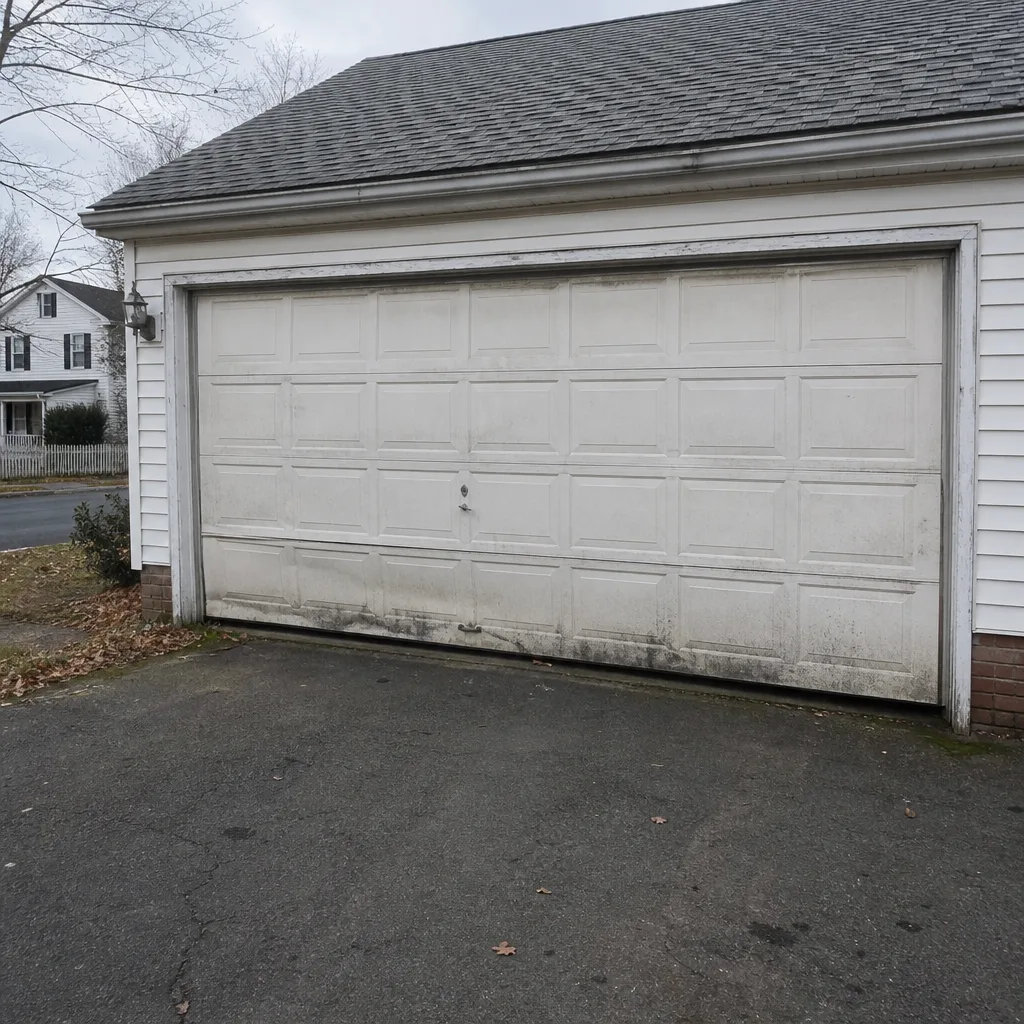 Before
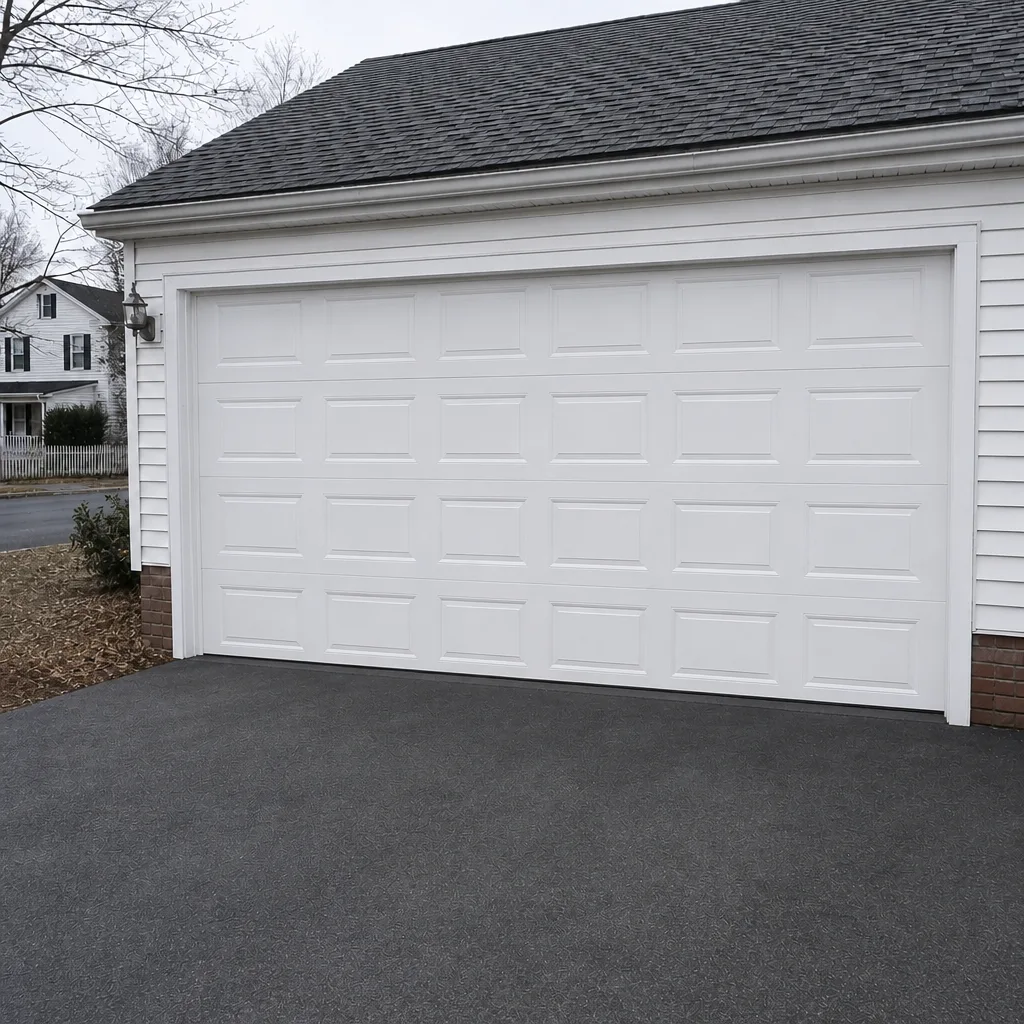 After
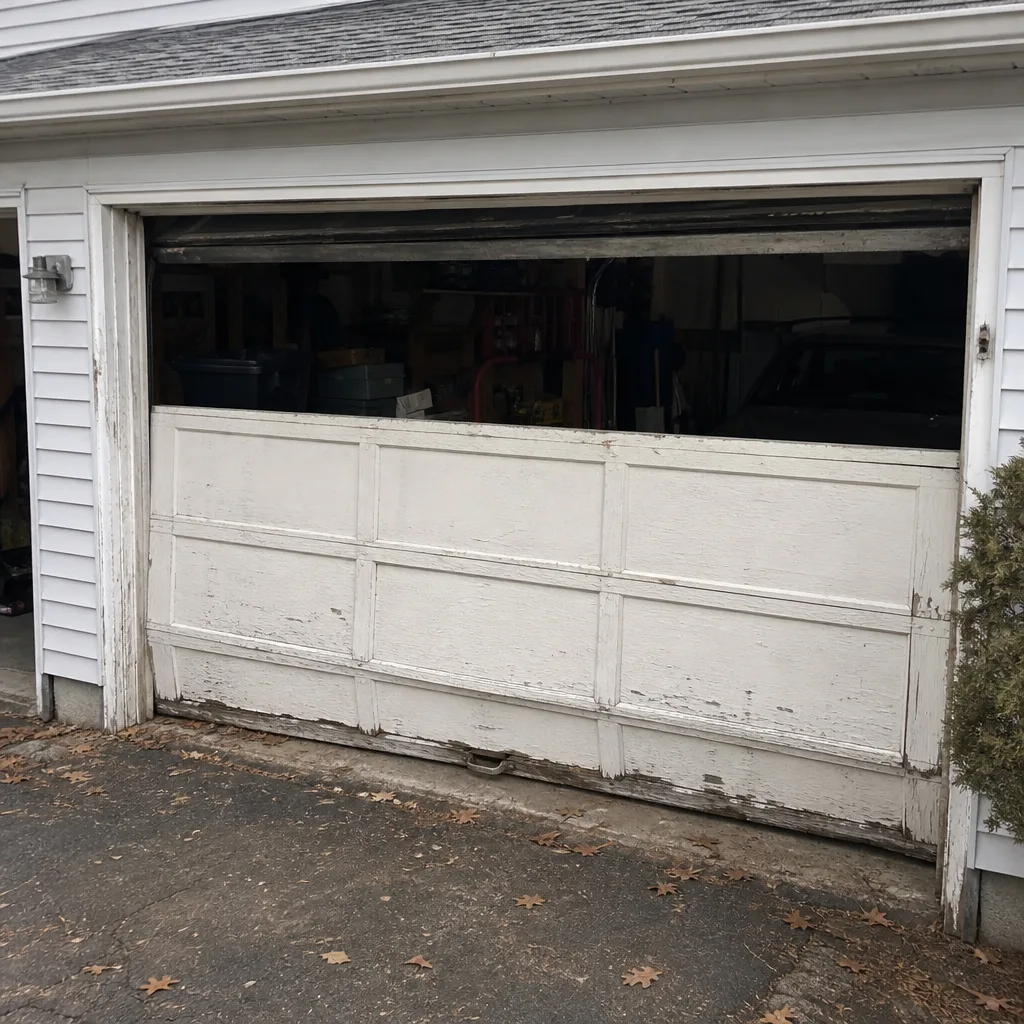 Before
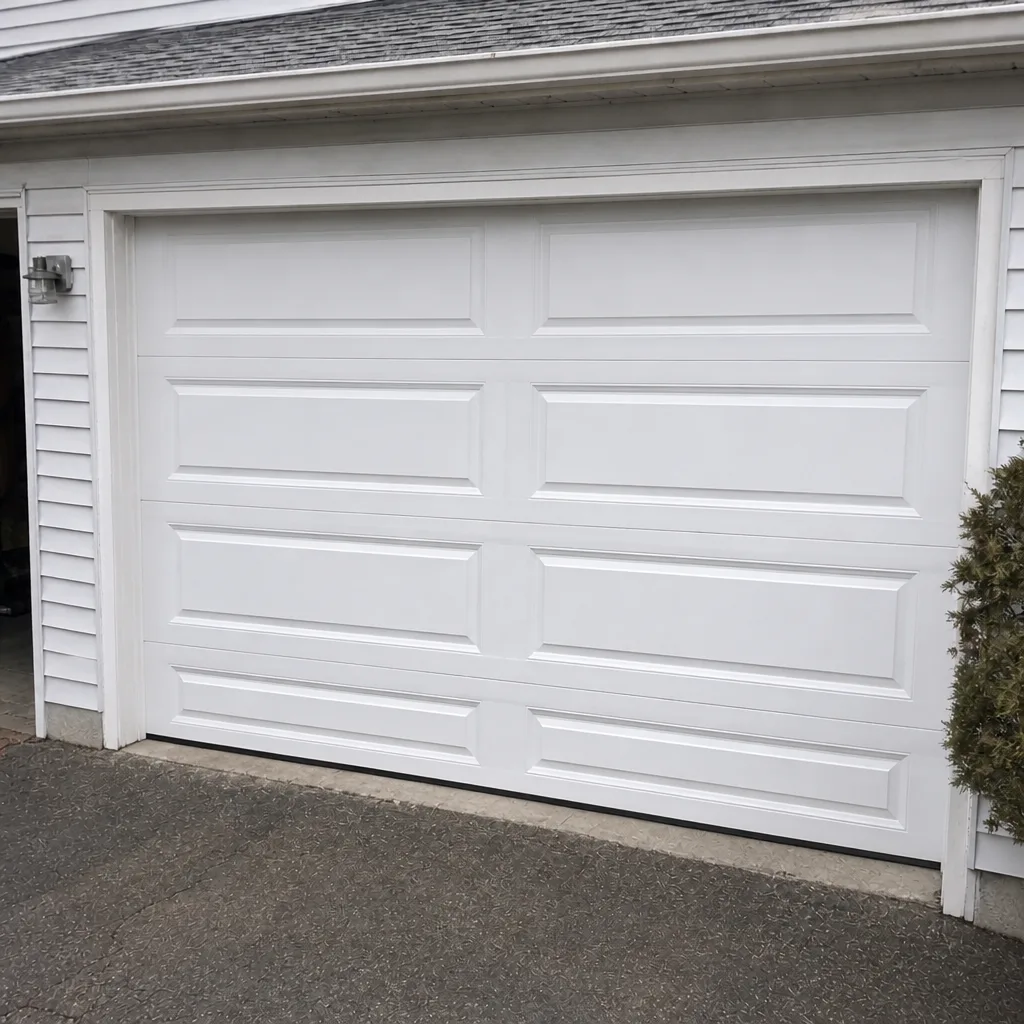 After
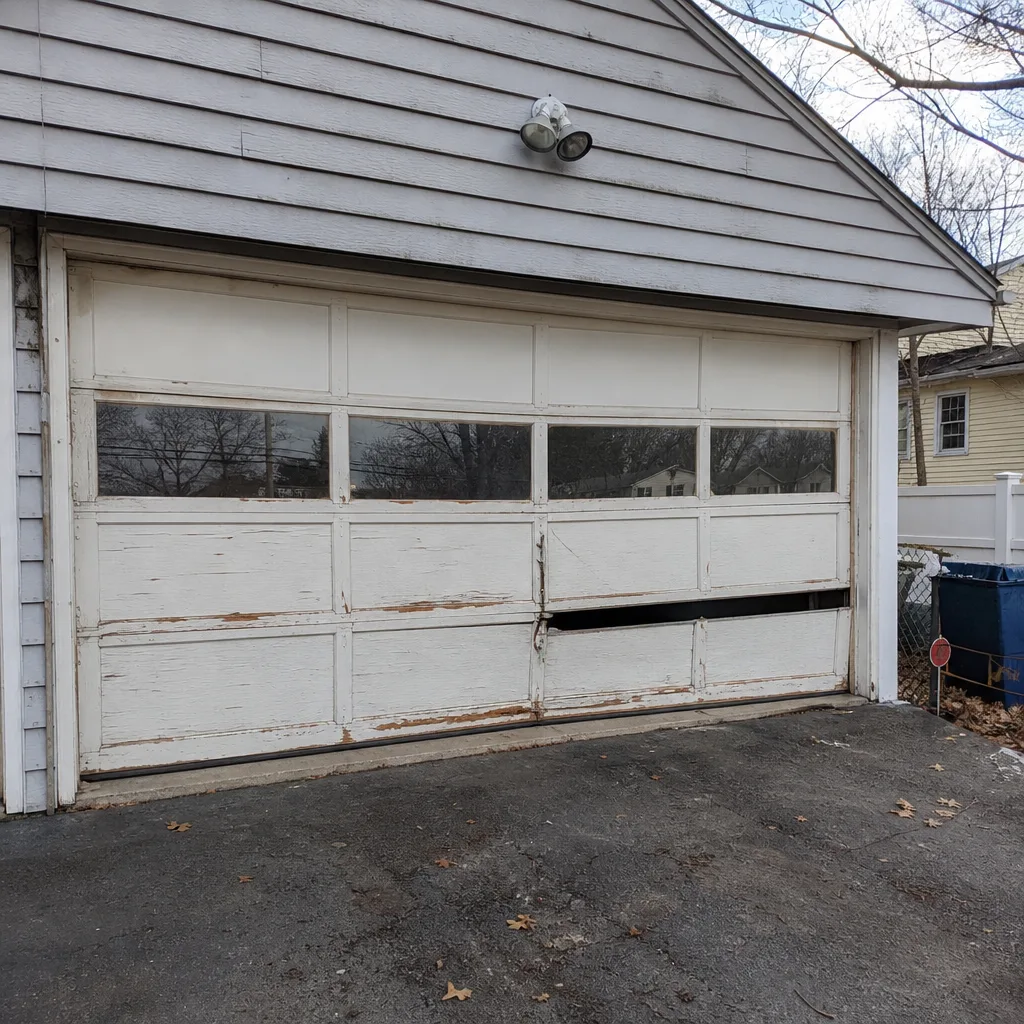 Before
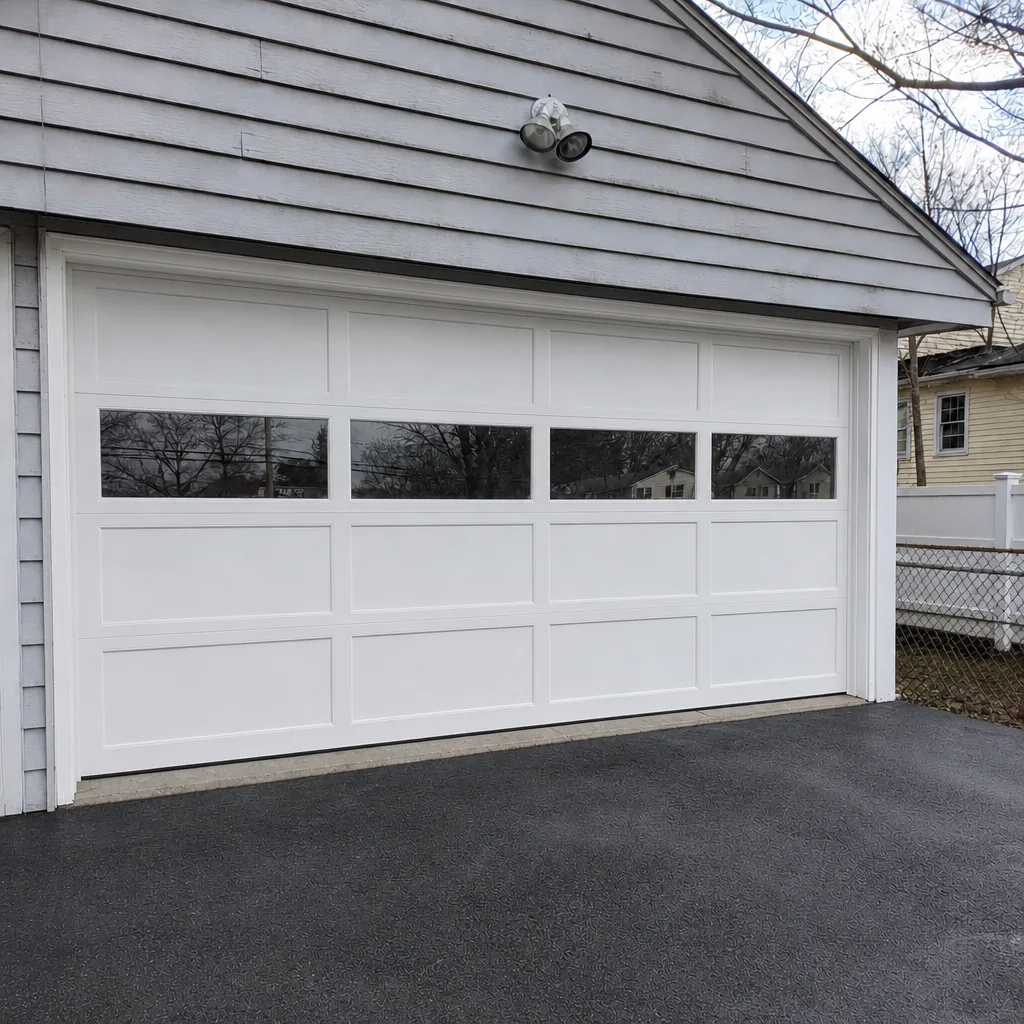 After
When to Call a Professional
Some symptoms are safe to monitor. Others mean stop what you’re doing. Call a technician if the door feels heavier than it did in fall, if a spring has a visible gap or you can see the coils unwinding, if the opener reverses unpredictably, if the door rests more than a quarter inch off the floor when closed, if a panel is showing a stress fracture at the hinge line, or if any part of the door has visibly failed. The same applies to a full replacement or a new opener: those jobs need a measure, a written price, and a scheduled install, and doing it wrong leaves a door that fights you for years. Meriden Garage Door Repair Pros offers free estimates in Meriden, and we handle repair, opener service, spring repair, and full new-door installation without handoffs. Call (855) 294-4551. We answer 24/7. Fast dispatch from 7am to 7pm, Sunday through Friday. The price is quoted and agreed before any work starts, so the estimate is the invoice.
Frequently Asked Questions
The fall transition between October and November is the single most important window, because it’s when you need to replace the threshold seal before the ground freezes and switch to a cold-weather lubricant. A seal that gets replaced after the ground freezes won’t seat, and a door running on summer-weight grease in January loads its springs on every cycle. Both tasks are cheap and fast. The cost of skipping them is a spring failure in February or a threshold that leaks snowmelt into the garage.
A garage door in Meriden should be lubricated twice a year: once in fall with a cold-weather formulation before first frost, and once in spring with a general-purpose formulation as temperatures stabilize. Lubricate the hinges, rollers, and torsion bearings, but not the tracks. If the door runs quietly, that’s the sign the lubricant is doing its job. If you start hearing squeaking in January, the winter lubricant has failed.
Springs fail more often in February because three factors line up at once: metal contracts in the cold, the door weighs more from ice accumulation on the panels, and summer-weight lubricant has thickened enough to drag on the rollers. All three push the springs closer to their fatigue limit on every cycle. Cold alone doesn’t break springs; the load does. That’s why the fall maintenance list includes lubricant and manual-balance checks. Catching a heavy door in October prevents the February failure.
Replacing the bottom seal or side weatherstripping yourself is reasonable for most homeowners, provided you do it before the ground freezes. The seal slides into the bottom retainer, or glued weatherstrip presses onto the door jamb. Both are homeowner-safe. Skip anything involving springs, cables, drums, or the opener’s force setting. Those require a technician and belong to a service call, not a weekend project.
A door that won’t close all the way in winter is usually showing opener limit drift, not a broken opener. The track and door metal contract in cold weather, and the travel limit that was set in summer is now slightly off. The fix is a limit adjustment, not a new opener or a force increase. If adjusting the limits doesn’t fix it, the door has a mechanical issue (misaligned track, failing spring, ice in the track) that needs diagnosis. Call (855) 294-4551 for a quote; estimates are free.
The local professionals we connect you with are licensed and insured as their state requires, and they work on the brands listed on this page using the manufacturer’s procedures. Our technicians have up to 11 years of experience on LiftMaster, Chamberlain, Genie, Clopay, Amarr, Wayne Dalton, Craftsman, and Raynor systems. If you’re not sure your system matches what we service, ask when you call. We’d rather confirm ahead of time than waste a trip.
Replace the door if the panels have structural damage (multiple stress fractures, joint separation on composite panels, or visible rust through the inside skin), if the springs and cables have failed together, or if the door is at the end of its service life. Otherwise, individual panel replacement and spring repair are usually the right call. A panel swap handles most winter damage, and a spring replacement resets the door to a known state. A measure and a written price come first, and the installer can advise on repair versus replace after seeing the door. Call (855) 294-4551 to schedule an estimate.
The Bottom Line
Seasonal garage door care in Meriden is four jobs timed to four different conditions, not one checklist applied evenly across the year. Fall is preparation: inspect the weatherstripping, replace the threshold seal before the ground freezes, switch to a cold-weather lubricant. Winter is management: keep the slab clear, watch for the three freeze-thaw failure modes, and don’t ignore a heavier door. Spring is reset: check panels for stress fractures and recalibrate opener force once temperatures normalize. Summer is protection: watch the inside of panels for condensation damage and keep the humidity from working its way into the insulation. The tasks you can do yourself are the inspections, the lubrication, and the safety reverse test. Springs, cables, the opener’s force setting, and anything electrical belong to a technician. A door that gets this treatment will last longer than the calendar suggests, and it will fail less often in the month you can least afford it. If the calendar above raises more questions than it answers, or if you’re already looking at a symptom, that’s the moment to reach out to our team and get a real diagnosis on your specific door and opener.
Written by the team at Meriden Garage Door Repair Pros.