
Last updated November 21, 2026
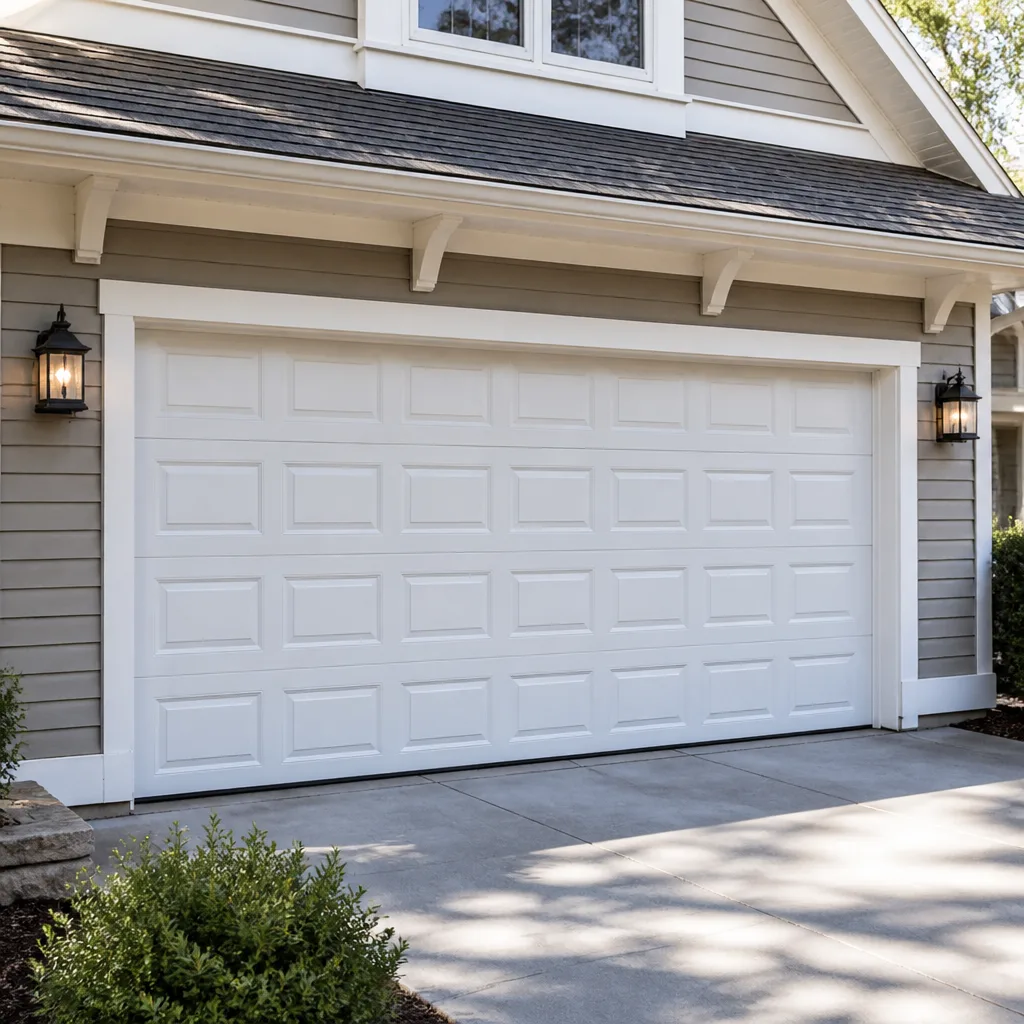 Raised-panel steel
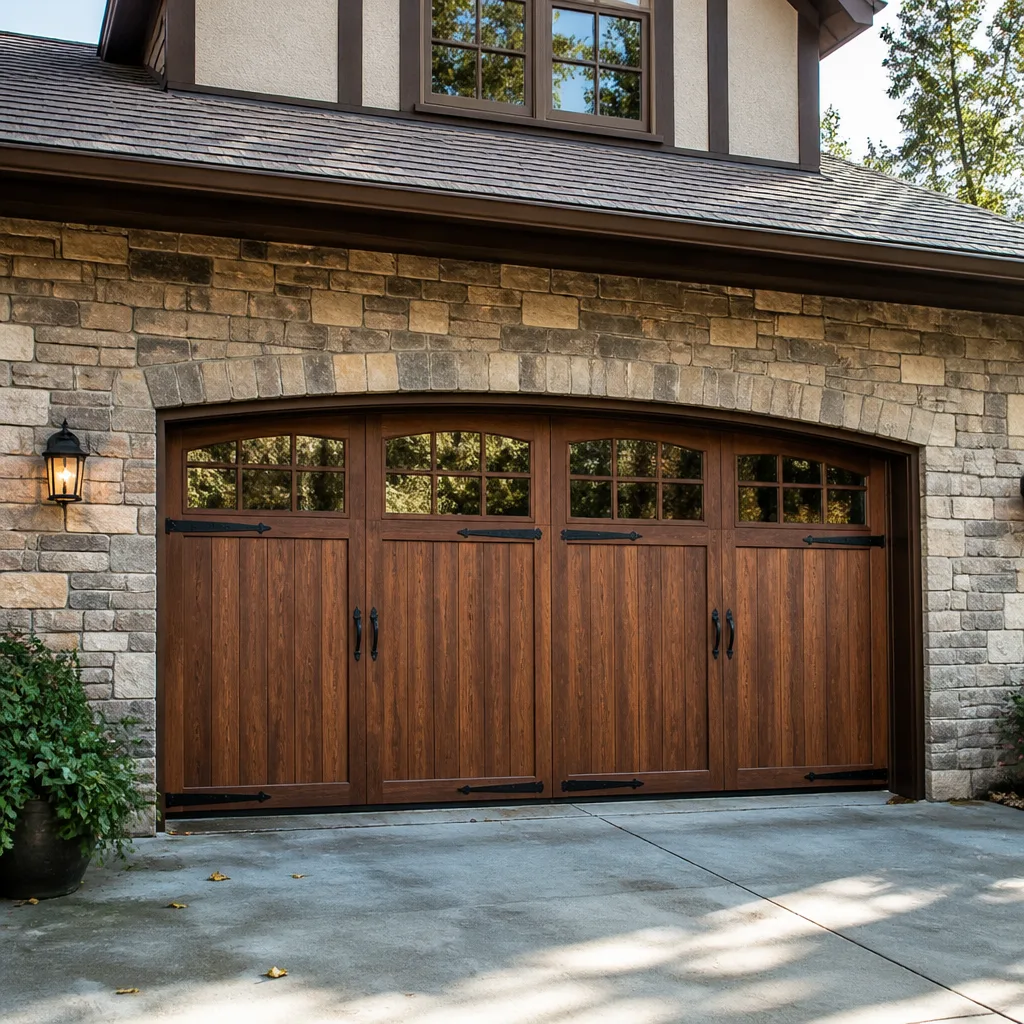 Carriage house
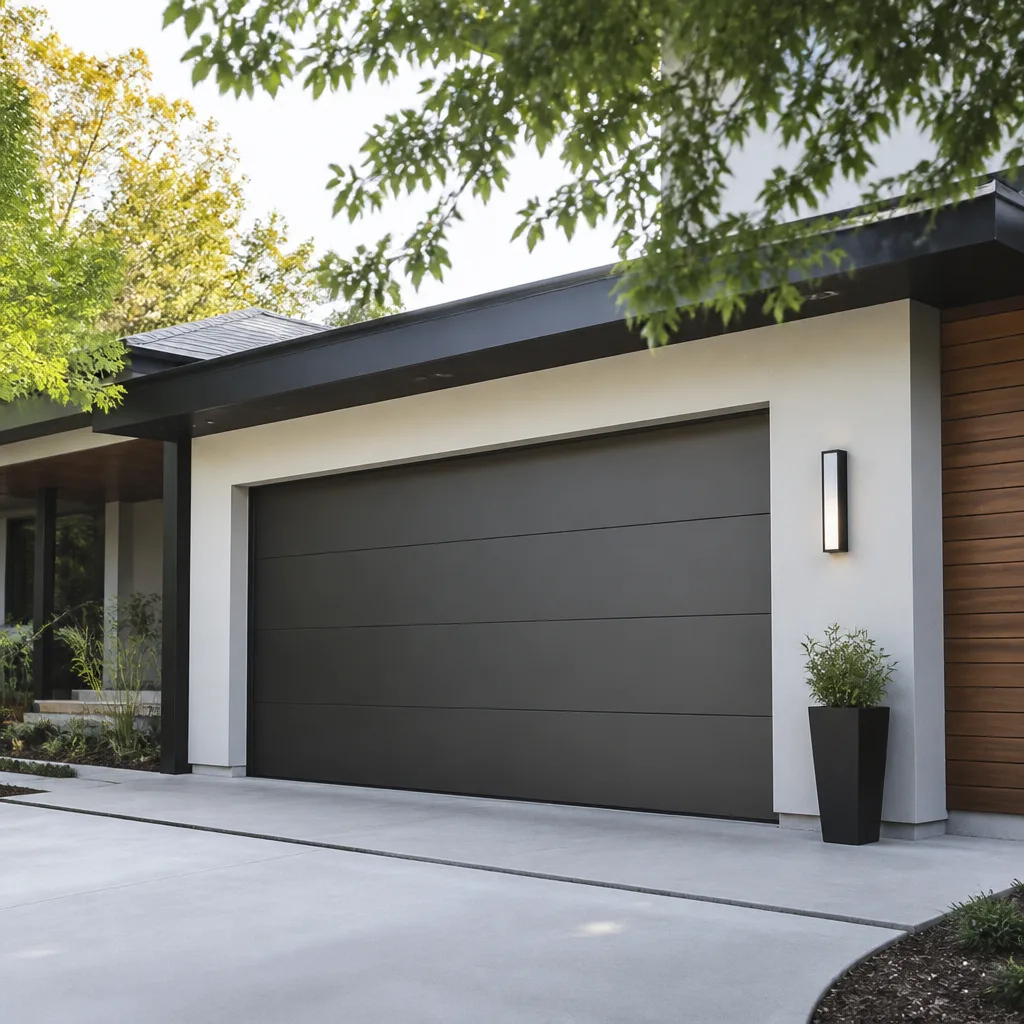 Modern flush
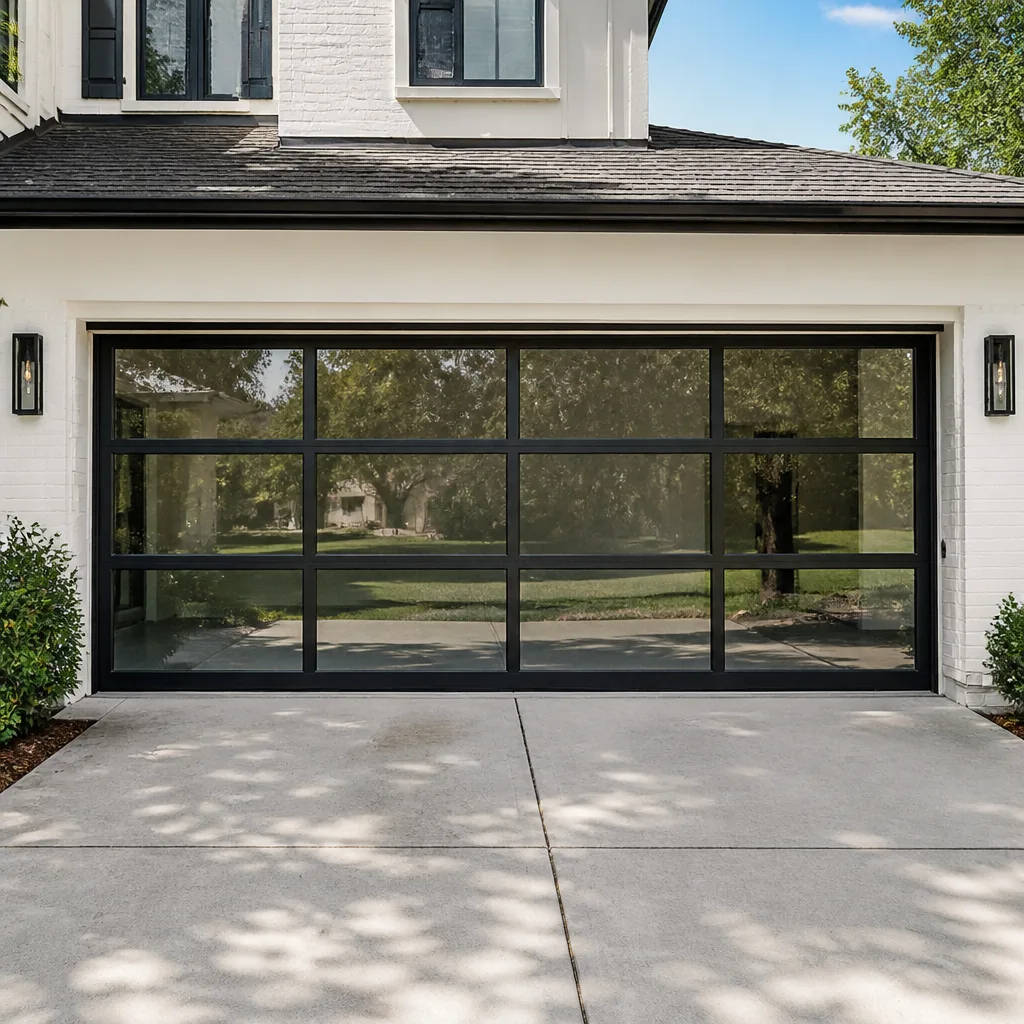 Full-view glass
 LiftMaster openers
 Chamberlain openers
Full 25-point door and opener safety check with every visit - springs, cables, rollers, tracks, and your LiftMaster or Chamberlain opener included
You get a price before we start. It does not change when the pro arrives.
Get your free estimateDIY vs Professional Garage Door: The Meriden Homeowner’s Decision Guide
Most homeowners think the DIY-versus-professional question comes down to how handy they are. It doesn’t. What actually matters is the failure mode: what happens when the repair goes wrong. Some garage door tasks have forgiving failure modes. You waste an afternoon, you buy a part twice, the door still opens. Others don’t forgive anything. A garage door torsion spring can store enough energy to break a hand or worse, and no amount of general handiness changes that physics. This guide sorts every common garage door job by that single measure, explains the Connecticut liability questions homeowners rarely consider before grabbing a wrench, and shows you exactly where the sensible DIY line falls for a Meriden homeowner.
Quick Answer
For a Meriden homeowner, safe DIY territory is weatherstripping, lubrication, track cleaning, photo-eye alignment, and remote programming. Anything involving the springs, cables, bottom brackets, or the physical installation of a new door or torsion-loaded opener belongs in professional hands because the consequences of a mistake are injury, a collapsed door, or a repair bill far larger than the original job. Everything between those two poles, like opener repair on a low-tension chain drive or adjusting a misaligned track, is a judgment call based on your tools, your research, and how the door is currently behaving.
Styles & brands we work with
- Raised-panel steel
- Carriage house
- Modern flush
- Full-view glass
- LiftMaster openers
- Chamberlain openers
Table of Contents
- Why “I’m Handy” Isn’t the Right Question
- The Three-Tier Task List: DIY-Safe, DIY-Possible, and Professional-Only
- Springs, Cables, and Brackets: The Line You Don’t Cross
- The Connecticut Liability Exposure of a Failed DIY Repair
- What a Genuinely Safe DIY Job Looks Like in Meriden
- Opener Work and Connecticut’s Permit Gray Area
- How to Read a Quote (and When Asking for Parts-Only Is Reasonable)
- What Happens When You Call
Why “I’m Handy” Isn’t the Right Question
A garage door looks like a big mechanical system with obvious parts. That surface simplicity is why so many capable homeowners decide to handle a repair themselves. A torsion spring, though, isn’t a bolt. When it’s fully wound during replacement, it holds roughly 100 foot-pounds of stored torque. That energy doesn’t care whether you’re careful, whether you’ve watched every video, or whether you’ve done a hundred other mechanical jobs. It releases the same way regardless. This is why hardware stores don’t stock torsion springs on the open shelf and why a whole category of injuries exists in emergency rooms around garage door work that never appears in the woodworking or plumbing columns.
So the right question isn’t “Can I do this?” It’s “If I get it wrong, what’s the worst case?” For a misaligned weatherstripping, the worst case is water gets inside. For a track adjustment, the worst case is the door still doesn’t run smoothly and you call someone. For a spring, the worst case is loss of fingers, hands, or worse. For a failed repair that later hurts someone else, the worst case is a liability question with no good answer.
Sorting every garage door task by its failure mode is the whole framework of this guide. Once you see jobs through that lens, the decisions become obvious, even if your confidence and skills are high. Our team here at Meriden Garage Door Repair Pros handles plenty of repairs that started as DIY projects, and the pattern we see is consistent: the homeowner stopped at the right point on the springs, then got stuck on something small that needed the right part for their specific system.
The Three-Tier Task List: DIY-Safe, DIY-Possible, and Professional-Only
Here’s the definitive sort. Injury risk and code compliance decide the tier, not difficulty. A chain-drive opener repair might be more complicated than replacing a bottom seal, but only one of them can break your arm.
Tier 1 – DIY-Safe (reasonable for a careful homeowner)
- Weatherstripping and bottom seal replacement. Peel off the old, slide in the new, trim to length. No stored energy anywhere.
- Lubrication. A garage-door-rated lubricant on hinges, rollers, and the torsion bar shaft. Ten minutes with a rag and a can.
- Photo-eye alignment. If the door reverses on its own, the safety sensors are usually knocked out of line. Loosen, straighten, retighten.
- Remote and keypad programming. All major brands build this into the opener’s control panel or a programming button. Your manual gets you there in five minutes.
- Visual inspection. Look for frayed cables, worn rollers, a sagging bottom rail, or a gap between door and frame. The catch is that identifying a problem isn’t the same as fixing it.
Tier 2 – DIY-Possible With Real Research
- Roller replacement on a sectional door. Doable if you secure the door properly and do one roller at a time, but a door that shifts during the job can come out of its tracks.
- Track adjustment for a minor misalignment. A gentle tap on a slightly bent track is usually fine. A badly bent track means the door isn’t sitting square, which usually traces back to a bigger issue.
- Chain and belt tension check. Adjusting tension is simple if you know the correct amount of slack for your opener model. Getting it wrong is somewhere between annoying and damaging.
- Replacing a single hinge or bracket on a non-tensioned part of the door. Straightforward if you confirm exactly which part you need first.
Tier 3 – Professional-Only
- Torsion spring replacement. The most dangerous task on the entire door. Full stop.
- Extension spring replacement. Less stored energy than torsion, but the same injury category and the same failure consequences.
- Cable replacement. Cables are under constant tension and can whip if released incorrectly.
- Bottom bracket and center bracket work. Both are directly connected to spring and cable forces.
- Full door replacement or new installation. Requires weight, alignment, and anchor-point work that can’t be verified by eye.
- Opener installation where a permit is required. More on this below, but the short version is that a professional-only task on the electrical side can pull the whole job into professional territory.
Springs, Cables, and Brackets: The Line You Don’t Cross
A torsion spring under tension is a stored-energy device, and a garage door is one of the few stored-energy devices inside a typical home that doesn’t come with any obvious warning label. What we see on a routine garage door spring repair call is that homeowners who tried it themselves often stop halfway through because the winding process feels wrong. It should. You’re deliberately fighting a spring, and a wrong guess on turns, on the winding bar position, or on the set screw torque is the kind of mistake that has no partial-credit version.
Spring repair is the single most safety-critical service in this trade, which is why we treat it as a dedicated specialty rather than one line item on a handyman list. We know the difference between a torsion and extension setup, we know the door weight each spring is matched to, and we know how to walk away from a job that needs additional parts before the spring is safe to install. There’s no reason for a homeowner to learn that trade on their own door.
What about the middle ground? Some homeowners want to understand the anatomy before deciding. That’s fine. Knowing what a spring does, what cable tension looks like, and where the brackets attach is genuinely useful when you’re calling for help and describing what you see. What we’d never recommend is reading so much that you decide the risk is smaller than it is.
The Connecticut Liability Exposure of a Failed DIY Repair
This is the part of the decision that most DIY guides leave out. Connecticut is a state with meaningful premises liability exposure, and a garage door sits on the boundary between your private space and the public sidewalk. If a door you repaired yourself later fails, and that failure damages a visitor’s car, hurts a delivery driver, or drops a door on a child who pushed the button, the question that follows isn’t about skill. It’s about whether the work was done to standard. That is a much harder question to answer when there’s no invoice and no record of who did the work.
Two things you should understand before doing any repair on your own:
- Your homeowner’s policy typically expects the work to have been done to code and by a competent party. That doesn’t mean every DIY job voids coverage. It does mean a claim adjuster can examine whether the failure traces back to how the work was done, and an amateur install is a different answer than a professional one.
- A failed repair that caused injury to someone else is the exposure that matters most. A dented car is annoying. A hurt visitor is a legal question, and the answer rarely favors the homeowner who did the install.
We’re not attorneys and this isn’t legal advice. What we can tell you is that in our experience, the standard for a professional garage door installation in Meriden involves written spec, manufacturer alignment on the right anchor hardware, and code compliance on the electrical side if a new opener is involved. None of that travels with a DIY job that has no paper trail.
What a Genuinely Safe DIY Job Looks Like in Meriden
The safe side of the ledger is real, and Meriden’s climate rewards homeowners for using it. Between the damp, freeze-thaw winters and the hot humid stretches in July and August, weatherstripping and bottom seals take a beating. That makes bottom seal replacement the single most useful DIY job on the list. Here’s how a well-run version of it looks:
- Measure your door width at the bottom rail and note the track style of your existing seal. Clopay, Amarr, and Wayne Dalton doors use different seal profiles, so the width alone isn’t the spec you need.
- Buy the matching profile in a roll. Local hardware stores carry the common profiles.
- Lift the door a few feet so you can work without crouching or kneeling on cold concrete.
- Pull the old seal out of its track from one end, all the way across.
- Slide the new seal in, starting at one end and pushing it along the channel.
- Trim the ends to sit just inside the door edge and confirm the seal compresses when the door closes.
Realistic budget: the seal itself runs in the range of a modest hardware purchase, and the job is under an hour for one person. Lubrication is even faster, and photo-eye alignment is a five-minute fix when a sensor gets bumped. Those three jobs are where a homeowner saves real money with zero downside. Weatherstrip, lubricate, align. Everything past that starts handing risk back to you.
Opener Work and Connecticut’s Permit Gray Area
Opener installation sits in a genuinely gray zone. A straight swap of a like-for-like unit on the same wiring, with the same power source, is treated by most municipalities as a mechanical repair rather than new electrical work. A new opener that requires a new dedicated circuit, a longer run to a panel, or a sub-panel install runs into electrical code territory, and most cities require a permit for that. Ask your city’s building department to confirm exactly what Meriden requires for your situation before assuming the answer either way. That five-minute call can save you a whole redo.
Here’s where the practical decision usually resolves. Most modern openers are smart-home integrated, and the difference between a smooth install and a headache is often in the brand-specific details: how a Chamberlain pairs with a home hub, which LiftMaster wall control supports the auto-lock, and whether the Genie drive type your door needs fits into the headroom you have. Trying to sort that out under a ceiling on a ladder is where DIY stops being fun. When you’re ready to talk about garage door opener repair or a full opener swap, we work across Chamberlain, LiftMaster, Genie, and Craftsman drive systems, so the diagnosis isn’t a brand guess.
What opener work is safe to DIY? Remote and keypad programming, battery replacement in the wall button, and cleaning the sensor lenses. What isn’t? Anything that involves running new wire, replacing the main logic board, or a full drive-type change. Our technicians have up to 11 years of experience with those jobs, and the reason the certification matters is that the same failure looks different on a chain-drive Chamberlain versus a belt-drive LiftMaster.
How to Read a Quote (and When Asking for Parts-Only Is Reasonable)
One legitimate reason homeowners lean toward DIY is a fear that a quote is padded. That fear isn’t irrational. Here’s how to evaluate a garage door quote in a way that protects you without shrinking the scope of a needed repair.
Signs a quote is padded
- A spring replacement quote that lists springs separately plus “spring labor” plus “spring disposal.” Spring replacement is a single job, and the price should reflect that.
- An opener install quote that adds “calibration” or “final programming” as line items. Programming is part of installing an opener, not an add-on.
- Rollers, hinges, and bolts itemized individually on a door replacement quote. Spec-grade hardware is bundled into the door price for a professional install.
- A quote that doesn’t state a written total before work starts. Every legitimate quote is in writing and the price is agreed before anyone picks up a tool.
When parts-only is reasonable
For Tier 1 and clear Tier 2 jobs, asking a company whether they’ll sell you just the parts is reasonable. A roller set, a weather seal, or a pair of sensors is a real purchase, and no reputable company takes offense at the request. Where parts-only becomes a genuinely bad idea is anywhere in Tier 3. A homeowner asking for the spring so they can install it themselves is asking us to hand over the most dangerous part of the system with no installation involved, and it’s the one request we won’t say yes to. Not because we don’t trust you. Because the failure mode is too severe to make the transaction reasonable.
What we will do, on any of our estimates, is give you the written price before the work begins. If the price changes once we’re on-site, that change is discussed with you, and only approved by you, before the work continues. Getting the estimate is free, and we’d rather answer the question in a five-minute phone call than have you second-guess a quote for a week.
What Happens When You Call
If you’ve read this far and still aren’t sure which tier your problem sits in, the answer is usually obvious once someone with the right experience looks at the door. A garage door repair call usually starts with a description of what the door is doing (or what it stopped doing), a check on the brand, and a same-day visit if the door is stuck, unsafe, or trapping a car. Emergency service exists for exactly that scenario, not as an upsell on every routine call.
Meriden is a town where these calls cluster around specific weather patterns. The first hard freeze of the year brings a wave of stiff springs and brittle weatherstripping. The first warm weekend of spring brings a wave of openers that won’t close the door because a photo eye got coated in pollen. Neither is a sign that your door needs replacing, and neither is worth diagnosing over a phone call from a homeowner who already opened the box. Call (855) 294-4551. We answer 24/7. Fast dispatch from 7am to 7pm, Sunday through Friday. The estimate is free, and the price you’re quoted is the price you pay.
Common Mistakes to Avoid
- Trying to “just loosen” a winding spring to see how tight it is. That’s the exact moment the stored torque releases. Never touch a wound spring.
- Assuming every spring is one size. Clopay, Amarr, Wayne Dalton, and Raynor doors use different spring weight specs. A spring you bought online for the door width isn’t the same as the right spring for your door weight.
- Buying a bottom seal by width only. Meriden’s freeze-thaw cycle exposes the wrong seal profile within a season. Match the profile, not just the measurement.
- Adding lubricant to the track itself. The track should be clean and dry inside the channel; lubricating it attracts grit and wears the rollers.
- Bypassing the safety photo eye while testing. The sensor is the only thing keeping the door from closing on a child or pet. If the door won’t close, the sensor is doing its job.
- Doing an opener replacement without checking permit requirements. New wiring, new panel runs, and new dedicated circuits usually require a permit. Meriden’s building department will tell you what your specific install needs.
- Adjusting the travel limits to fix a symptom instead of a cause. A door that stops short or closes too hard is usually telling you something about the spring or the alignment, and dialing it out at the opener hides the real issue.
See the difference
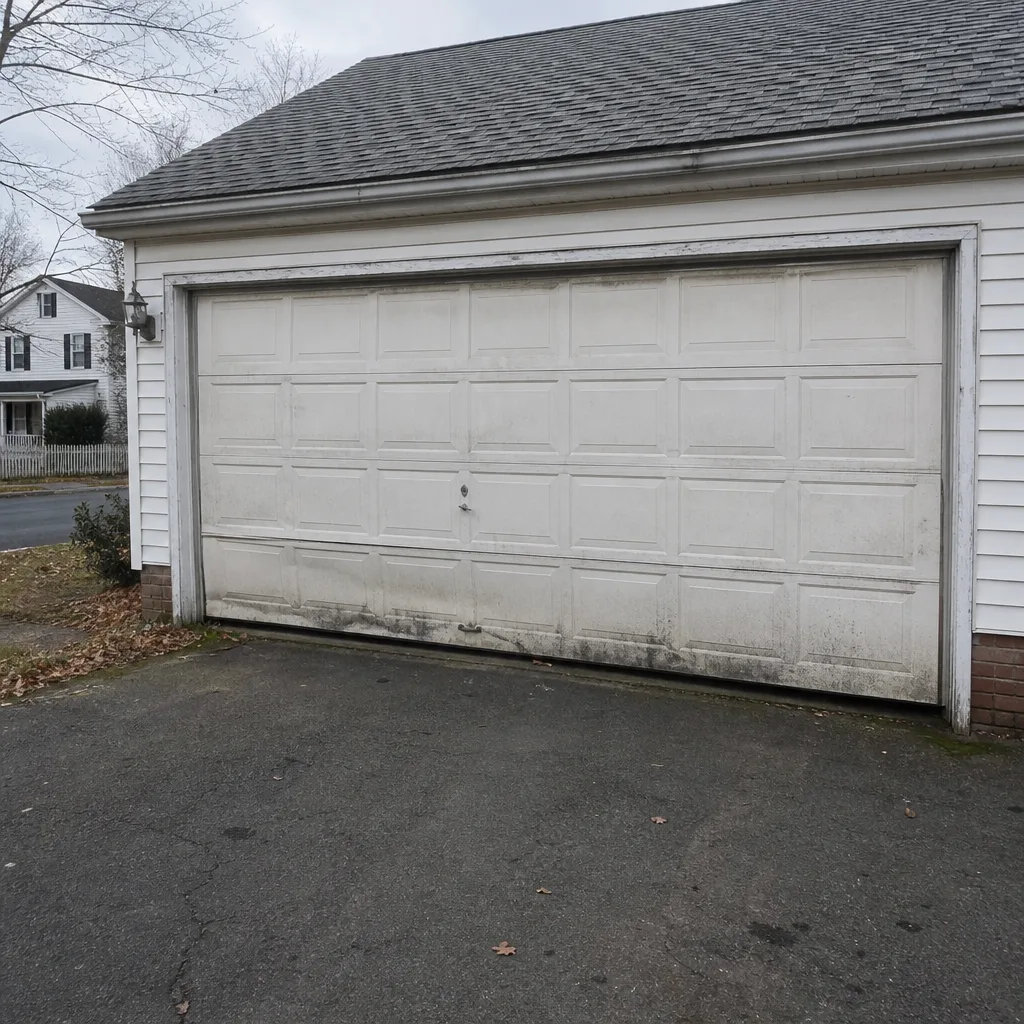 Before
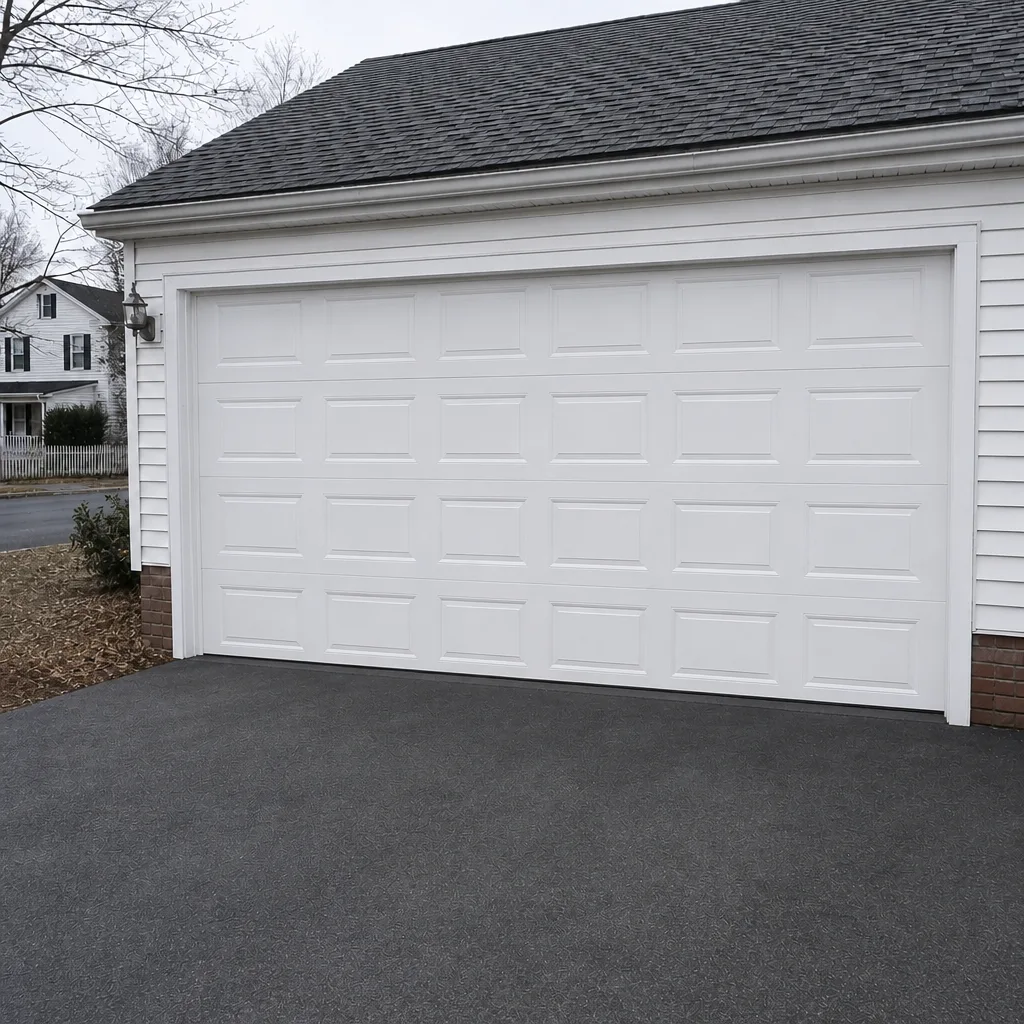 After
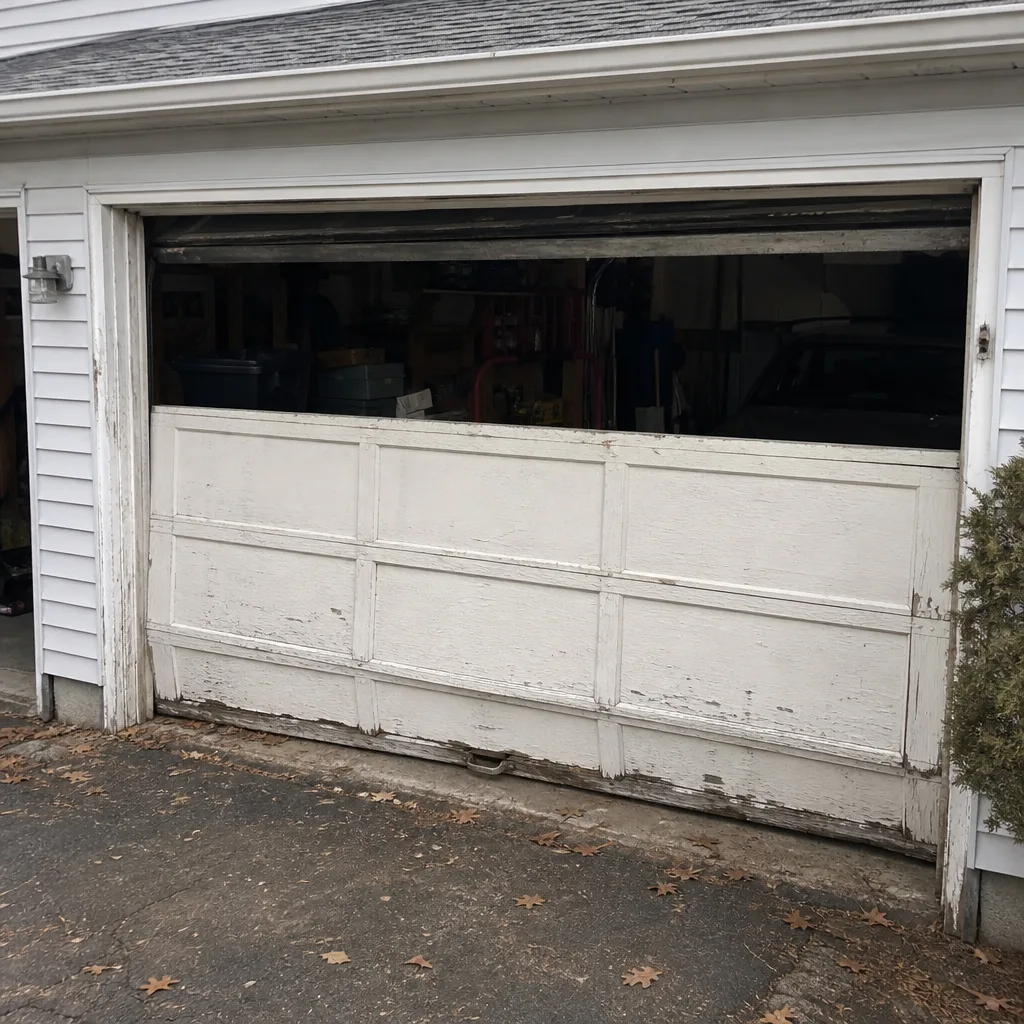 Before
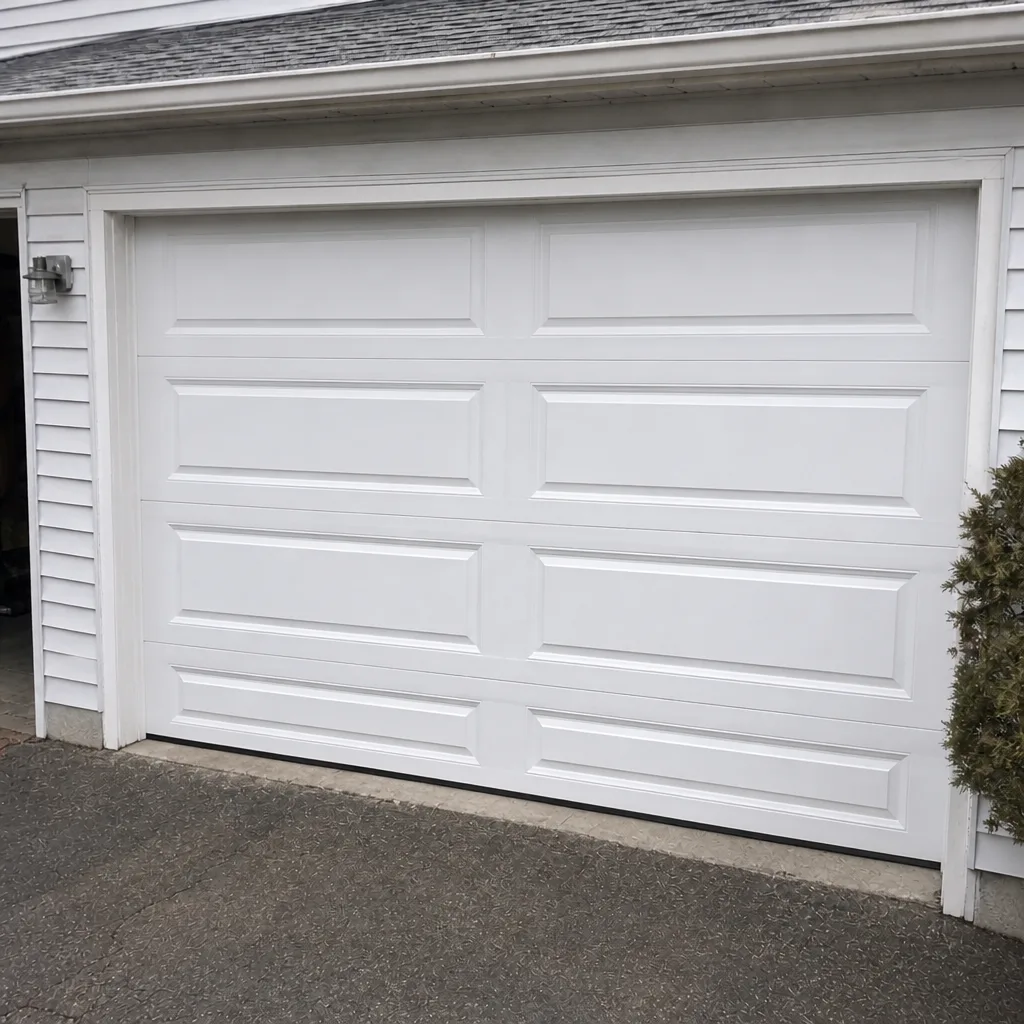 After
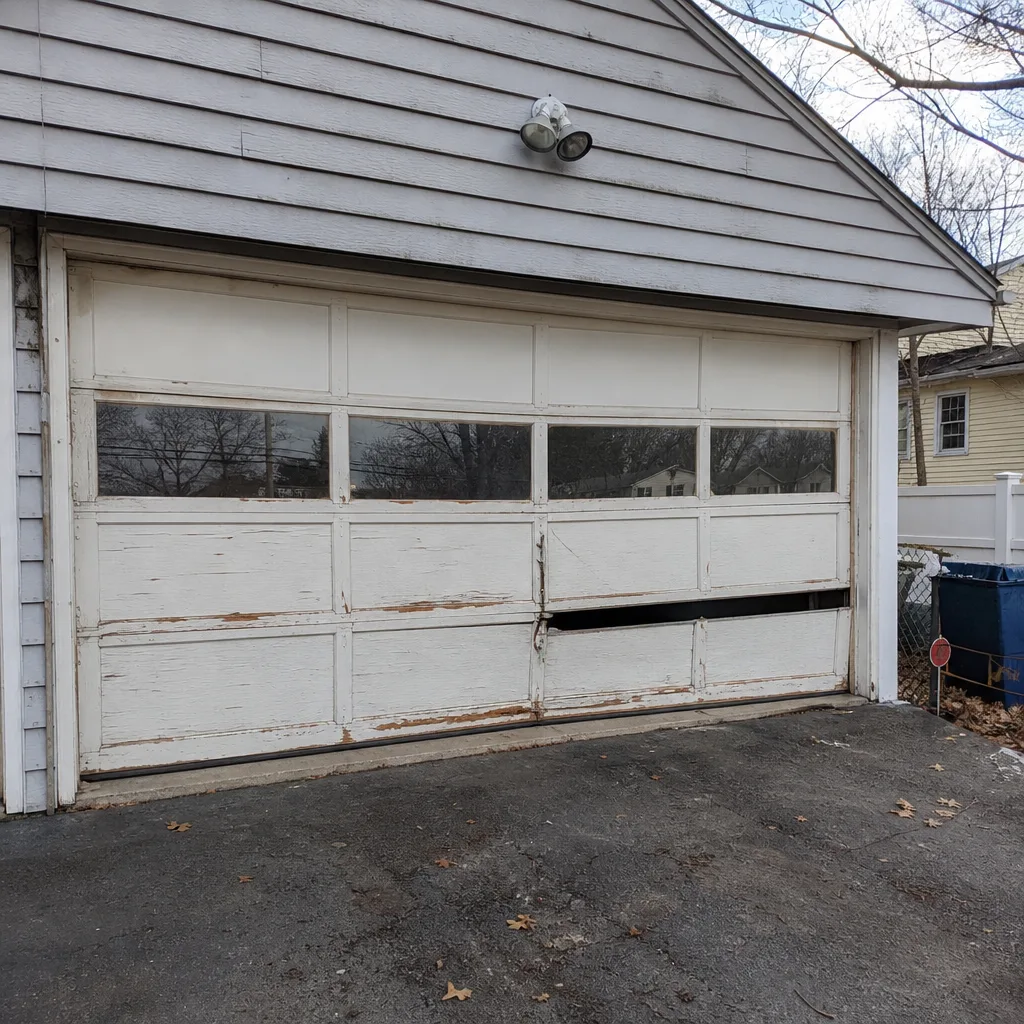 Before
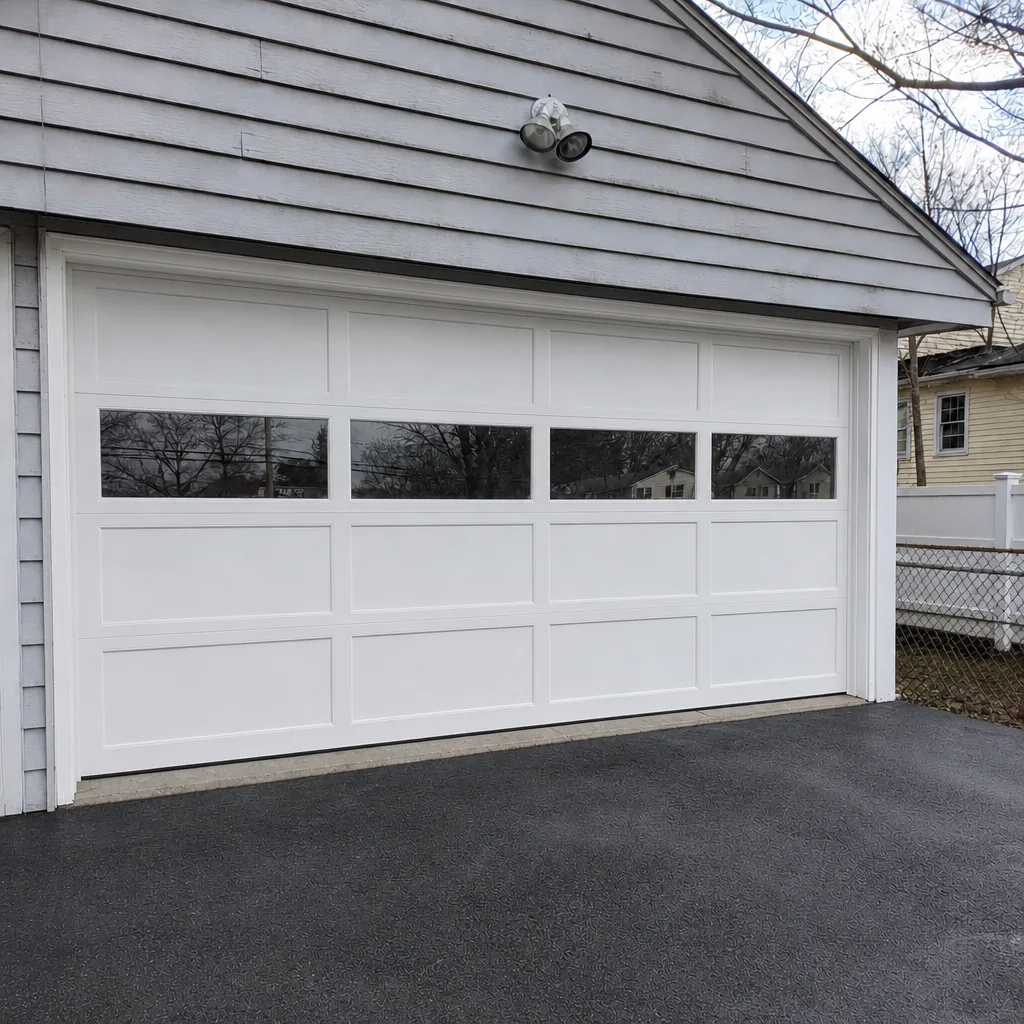 After
When to Call a Professional
Call a professional whenever the answer to “what’s the worst case?” is anything worse than “I wasted an afternoon.” That covers a broken spring, a frayed cable, a door that hit something and won’t travel straight, a bottom bracket that looks bent, and any new door or opener installation where the electrical side might touch a permit. It also covers the moment when you’ve half-finished a DIY job and realize the door is now worse off than when you started. That last one is not an embarrassment; it’s a good call. Meriden Garage Door Repair Pros offers free estimates in Meriden, and we work across Amarr, Wayne Dalton, Craftsman, and Raynor systems, along with the other major brands, so the technician arrives already knowing the platform they’re looking at. Call (855) 294-4551.
Frequently Asked Questions
You shouldn’t. A fully wound torsion spring stores roughly 100 foot-pounds of torque, and a single slip during winding or unwinding can cause serious injury. Spring replacement requires proper winding bars, correct turns on the new spring, and a controlled release process that can’t be safely rehearsed on a video. Call (855) 294-4551 for a free estimate and same-day spring repair.
Bottom seal and weatherstripping replacement are the two safest jobs on the whole door. They involve no stored energy, no wiring, and no height work, and Meriden’s climate makes them the two jobs that need doing most often. Lubrication and photo-eye alignment round out a short, useful DIY list.
It depends on whether the install involves new electrical work. A like-for-like opener swap on existing wiring is usually treated as a mechanical repair, but a new opener that needs a new dedicated circuit or panel work typically requires a permit. Ask Meriden’s building department to confirm for your specific install before buying the unit. Call (855) 294-4551 and we’ll help you figure out which side of the permit line your project falls on.
Only if you don’t count the injury, the potential damage to the door frame, and the correct part that you probably can’t source retail. Garage door springs are matched to the door weight, not the door width, so a wrong-spring install causes accelerated wear on the whole system. The realistic trade-off isn’t money against money; it’s money against risk.
Usually the work itself isn’t covered, and if the failure caused damage or injury to a third party, the claim may hinge on how the work was done. Every legitimate repair should be in writing with a documented professional scope. That’s true for any garage door work in Meriden, not just ours, but it’s the paper trail that moves an insurance question into a version where you have an answer.
Yes, for time-sensitive calls like a door stuck open, a broken spring, or a vehicle trapped inside. We answer 24/7 and fast dispatch runs from 7am to 7pm, Sunday through Friday. A call outside dispatch hours is booked into the next opening. Emergency service exists for exactly that situation, and we’d rather see a half-finished repair in progress than have you keep pushing on it.
The Bottom Line
The DIY-versus-professional decision on a garage door isn’t about ability. It’s about which tasks have forgiving failure modes and which don’t. Weatherstripping, lubrication, photo-eye alignment, and remote programming are all genuinely safe, genuinely useful, and genuinely yours to do. Springs, cables, brackets, and full installations are professional-only because the physics doesn’t allow a safe second attempt. Opener work sits in the middle and turns on whether new electrical runs are involved. Everything else is a written quote away from a decision, and the quote is free. Whether you’re in the middle of a DIY project that got complicated or you’re planning one you haven’t started, we’ll tell you honestly which tier it’s in. Call (855) 294-4551 for a free estimate in Meriden.
Written by the team at Meriden Garage Door Repair Pros.