
Last updated November 21, 2026
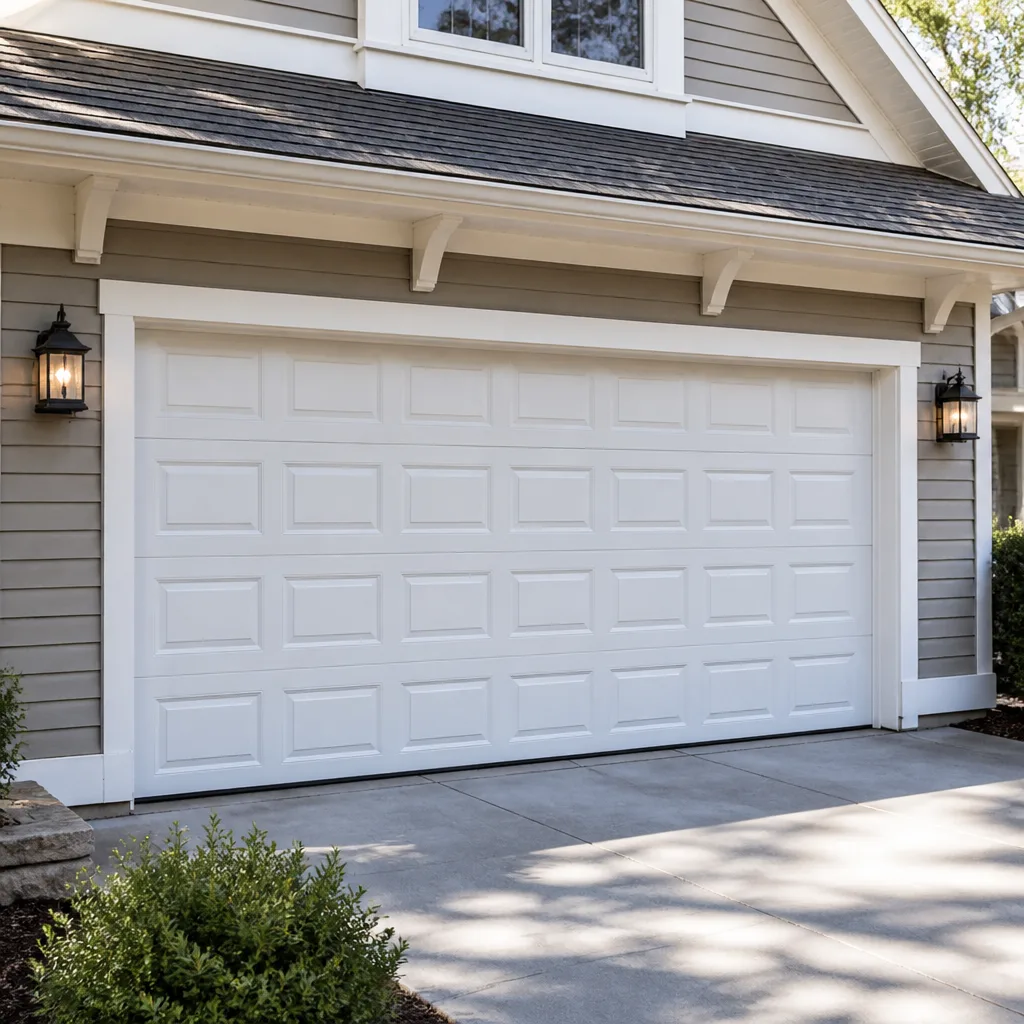 Raised-panel steel
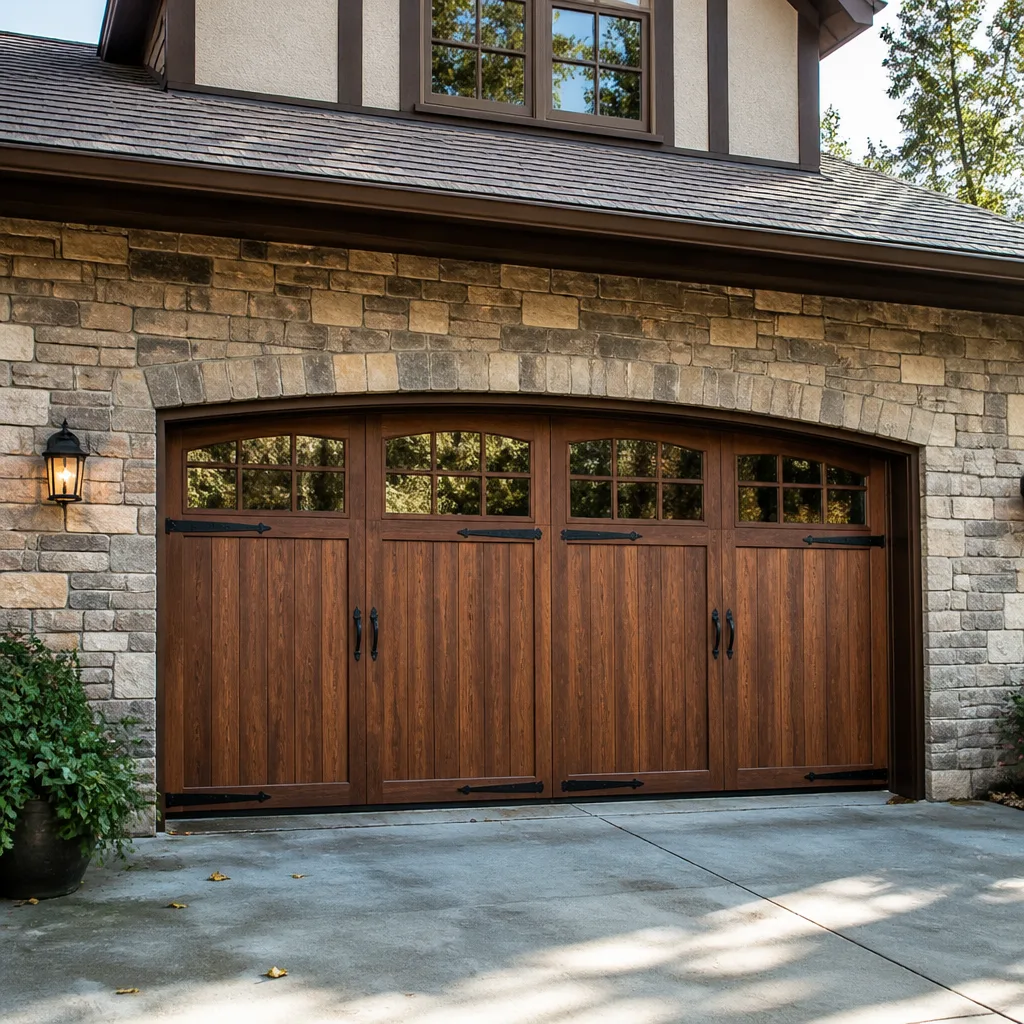 Carriage house
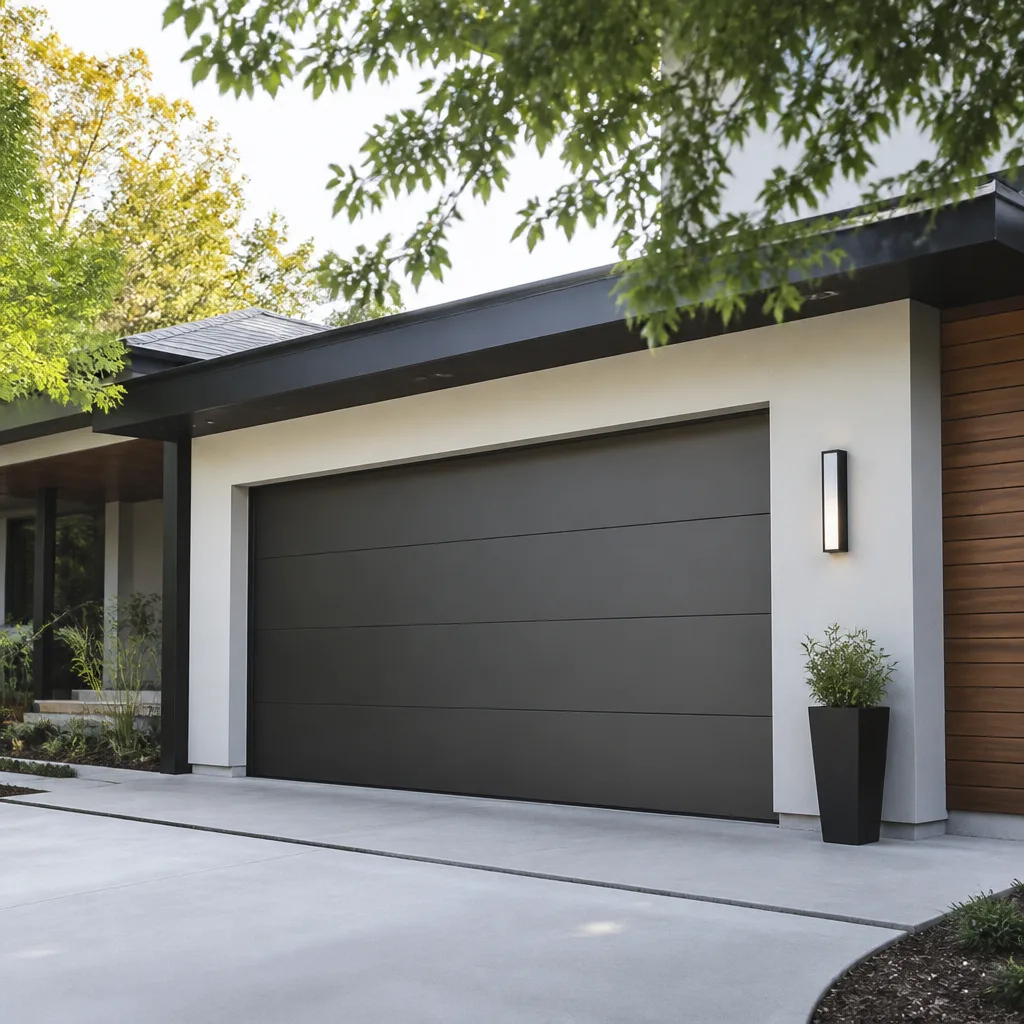 Modern flush
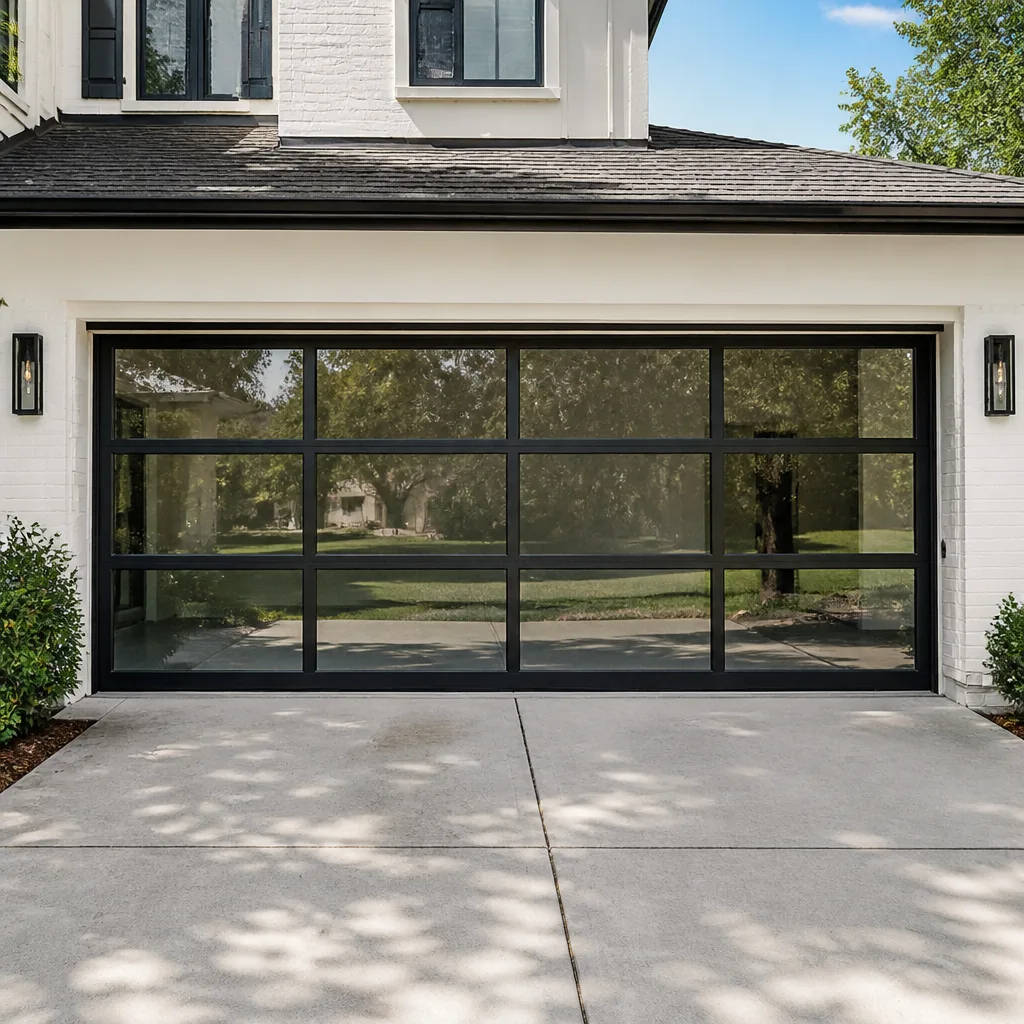 Full-view glass
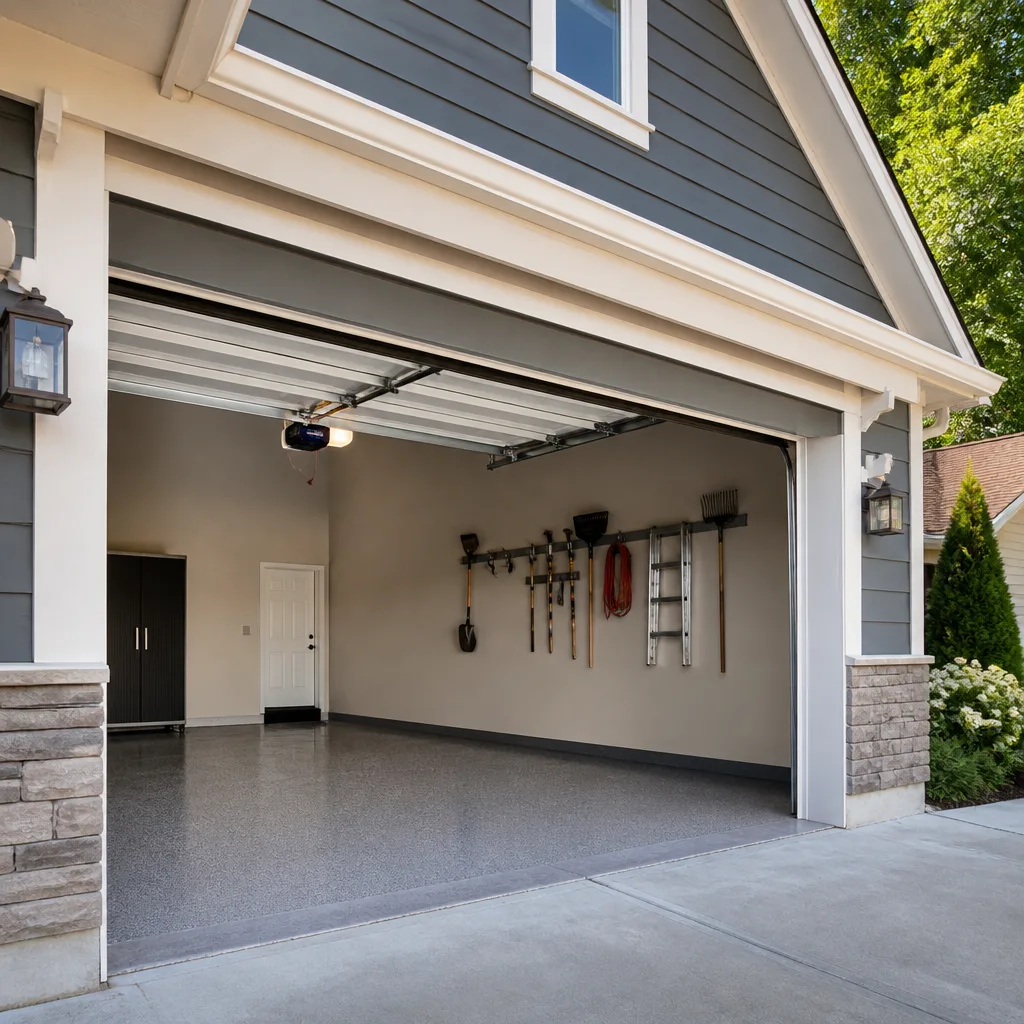 LiftMaster openers
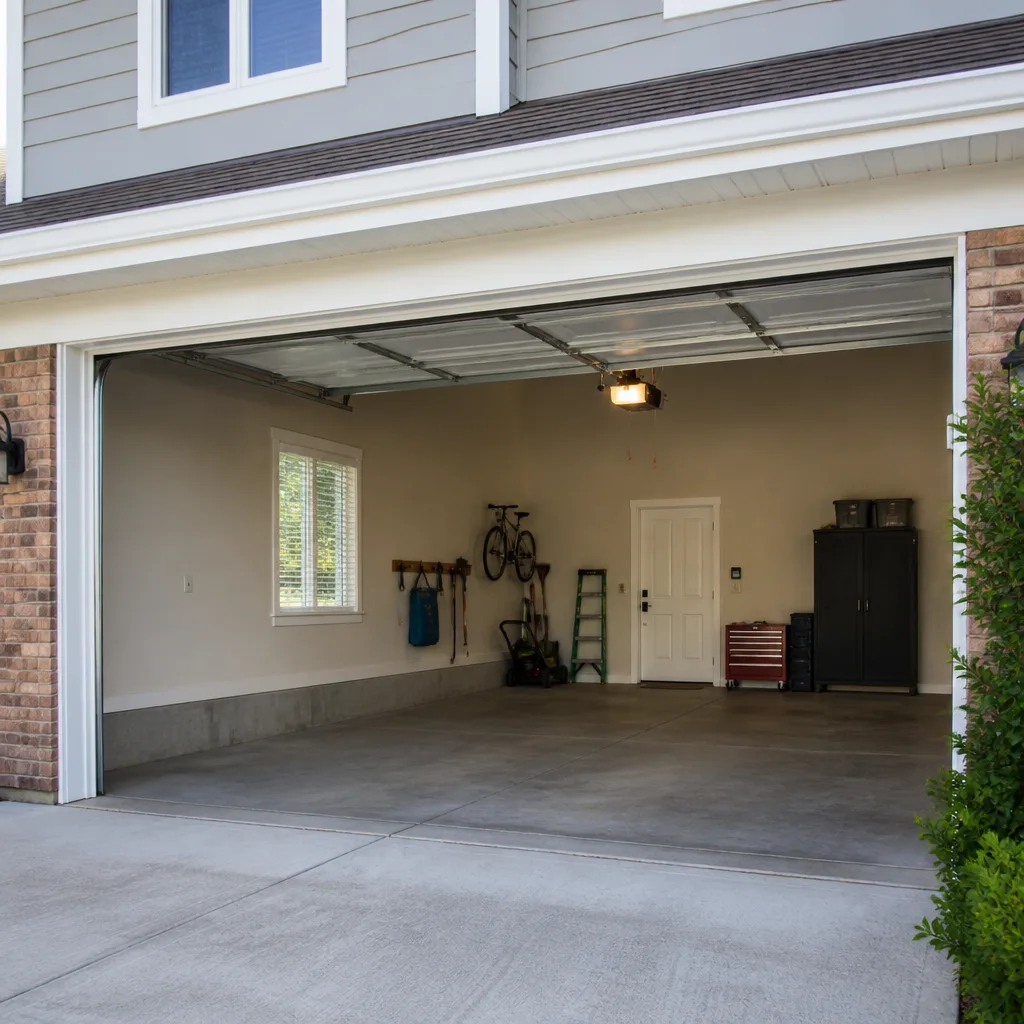 Chamberlain openers
Full 25-point door and opener safety check with every visit - springs, cables, rollers, tracks, and your LiftMaster or Chamberlain opener included
You get a price before we start. It does not change when the pro arrives.
Get your free estimateThe Complete Guide to Garage Doors in Meriden
Most garage door advice treats the door as a single product you buy and forget. That’s backwards. A garage door is a mechanical system, and every part in it – panels, hinges, rollers, springs, cables, opener – is matched to the others by weight and geometry. Change one piece without recalculating the rest and the system eats itself. Nowhere does this matter more than in Meriden, where a lot of the housing stock predates any modern “standard” door size. In this guide we’ll walk through how Meriden’s homes and its humidity-to-freeze climate shape every decision, from panel material to opener torque, and how to read your own door before you ever pick up the phone.
Quick Answer
A garage door in Meriden should be evaluated as a complete mechanical system – weight, spring balance, opener capacity and panel material all have to match each other and match the door’s actual rough opening. In Meriden’s older homes that opening is often non-standard, so measuring first and recalculating the other parts is what prevents premature failures. If the door is sagging, noisy, unbalanced or won’t stay up, the fix usually starts with the balance system, not the opener.
Styles & brands we work with
- Raised-panel steel
- Carriage house
- Modern flush
- Full-view glass
- LiftMaster openers
- Chamberlain openers
Table of Contents
- Why Meriden’s Older Housing Stock Changes the Whole Equation
- The Humidity-to-Freeze Cycle and What It Does to Door Materials
- Door Weight, Spring Size and Opener Torque: One System, Three Parts
- How to Read Your Door’s Data Tag Before You Call Anyone
- Multi-Brand vs. Single-Brand: What You Actually Gain
- Repair or Replace? A Practical Framework
- Choosing Panels for a Meriden Climate
- Openers, Drive Types and Smart-Home Controls
Why Meriden’s Older Housing Stock Changes the Whole Equation
The average Meriden home was built between 1940 and 1980, and that single fact drives more garage door decisions than any brand or model. Garage openings from those decades were built to the dimensions of whatever door the builder had, not to a universal spec. It’s common to find rough openings that sit an inch or two off the sizes sold off the shelf today. That mismatch, in our experience, is the source of more callbacks than any single mechanical failure.
Here’s what that means in practice. When a rough opening doesn’t match a stock size, you have three realistic paths:
- Custom or sized-to-fit panels. A door made to the opening avoids framing changes but usually costs more and takes longer to order.
- Framing adjustment. A technician adjusts the opening to accept a standard size. It’s often the cleanest long-term fix but adds carpentry to the job.
- Trim and track modification. Sometimes the gap can be closed with trim and track adjustments without touching the framing.
None of these is automatically the “right” answer. The point is that anyone quoting a replacement over the phone without measuring the rough opening is guessing. A free on-site measure is what turns a ballpark into a real written estimate. In neighborhoods with a lot of mid-century construction, this step is not optional. If you’re replacing the door rather than repairing it, we always measure before quoting, and so should anyone you hire.
The Humidity-to-Freeze Cycle and What It Does to Door Materials
Connecticut doesn’t give garage doors a clean winter or a clean summer – it gives them both, over and over. The cycle that does the damage is the thaw-and-freeze rhythm: damp air pushes humidity into wood and steel, then a hard freeze expands whatever moisture got in. That’s harder on materials than either a steady cold climate or a steady warm one, because the repeated expansion is what cracks, warps and splits.
What to watch for in Meriden:
- Wood doors: check the bottom section and joints for soft spots and paint failure. A failing finish lets moisture in, and freezing finishes the job.
- Steel doors: look at the bottom edge and around hardware for rust blooms. Standing moisture at the threshold is the usual culprit.
- Weather seals: the bottom seal and side seals are the first line against moisture. A cracked seal at the floor lets water in and speeds up everything above it.
- Hardware and rollers: repeated freeze cycles loosen fasteners and stiffen rollers. A door that ran quiet all summer can start grinding by mid-winter.
Storm and impact damage happens here, but hail is uncommon in this part of Connecticut. The bigger year-round threat is moisture and freeze, not falling ice. A yearly inspection before the first hard freeze catches most of it while it’s still cheap to fix.
Door Weight, Spring Size and Opener Torque: One System, Three Parts
This is the section most guides skip, and it’s the one that saves homeowners the most money. Your door’s weight, its springs and its opener motor are a matched set. Springs are sized to counterbalance a specific door weight. The opener is sized to lift whatever the springs don’t. Change any one of the three without recalculating the others and the system fails early – usually at the spring or the opener gear.
The failure chain looks like this:
- A homeowner upgrades to a heavier, better-insulated door but keeps the original springs.
- The springs are now under-sized for the added weight, so they work harder and break sooner.
- The opener now lifts more than it was rated for, and its gear or motor wears prematurely.
- Within a couple of years you’re replacing both the springs and the opener – well before either should have failed.
The reverse also happens: a lighter door on springs sized for a heavier one creates an unbalanced door that slams or reverses. Springs are the most dangerous part of your garage door system, so this is not a place for guesswork. Torsion and extension springs store serious energy – a torsion spring under full tension can cause severe injury if it’s mishandled – which is why we treat spring work as its own safety-critical specialty rather than a general repair. If your door is unbalanced, sagging or won’t stay up, that’s a signal the balance is off and it needs a professional look, not a DIY fix.
When the balance is right, we take care of it as part of garage door spring repair; when the opener is the weak link, it’s garage door opener repair. The two are related, but the diagnosis comes first.
How to Read Your Door’s Data Tag Before You Call Anyone
The fastest way to get the right part for your specific system is to know exactly what you already have. Nearly every modern garage door carries a data tag – usually a sticker on the inside of one panel or on the vertical track – and it holds the information a technician needs to quote accurately. Reading it before you call saves time and prevents mis-ordered parts.
What to look for on the tag:
- Manufacturer and model number: this tells you which brand line you’re dealing with, whether that’s a Clopay, Amarr, Wayne Dalton or another line.
- Serial number: useful for warranty support and for confirming the build year within that model.
- Door size or serialized dimensions: confirms the actual panel dimensions, which matters in older Meriden homes.
- Panel material and insulation type: steel, aluminum or wood, and whether it’s insulated, guides the repair or replacement path.
If the tag is worn, faded or missing, photograph both the inside of the door and the opener’s label. That combination is usually enough for a technician to identify the system and quote from it. We work on the brand you already have, so having the tag in hand means we arrive prepared with the right questions.
Multi-Brand vs. Single-Brand: What You Actually Gain
A single-brand dealer knows one product line deeply, and there’s nothing wrong with that – as long as your door happens to be that brand. The problem comes when it isn’t. A single-brand contractor either can’t source the right part, has to special-order and wait, or tries to substitute a part that doesn’t match. A multi-brand specialist avoids the brand guess entirely.
We service 8 industry-leading brands: LiftMaster, Chamberlain, Genie, Clopay, Amarr, Wayne Dalton, Craftsman and Raynor. That range matters in two concrete ways:
- Parts availability: with access to multiple lines, the correct part for your system is more likely to be on hand or quickly sourced, rather than forcing a substitute or a long order cycle.
- Warranty support: knowing how each manufacturer’s warranty process works means claims get filed to the right place with the right information the first time, instead of being bounced around.
It also means a single provider can carry you from opener service to full door replacement without a handoff. You won’t need a repair company for one job and an install company for the next. That’s a quieter benefit than a headline, but it’s the one homeowners notice when their needs grow.
Repair or Replace? A Practical Framework
The repair-or-replace question has less to do with the calendar and more to do with the door’s condition – which is why we look at the parts, not just age. A 20-year-old door that’s still balanced and sound can run for years; a 10-year-old door with rusted through panels or a bent track may be done.
Here’s the framework we use:
- Check the panels. Widespread rust, cracking or delamination means replacement is usually the better spend. One damaged panel can often be swapped.
- Check the track and hardware. Bent, rusted or loosened track can be repaired; a thoroughly worn system points toward replacement.
- Check the balance and springs. Worn springs alone are a repair, not a replacement trigger. Worn springs plus a failing door are a different calculation.
- Check the opener. If the opener is failing and the door is sound, new opener only. If both are gone, price both options before deciding.
For older Meriden homes with non-standard openings, replacement often comes with a measurement and framing step that a repair doesn’t. We price both plainly so you can compare the written estimates side by side. When you’re ready to fix something, we handle garage door repair and full installation under one roof.
Choosing Panels for a Meriden Climate
Panel material is where the climate conversation actually pays off. In a climate that swings from humid summer to hard freeze, the wrong panel fails early; the right one holds up. Here’s how the common options behave here.
- Insulated steel: the practical default for Meriden. Steel holds its shape through freeze cycles, and insulation limits the condensation that drives rust and rot. Look at the finish and the bottom edge first.
- Non-insulated steel: durable and lower cost, but more condensation and more noise. Fine for a shed or a pass-through garage, less ideal for an attached garage you use every day.
- Wood: appealing look, but the most maintenance here. It needs a solid paint or stain finish kept up, because any moisture that gets in is what the freeze cycle then expands.
- Aluminum and composite: resist rust well but can be lighter, which means the springs and opener have to match. Worth knowing before you swap.
Whichever panel you pick, the door still has to match its opening and its balance system. Meriden’s older homes make that match a calculation rather than a default purchase.
Openers, Drive Types and Smart-Home Controls
The opener is not the muscle of your garage door – the springs are. The opener only lifts what the springs don’t. That’s why a struggling door whose opener “keeps dying” often has a balance problem, not an opener problem. Getting the balance right is cheaper than replacing openers that were never the cause.
Common drive types and what they suit:
- Belt drive: quietest for attached garages where the door is near living space. We see a lot of these in Meriden homes with bedrooms above the garage.
- Chain drive: durable and cost-effective, but louder. Fine in a detached garage.
- Screw drive: a middle ground with fewer moving parts, good for steady use.
- Smart-integrated openers: Wi-Fi control and smartphone monitoring across the lines we service, including Chamberlain, LiftMaster, Genie and Craftsman.
Openers are their own specialty, and a lot of repair calls are really opener calibration or remote programming tasks, not mechanical failures. From opener remote to full door replacement, we cover the full span. If your opener is the issue, start with garage door opener repair rather than a new door.
Common Mistakes to Avoid
- Replacing a door without measuring the rough opening. In Meriden’s older homes this is the most common source of mis-ordered parts and callbacks. Measure first, quote second.
- Changing door weight without new springs. A heavier door on old springs works both to death prematurely. The springs have to be recalculated with the door.
- Ignoring a door that won’t stay up or is unbalanced. That’s a balance problem, not a minor annoyance, and it’s the reason we treat springs as a safety-critical specialty.
- Choosing a single-brand dealer when your door is another brand. It forces a substitute or a wait. Multi-brand service avoids the brand guess.
- Letting the finish on a wood door go. In a humid-to-freeze cycle, a failing finish is the doorway to rot and cracking. Keep it sealed.
- Skipping the bottom seal. A cracked floor seal lets moisture in, which the next freeze expands. Check it each year.
- Replacing the opener when the springs are the problem. A new opener on an unbalanced door just fails again. Fix the balance first.
See the difference
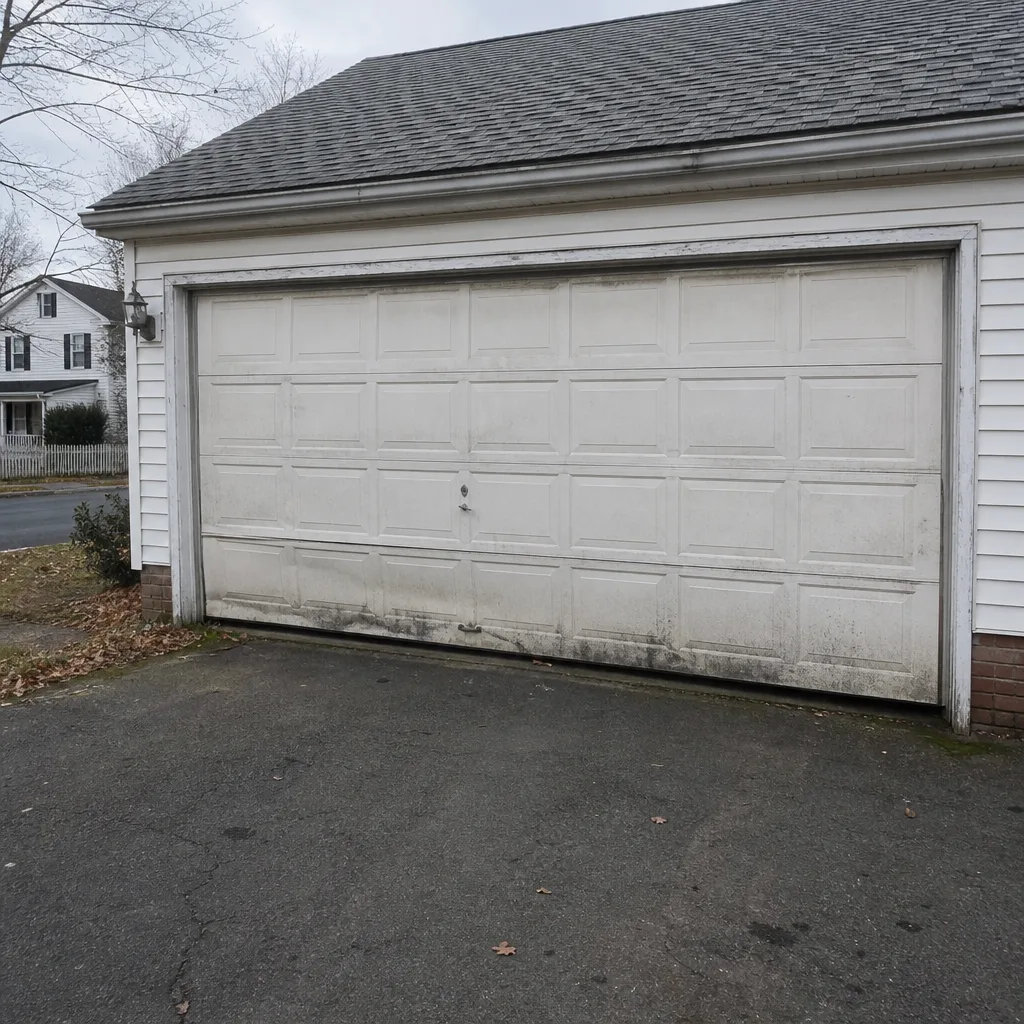 Before
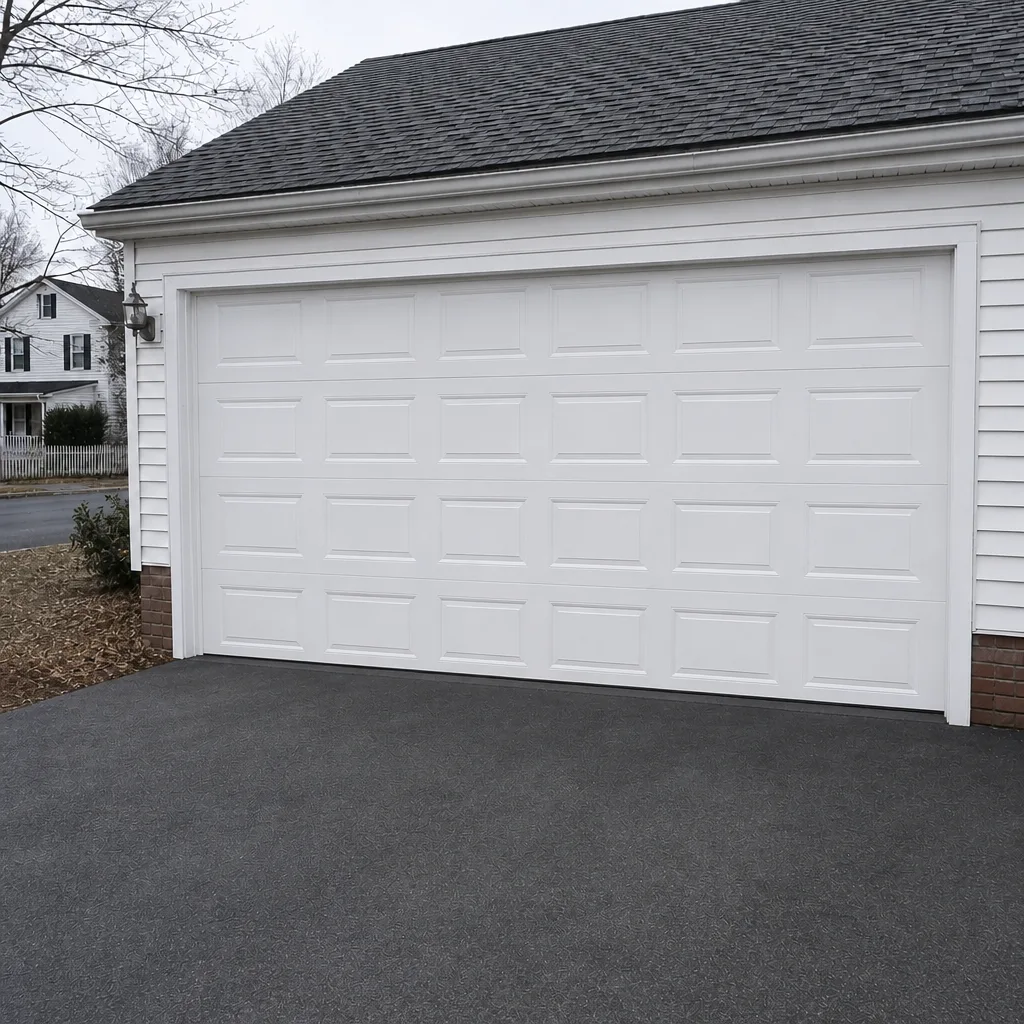 After
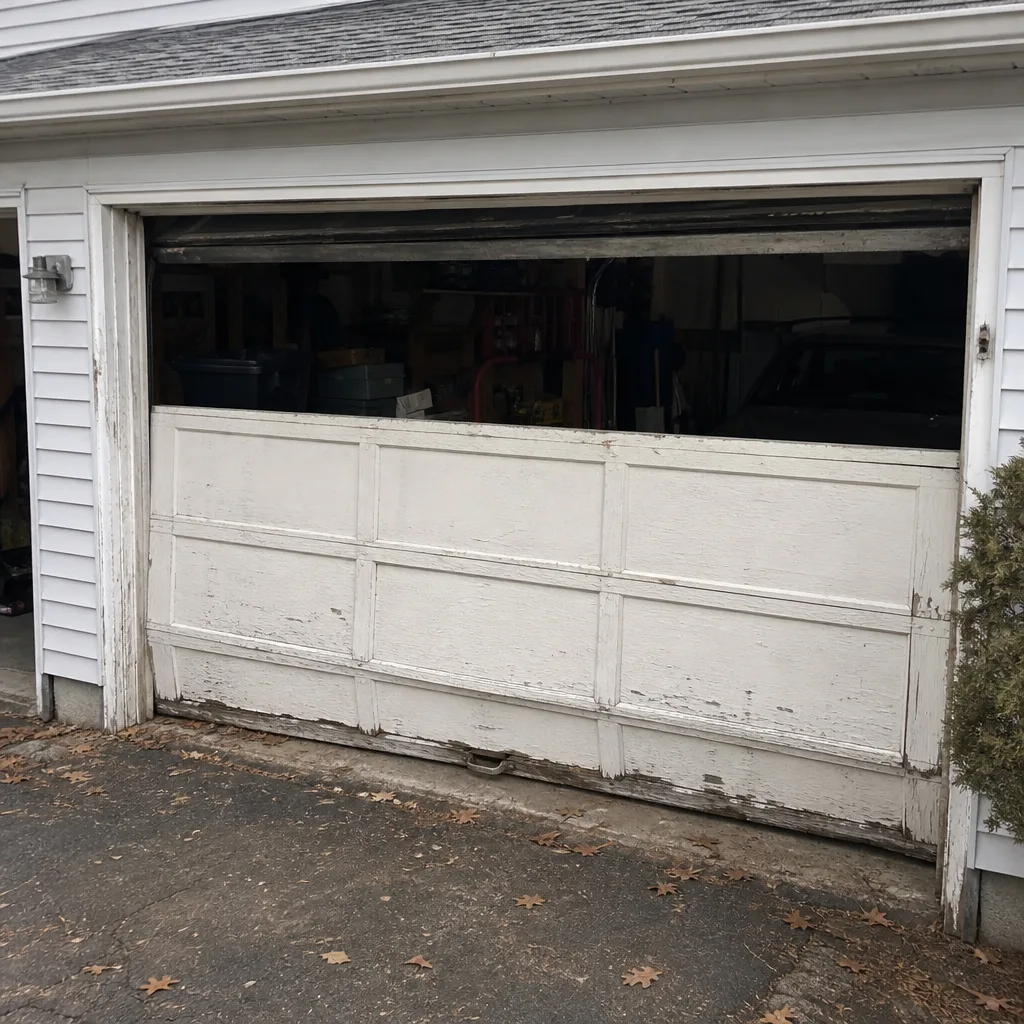 Before
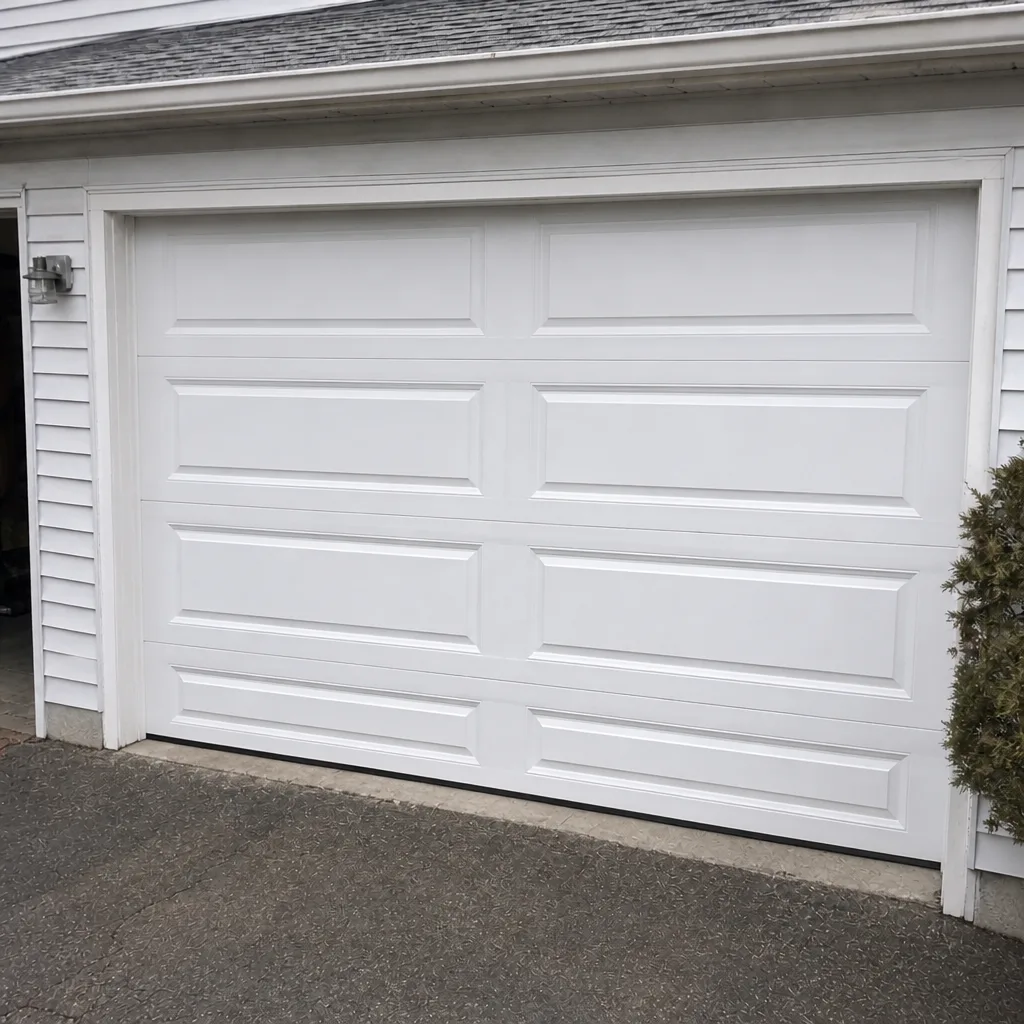 After
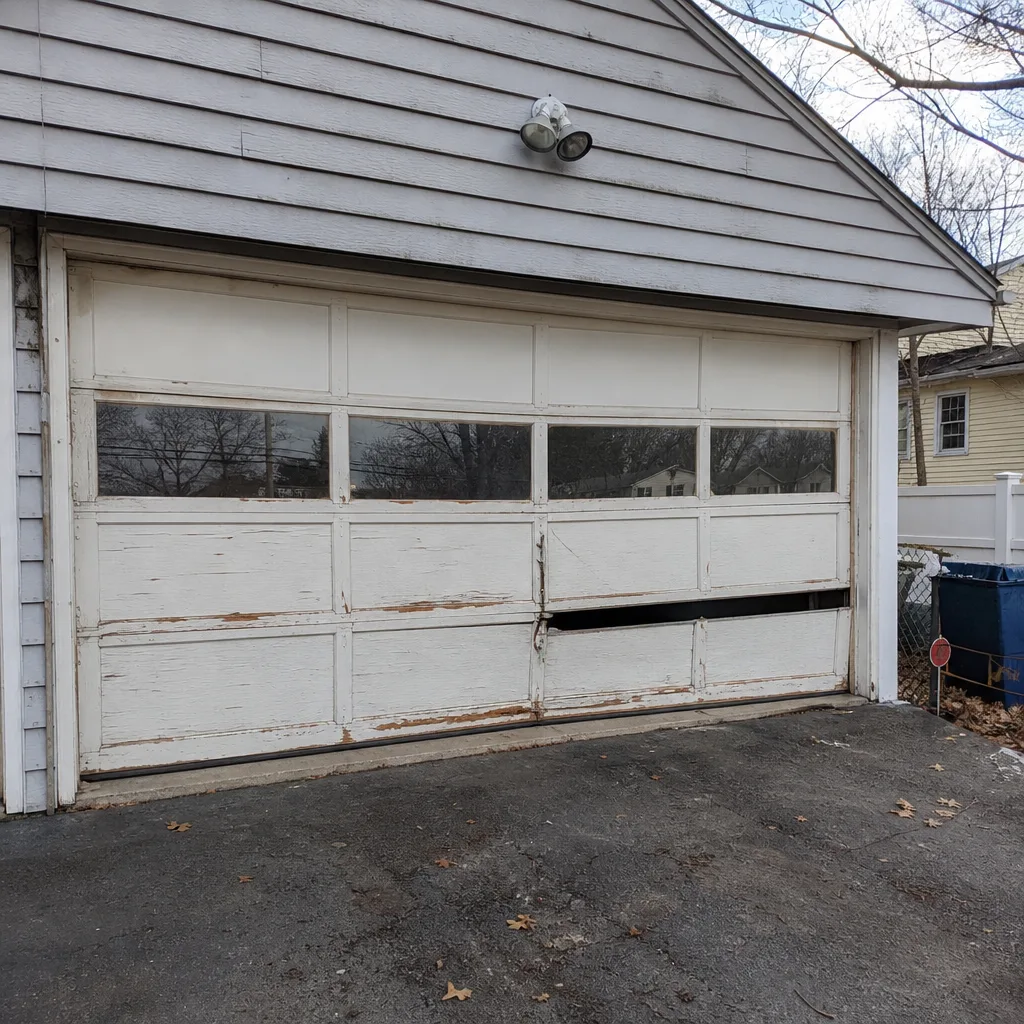 Before
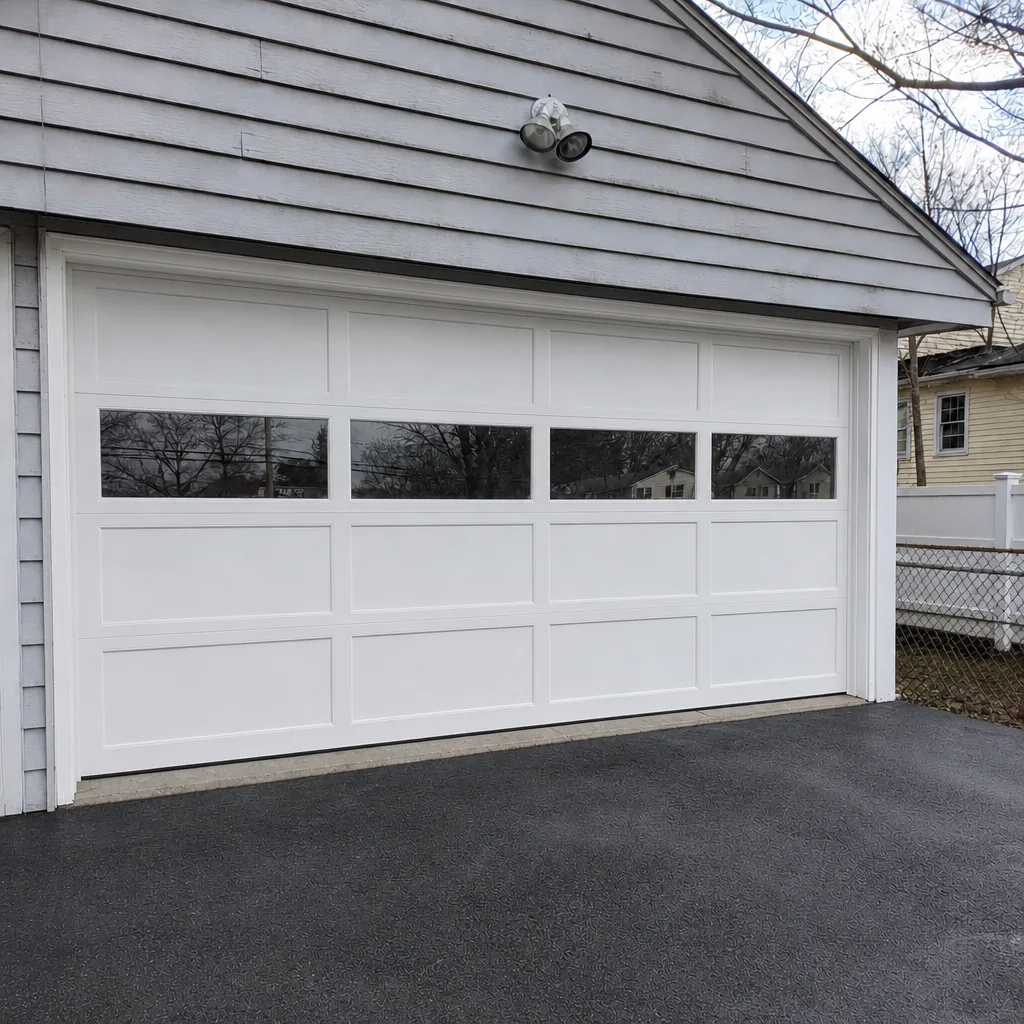 After
When to Call a Professional
Some jobs are worth a trained hand. Call a professional when your door won’t stay up, when it sags or reverses, when a spring has broken, when the door rubs or grinds on the track, or when the opener runs but the door doesn’t move. Springs are the dangerous part – torsion and extension springs store energy that can cause serious injury, so leave that work to a technician. We work on the brands you already have, and our technicians have up to 11 years of experience. Same-day service is available for urgent failures, and emergency garage door service is a core offering when a car is trapped or the house is unsecured. We answer 24/7, with fast dispatch from 7am to 7pm, Sunday through Friday. Meriden Garage Door Repair Pros offers free estimates in Meriden – call (855) 294-4551.
Frequently Asked Questions
Most garage door repairs in Meriden fall in the range the written estimate sets per job, so the only reliable number is the one you get after diagnosis. That’s why we give a free on-site estimate and put the price in writing before any work starts. Spring work, opener work and panel replacements are priced separately. Call (855) 294-4551 for an exact quote – estimates are free.
Yes, same-day service is available for urgent failures like a broken spring or a door that won’t open. We answer 24/7, and fast dispatch runs from 7am to 7pm, Sunday through Friday. A call outside dispatch hours is booked into the next opening, Sunday through Friday, 7am to 7pm. Call (855) 294-4551.
No, the written estimate is the price, and nothing starts until you agree to it. We diagnose on site, quote a free estimate, and only then schedule the work. If something changes mid-job, you’ll hear it from us before we proceed. Call (855) 294-4551 to book a free estimate.
Very likely, yes. We service LiftMaster, Chamberlain, Genie, Clopay, Amarr, Wayne Dalton, Craftsman and Raynor, so we diagnose without brand-guessing. Read your door’s data tag before you call and it goes even faster. Call (855) 294-4551 to confirm your model.
A single spring can be replaced, but torsion and extension springs are usually replaced as a matched pair because the second one is typically at the same wear point. That’s a decision for the on-site inspection. Call (855) 294-4551 for a free estimate.
Because a lot of Meriden homes were built between 1940 and 1980, when builders used the dimensions of the door they had rather than a universal spec. The opening is often an inch or two off today’s stock sizes, which is why measuring comes first. Call (855) 294-4551 and we’ll measure it before quoting.
The Bottom Line
Your garage door is a system, not a single product, and in Meriden the two big forces on that system are the older housing stock and the humidity-to-freeze climate. Measure the rough opening before you buy. Match the springs and opener to the door’s weight. Keep moisture out with a good seal and a sound finish. Read the data tag so you know what you have, and choose a multi-brand specialist so the right part is within reach. Do those things and you’ll spend less over time. When you’re ready, we’re here to help – see more with Meriden Garage Door Repair Pros.
Call (855) 294-4551 for a free estimate. We answer 24/7, and fast dispatch runs from 7am to 7pm, Sunday through Friday.
Written by the team at Meriden Garage Door Repair Pros.